






 The American Goldfinch is one of the most colorful birds found in Delaware backyards, looking more like a pet than a wild bird. Their brilliant yellow plumage and cheerful disposition are appreciated by many backyard birdwatchers.
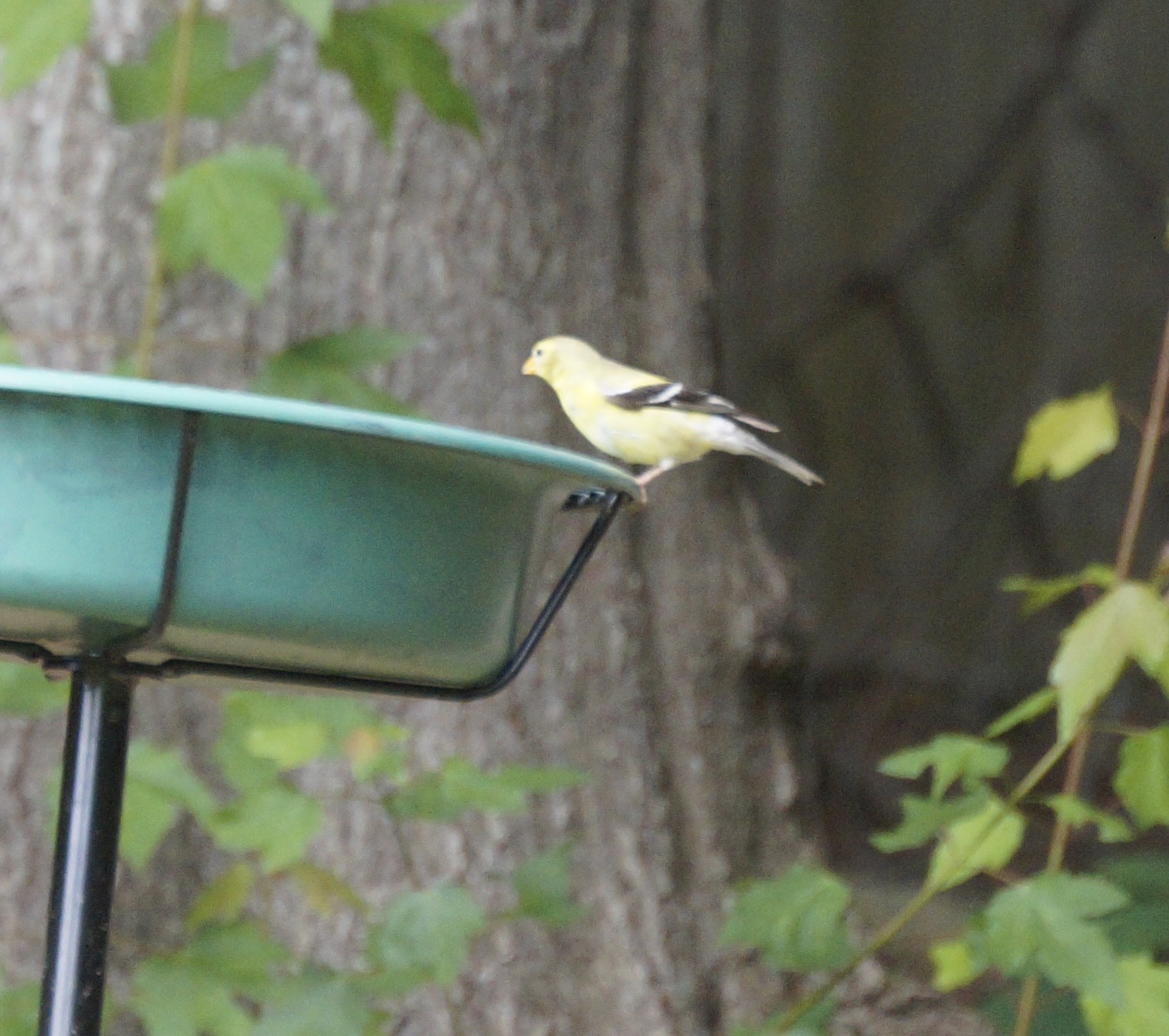
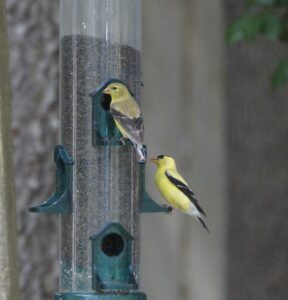
Scientifically known as the spinus tristis, the American goldfinch is easily recognizable. The male has a brilliant yellow body with contrasting black wings and a black cap that gives the bird a bushy eyebrow appearance. Females have a more muted yellow appearance with slightly brown coloring over the yellow. Some say the female goldfinch looks “dusty” compared to the male. The bill is pinkish in summer and dark in the winter.
All adult goldfinches have a white upper tail and undertail converts with white wing bars that are thin in summer, bold in the winter. The breeding male is bright yellow with a black cap. The winter adult male is tan above, pale gray below with a yellow face and throat. The breeding female is olive brown above, yellow below. The winter female has a drap plumage overall with just a hint of yellow. Juveniles, who mature around November, have buff wing markings and rump.
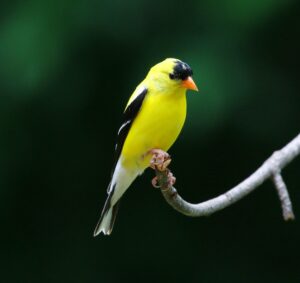
The birds are small and stocky with a notched tale. Although they tend to congregate around feeders, they are also attracted to ornamental plantings like purple cornflower, black-eyed Susan and sunflowers.
Their flight is bouncy as they move from place to place.
Weighing just under a half ounce and standing around five inches tall, goldfinch have a lifespan of three to six years in the wild.
Goldfinches are late season nesters and reproduce when thistle or sunflower seeds are in abundance. They build cup nests in shrubs or small trees, laying four to six blue or white eggs. Nestlings are fed a regurgitated mash of seeds that may include some small insects. Nests are usually found 5 to 20 feet above the ground, created from fine grass and plant fibers. Sometimes the nest is held together with spiderwebs. Eggs are incubated by the female for 12 to 14 days and hatchlings leave the next between 11 and 17 days.
Their call sounds like “po-ta-to-chip.”
Goldfinch very rarely eat insects, eating seeds of different types, sometimes pulled directly from the heads of flowers. They prefer thistle, nyjer and shelled sesame seeds.
The birds are seen at feeders throughout the year although their coloring dulls slightly in winter. It is possible to watch the progression of the molting season as feathers go from brown to brilliant yellow. Molting occurs twice each year. Goldfinches in northern areas do migrate south from October to December, returning in April or May.
 Their habitat is overgrown fields and trees for nesting. They are also found close to water sources and in well-planted residential areas. Predators are hawks, snakes, squirrels and outdoor cats.
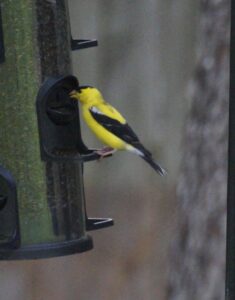
The best way to attract the American goldfinch to a backyard is to add a mesh sock feeder or tube feeder with tiny feeding ports. Fill the feeders with black oil sunflower seeds, sunflower chips, nyjer or thistle seeds. If using nyjer, replace the seed often as goldfinches will not eat old seed. As mentioned, goldfinches are attracted to seed head flowers, so planting purple cornflower, black-eyed Susan, blanket flower, coreopsis, native sunflowers, Joe-Pye weed and asters will also attract the tiny bird.
A shallow birdbath with clean water is another attraction for goldfinches, but moving water is even more attractive. Add a bubbler or dripper to attract them as well. Goldfinches also tend to gravitate toward “messy.” Avoid removing dried flower heads, ornamental grass and leave native weeds. Try to avoid pesticides near feeding areas as they can feed them to their fledglings as they gather seeds.
Eastern red cedar, American holly, dogwood and viburnum are also favorite shrubs of the goldfinch.
Because they nest later in the summer, they may be scarce in the spring. However, once nesting season starts, goldfinch populations in backyards often increase significantly in July and August. In addition, attracting goldfinches will likely also attract chickadees, nuthatches, titmice, house finches and other colorful backyard birds.
Goldfinches are the state bird of Iowa, New Jersey and Washington.
Coming up next week is the house finch.