
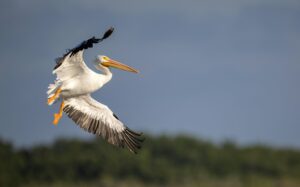

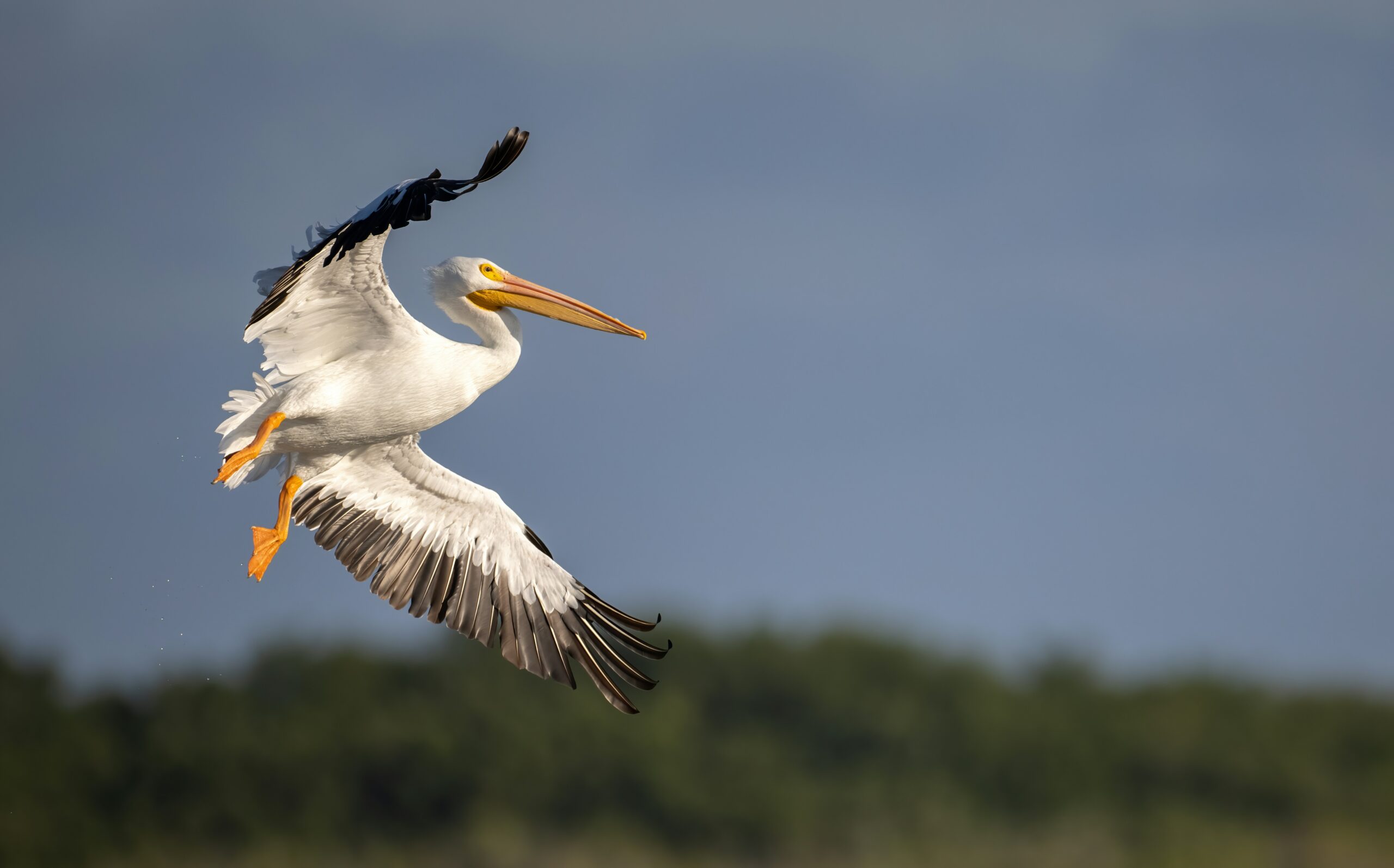


Bird enthusiasts still have an opportunity to witness one of the Mid-Atlantic’s most unique wildlife experiences as Delmarva Birding continues its guided summer tours to Smith Island, Maryland, home to one of the northernmost breeding colonies of Brown Pelicans on the East Coast.
Delmarva Birding has announced that registration remains open for its final Smith Island Pelican Tours of the season. Tours are scheduled for Monday, July 27, from 8 a.m. to 4 p.m., and Friday, July 31, from 9 a.m. to 5 p.m. Additional tours on July 28 and July 29 may be offered if enough participants join the interest list.
The guided excursions cost $355 per person and include a full day exploring the island’s bird colonies and marsh habitats with experienced guides.
Recent tours held July 14-17 found the island’s pelican colony thriving, with guides estimating approximately 400 Brown Pelicans currently nesting throughout the island’s marshes. Most nests are built along elevated ridges within the marsh, while a few can be found closer to the shoreline.
During the tours, participants observed pelican chicks ranging in age from 1 to 2 weeks old to 5 to 7 weeks old. On July 17, guides also discovered one nest that still contained eggs, indicating that nesting activity is continuing.
Located in the Chesapeake Bay off Maryland’s Eastern Shore, Smith Island is Maryland’s only inhabited offshore island and is best known for its rich maritime heritage, watermen, and the famous multi-layered Smith Island Cake, the state’s official dessert. The island is also recognized as an internationally important bird habitat, with expansive tidal marshes providing nesting grounds for Brown Pelicans and numerous wading birds.
Smith Island is actually an archipelago made up three distinct, close-knit communities. Ewell is the largest village and home to the visitor’s center on the island; Tylerton and Rhodes Point. The island is surrounded by thick underwater meadows and is well-known for its shallow marshes with narrow channels and creeks. The island was first settled by English colonists in the 19th century wit oysters and blue crabs eventually becoming the mainstays of the economy. Many homes on the island have been passed down through generations.
Brown Pelicans nearly disappeared from the Chesapeake Bay during the mid-20th century due to the effects of the pesticide DDT. Following conservation efforts and the banning of DDT, the species has made a remarkable recovery, and Smith Island’s colony has become an important indicator of that success
While the pelicans are the main attraction, tour participants also observed a variety of other coastal bird species, including Little Blue Herons, Tricolored Herons, Glossy Ibises, White Ibises, and Seaside Sparrows, offering birders an opportunity to experience the diversity of the Chesapeake Bay ecosystem.
For more information or to register, visit Delmarva Birding online.