


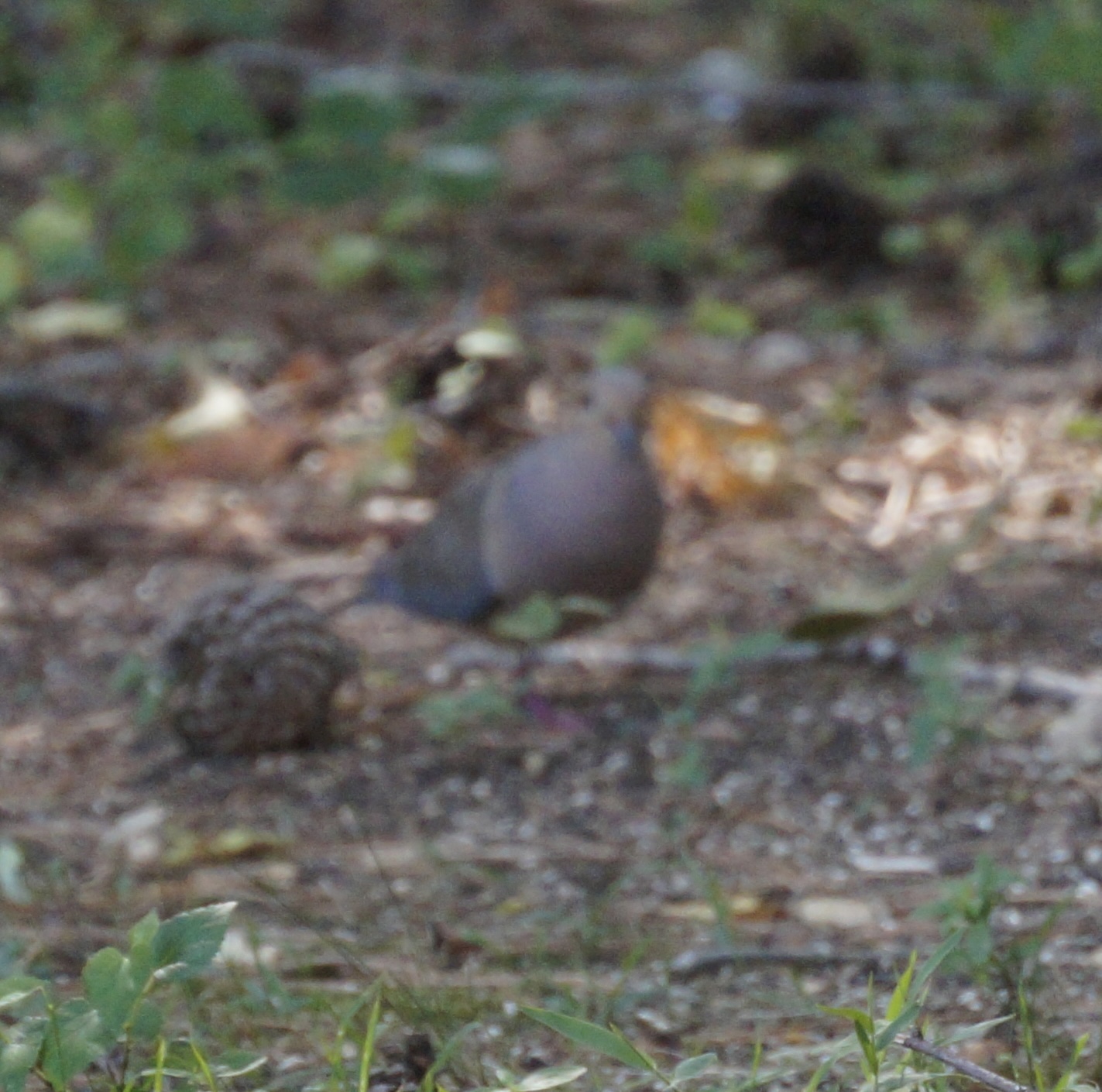


This is the next in a series designed to help readers identify the different wildlife and foliage they may have in their backyard. Birds are the first that we plan to identify, but if there are specific creatures or plants you would like to learn more about, please send us an email.
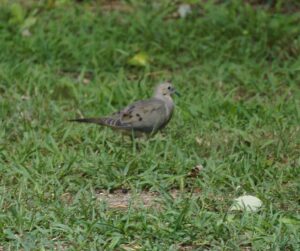 The soft, mournful coo of a morning dove is well-known to Milford residents and these satiny birds with their streamlined bodies are frequent visitors to backyards throughout the area.
The scientific name for mourning dove is zenaida macroura as the word “macroura” is Greek for “long-tail.” When early settlers arrived in North America, the bird’s call sounded sad, as if it was in mourning. Some refer to the bird as a “morning” dove as they are one of the first heard when dawn breaks, but the actual name of the bird is mourning dove.
A mourning dove has pale tan plumage with a subtle iridescence that makes it appear to have purple or blue highlights. Close up, a light blue orbital ring is visible. The tail is long and it is deemed to be one of the most elegant birds in a backyard. The plumage helps the dove hide in grasses, flowers and shrubs. A juvenile dove is darker with pale feather fringes that give it a scaly look. Males and females look similar.
Doves may perch on wires or rooftops, but they usually feed in open fields and backyards, primarily on seeds, foraging on the ground. In addition to seeds, doves eat grains and millet. They will occasionally eat at backyard feeders.
Doves take flight quickly usually with a whistling sound. A mourning dove grows up to 13 inches and weigh as much as a half-pound They can live up to five years in the wild.
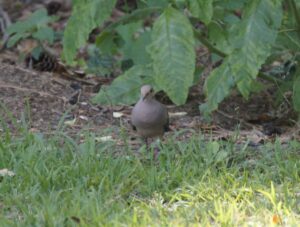 Mourning doves flock in colder months and build flimsy nests in trees, shrubs or on flat ledges. Nests are located about 10 to 25 feet above the ground and look like a flimsy platform of sticks and twigs. Their habitat is open woodlands, suburbs and farmland. They breed prolifically, sometimes raising six broods in one year. Eggs are usually two white eggs that are incubated for 14 days. Fledglings leave the next between 13 and 15 days. Adults produce crop milk, a protein rich secretion from their throats which the regurgitate to feed their newly hatched chicks.
Mourning doves are monogamous and tend to mate for life. They form strong pair bonds and often stay together year after year, sharing co-parenting duties like building flimsy nests and feeding their young. However, if one mate dies, the surviving bird will usually find a new partner.
They are one of the most peaceful birds found in the area and are considered symbols of calm and renewal in many cultures. Despite their gentle nature, they are one of the most hunted game birds in North America. In addition to hunters, predators are hawks, cats, snakes and raccoons.
Next, learn more about the Carolina wren.