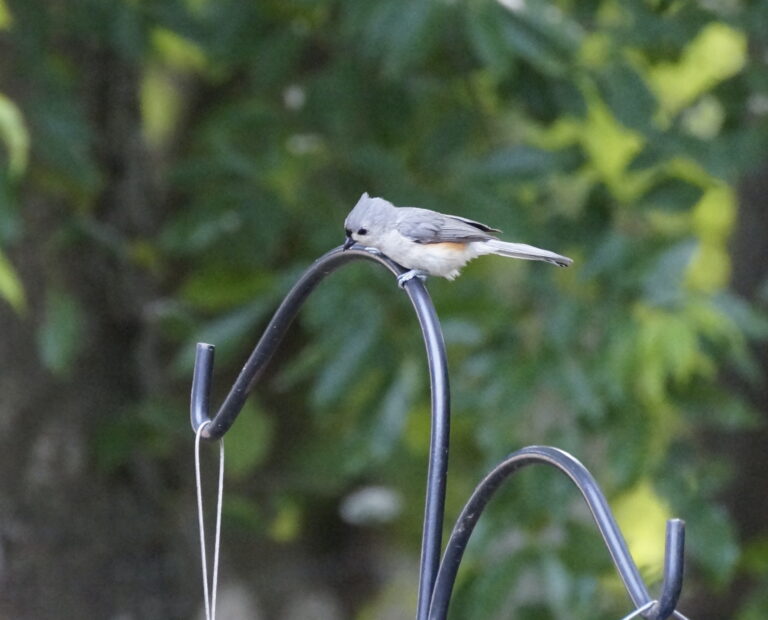




This is the next in a series designed to help readers identify the different wildlife and foliage they may have in their backyard. Birds are the first that we plan to identify, but if there are specific creatures or plants you would like to learn more about, please send us an email.
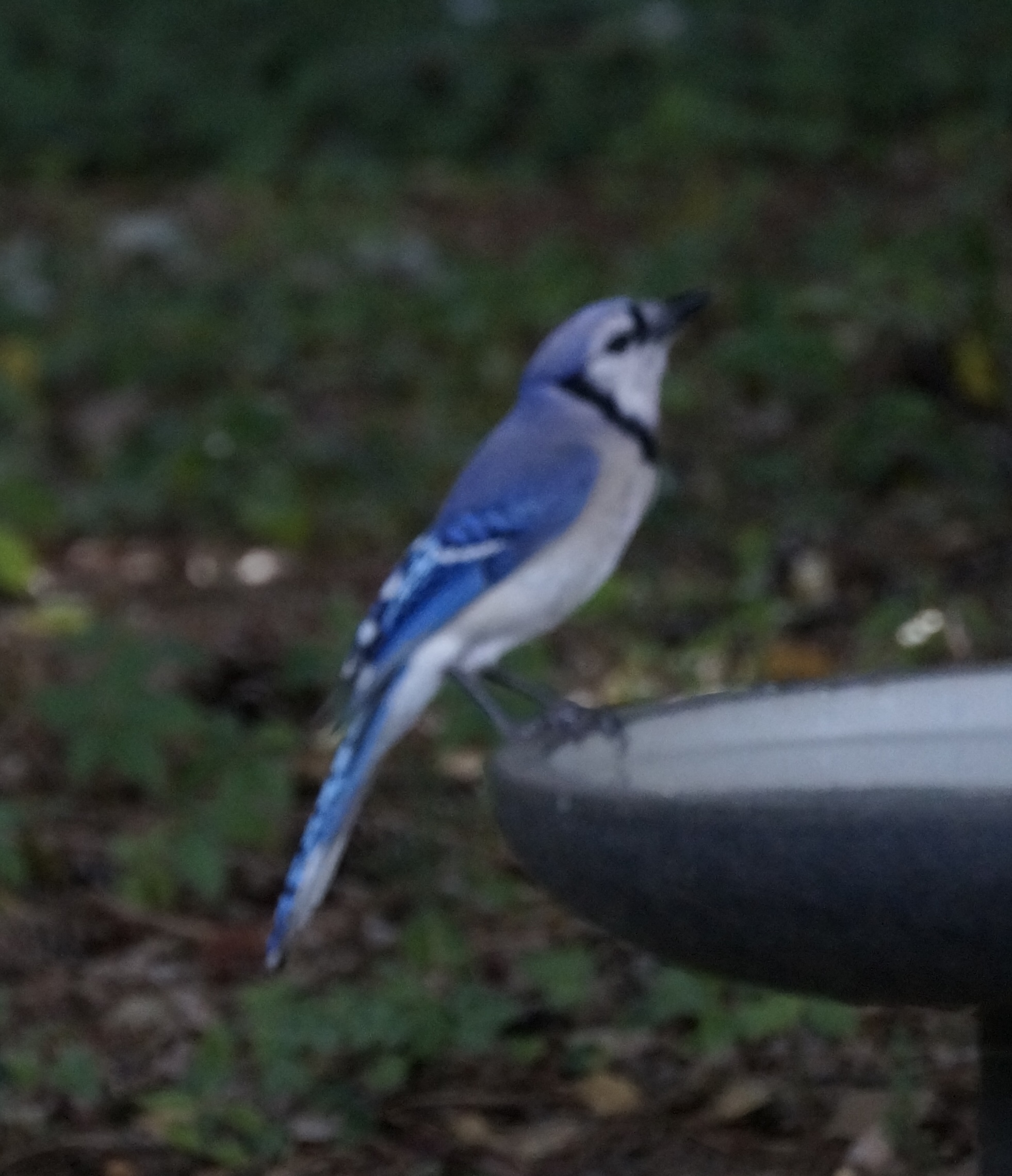
 Another very recognizable bird in Milford backyards is the blue jay. The brilliant blue feathers are easily recognizable at feeders and in trees. There is no question that the bird also has personality to spare.
The scientific name for a blue jay is Cyanocitta cristata. They are bold, intelligent and unmistakably loud. The bright blue, black and white coloring with a prominent crest and expressive face, blue jays command attention. Female and male blue jays look exactly the same although the female is slightly smaller.
They are often described as conspicuous, colorful, brassy, loud, domineering, raucous, adaptable, intelligent, inquisitive, thieving, handsome and unmistakable. Despite their cocky attitude, blue jays are actually shy and secretive when nesting.
The blue jay is the only, blue-colored jay in the northeast. It is the provincial bird of Prince Edward Island.
There are no similar species to the blue jay, and their range barely overlaps with another jay, the Steller’s Jay and the California Scrub-Jay. Those two jays do not have similar coloring to the blue jay.
The blue jay hops from limb to limb or on the ground when searching for food and often perches up high when less active. When the bird lands at a feeder, it does so with an assertive flourish of wings, although it can also guide quietly through the forest. Flocks of migrating blue jays fly with steady wing beats well above treetops.
The bird can perfectly mimic the scream of a red-shouldered hawk, using this trick to frighten competitors away from feeders or hidden food. It also uses the call to warn its flock of danger. The common call of a blue jay is a piercing jay, jay jay or a musical wheedle-wheedle. They can also whistle a sound like tooli and emit a low-itched rattle.
Omnivorous and opportunistic feeders, blue jays feed on acorns, insects, fruits, seeds and sometimes the seeds or nestlings of other birds. It is rare for them to attack nestlings, however. At backyard feeders, they are especially fond of peanuts in the shell. They are avid food storers, tucking acorns in the ground or tree crevices for later. They also bury nuts and seeds in the ground. Their preference for acorns can lead to a propagation of new oak trees when the bird buries them.
It is not uncommon for a blue jay to form lifelong pair bonds and work cooperatively to build nests which are bulky, twig-lined found in trees. The nests are cup-shaped and can also be found in tall shrubs.
Blue jays are social and adaptable, thriving in both forest edges and suburban neighborhoods. They are commonly found at backyard feeders and defend their territory with loud squawks and aggressive posturing.
A blue jay grows to between 9 and 12 inches, weighing between 3 and 4 ounces. They live five to seven years in the wild.
Blue jays lay between three and six blue-to-greenish eggs. The eggs are incubated by the female for 16-18 days and the fledging leaves the next between 17 and 21 days. A juvenile jay has similar but less colorful plumage than the adult.
The range of a blue jay is the eastern and midwestern area of the country. They inhabit forested areas and mixed woodlands, especially fond of oaks. However, they are also abundant in suburbs and urban areas. Northern breeds do move south for winter and large numbers can sometimes be seen migrating in loose flocks. They head north between late-April and late May. In the fall, they migrate mid-September to late-October.
Predators include hawks, owls, snakes, squirrels and raccoons. However, blue jays will mob predators to protect nests.
Next week, learn more about the American robin.