





This is the next in a series designed to help readers identify the different wildlife and foliage they may have in their backyard. Birds are the first that we plan to identify, but if there are specific creatures or plants you would like to learn more about, please send us an email.
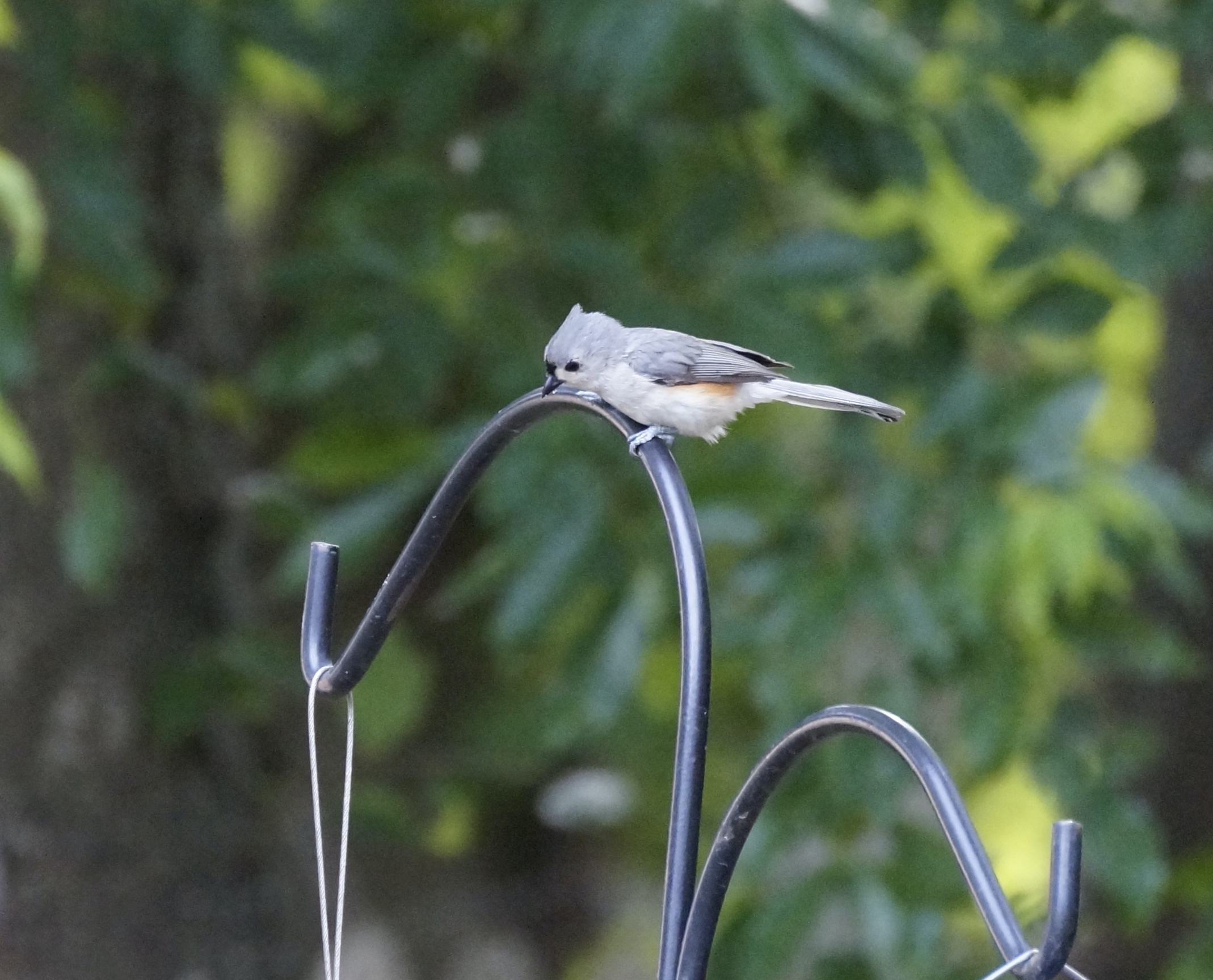
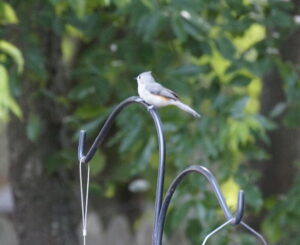 Frequently found at backyard feeders, the tufted titmouse, scientific name Baeolophus bicolor, is bold, inquisitive and amusing with its tufted head, gray crest, black forehead and peach flanks. The bird has large eyes, making it appear alert and expressive. Juvenile birds lack the black forehead of an adult titmouse. There is little difference between the male and female bird.
The tufted titmouse can grow to about six-inches and they weigh about a half pound. They live between two and three years on average.
The titmouse call is a “peter-peter-peter” sound, and they are active all year. They are one of the loudest backyard birds. They often travel with chickadees or nuthatches in the winter.
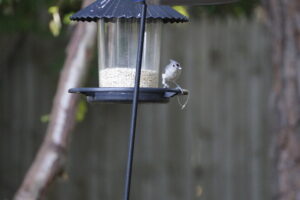
A titmouse does not spend a lot of time at a backyard feeder as they cache food in tree bark for later use. They are small, but they can be assertive at feeders, frequently chasing off larger birds. Their food choices are often seeds, insects and berries. They pull insects from bark and foliage, sometimes chipping away the bark to pull out a beetle or bug. They do consume wild berries. At bird feeders, they enjoy sunflower seeds, shelled peanuts, peanut butter and suet.
Their habitat is deciduous forests, parks and residential areas. They generally stay below 2,000 feet, but over the past 50 years, the birds have expanded northward. Unlike chickadees, the tufted titmouse often descends to the ground.
 Nests are in tree cavities or bird houses, lining the nest with fur collected from the environment, although they have been known to pluck it from live animals like raccoons or even house pets. They are cavity nesters by necessity but are flexible in nesting choices. They can also be found in nest boxes and fence posts.
A tufted titmouse lays between five and seven eggs that are white with brown speckles. The female incubates the eggs for about 12 to 14 days. Titmouse pairs are monogamous and families often stay together through the winter. The following spring, one of the young birds may help the mated pair raise the next generation. Birds fledge in between 15 to 18 days.
A titmouse is playful, vocal and loyal to their flocks. They are incredibly agile and frequently hang upside down or sideways to pluck insects and seeds. A titmouse will often hop upward along tree trunks. If they need to shift to another position, they either fly or flutter rather than walking.
Predators are snakes, raccoons, squirrels and hawks.
Next in the series is the Blue Jay.