




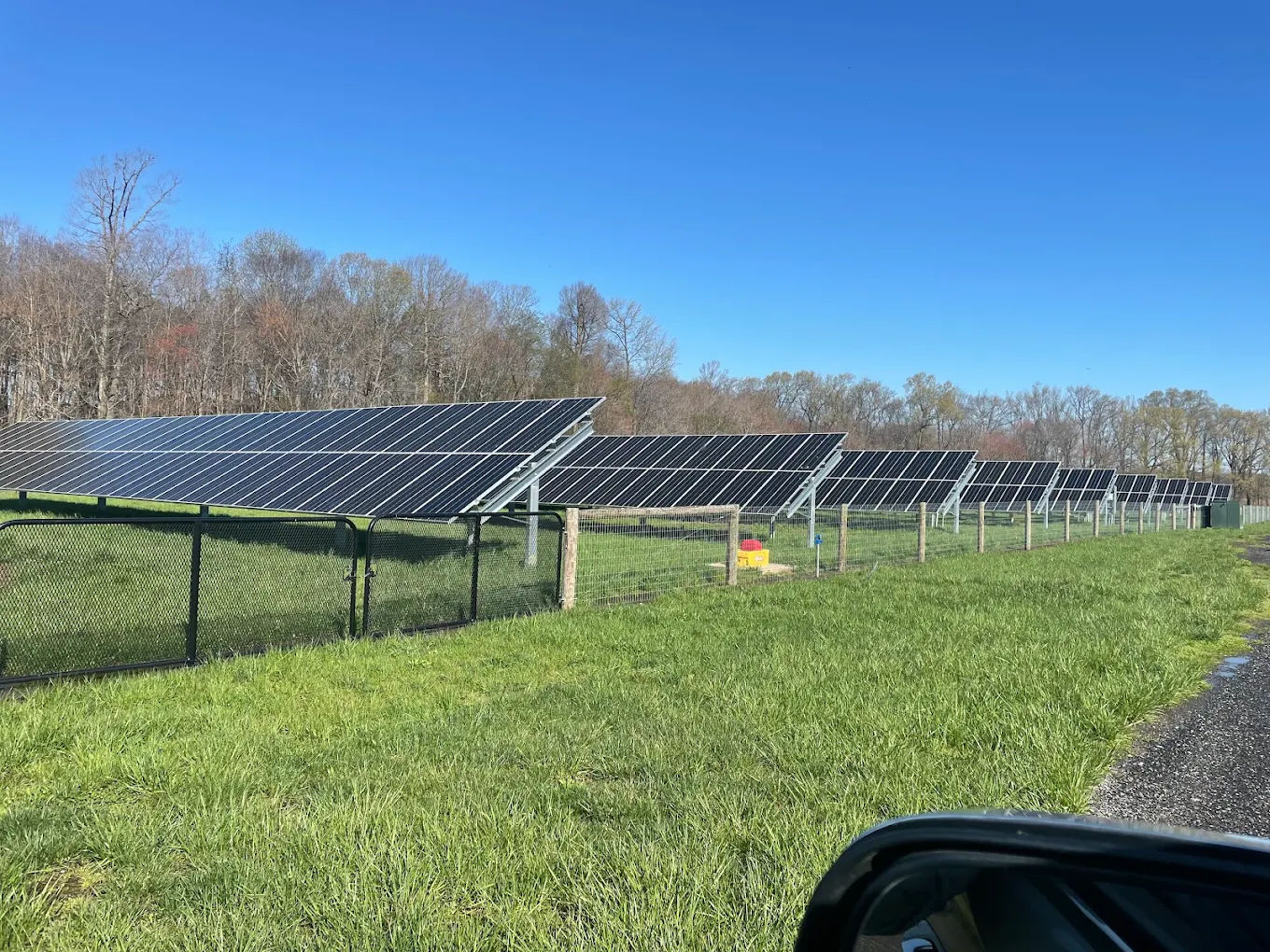

 Sussex County officials reviewed the growing number of approved and proposed solar energy projects during a recent council meeting, with some members expressing concern about the amount of farmland that could be converted to solar panel installations.
County staff reported that Sussex County is currently tracking 59 solar projects approved through the conditional use process. Of those, 14 projects have been constructed and are operational, while nine applications were withdrawn and will not move forward.
According to county officials, the combined solar panel coverage area for projects still being tracked totals approximately 1,550 acres. The overall project footprints are significantly larger when accounting for the entire property areas included in approved site plans.
Staff explained that many solar projects receive county approval but never reach construction because developers must navigate a complex interconnection approval process before they can connect to the electrical grid.
“There’s a chicken-and-the-egg scenario that goes on,” Planning and Zoning Director Jamie Whitehouse told council. “They have to get approval in the county first, then you can apply for and receive connection approval.”
Officials noted that developers often seek county approvals before knowing whether their projects will ultimately receive interconnection approval from utility regulators, resulting in some projects never moving forward.
The discussion prompted concerns from council members about the long-term impact of solar development on agricultural land.
“I’m concerned about the number of acres of farmland that these take up,” Council Vice President John Reiley said. “To me, this is more of an industrial application than an AR-1 type use.”
Reilley pointed to the potential loss of thousands of acres of open land and questioned whether Sussex County should consider encouraging solar development in other locations.
“I’m not saying that solar panels are bad or wrong or unnecessary, but where do they go?” he asked.
Reilley suggested the county explore incentives that would encourage solar installations on existing commercial and industrial buildings rather than agricultural land. As an example, Reilleycited large warehouses and government facilities that could potentially host rooftop solar arrays.
“I would much rather see more of that and less farmland,” Reilley said.
The concern over farmland conversion is compounded by questions about who ultimately benefits from utility-scale solar projects. While solar farms are built within Sussex County, the electricity they generate is typically fed into the PJM regional transmission grid rather than dedicated to local homes and businesses. Once power enters the regional network, it can be distributed across a multi-state service area, meaning there is no guarantee that electricity generated on Sussex County farmland will remain in Sussex County. Unlike rooftop solar systems that directly offset energy use at a specific property, utility-scale facilities primarily contribute to the broader regional power supply. As a result, some residents and officials have questioned whether the loss of agricultural land is justified when the energy produced may ultimately be consumed outside the county.
County staff noted that rooftop solar systems installed on existing residential and commercial buildings are currently permitted by right under county code, meaning property owners do not need to seek special approvals. However, staff acknowledged that the current regulations may not provide enough incentive to significantly expand rooftop solar development.
Officials also noted that approved solar projects generally have three years to move forward. Projects that fail to begin construction within that timeframe may be required to reapply and go through the county review process again unless an extension is granted.
The discussion comes as Sussex County continues to balance competing priorities involving renewable energy development, farmland preservation, and economic growth. While no action was taken during the meeting, county officials indicated the topic could be revisited as part of future updates to the county’s comprehensive land-use plan.