




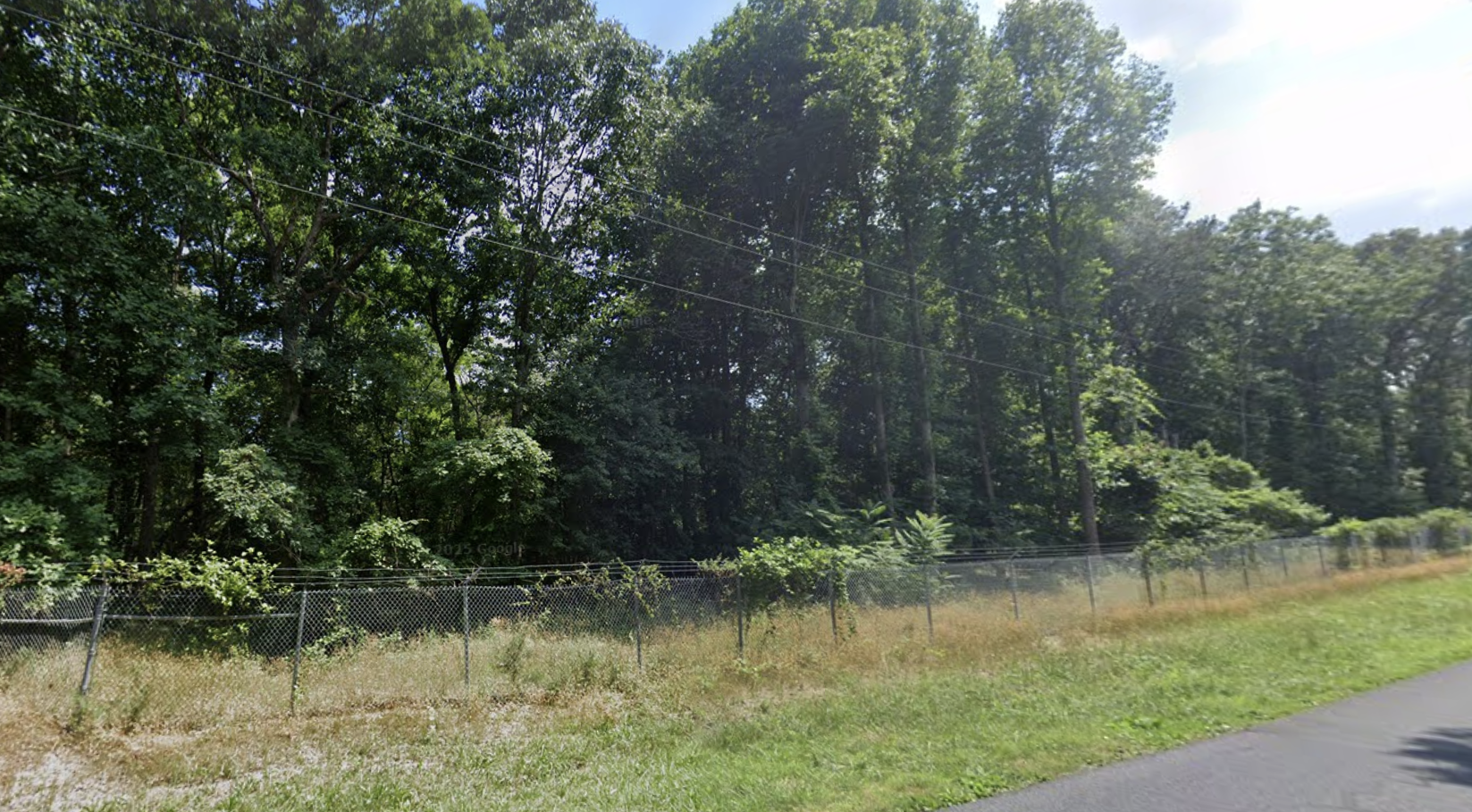

On Sunday, August 12, 1984, the body of Elizabeth “Betty” Reed, 67, of Milotn, was discovered at the Sussex County landfill in Lincoln. Reed had been reported missing by her son, Richard. Her body was discovered by family members who had gone to look for her at the transfer station on what was then known as Road 214, now known as Cubbage Pond Road.
According to newspaper accounts, Reed’s body was lying outside the small booth where she worked as a clerk. Reed was a 37th Representative District Democratic committee woman and police believed she died sometime Saturday afternoon. The landfill closed at 4 PM on Saturday. The woman’s Oldsmobile Cutlass was missing and police asked for help in finding the car.
On Monday, August 13, Kenneth DeShields, 24, was arrested and charged with her murder. DeShields, who was living in Slaughter Neck at the time, was identified by witnesses and driving away from the landfill Saturday afternoon. Police arrested DeShields at 6:30 Am near his home driving Reed’s car.
Family members stated that Reed was known to carry cash, and robbery was suspected at the time. The landfill was a transfer location where garbage was taken to the county landfill in Bridgeville. Reed’s job was to record who used the transfer station and she did not collect cash as part of her job. Based on the investigation, Reed had finished work, locked away papers and the telephone. She was apparently leaving the office when she was surprised by the assailant.
An open padlock hung on the gate when the transfer station was open, officials said. After the murder, the gate was locked when the assailant left in Reed’s car. The front of the area was fenced to keep people from using it after hours, but it was isolated with the nearest house about a mile away at the time.
“I last saw her a week ago and she was looking forward to working on her brother’s campaign for sheriff,” then County Administrator Joseph T. Conaway said. “We’re going to miss her. Betty was the kind of person who would give you the shirt off of her back. She just loved life.” Her brother was William F. Betts, the former Democratic County chairman.
Reed was laid to rest on Thursday, August 16. Her obituary indicates she retired in 1982 as a seamstress for the Graves Manufacturing Company in Milton after 45 years. In addition to serving for the Democratic committee, she was a member of the Milton VFW Ladies Auxiliary. She was survived by her husband, Carl H., a son, Richard R.; two sisters, Grace Conway and Alva Jones; two brothers, William Betts and David Betts as well as two grandchildren and a great-grandchild.
When he was arrested driving the victim’s car, police found a shotgun at the residence of Odetta Boyd where DeShields was living with Boyd’s daughter, Sadie Sample. They also discovered a pair of dungarees with blood on them that Sample said belonged to DeShields.
A few days after his arrest, it was discovered that DeShields had been released early from prison in January 1984 after serving seven years of an 11-year sentence after pleading guilty to robbery in 1976. In that incident, a 76-year-old Laurel-area resident was beaten after allowing two youths in her home to use the phone. About $136 in cash and the victim’s car was taken. DeShields and a co-defendant, Johnny Jackson, both plead guilty to the crime.
On August 24, 1984, DeShields claimed that he did not kill Reed but that he “saw someone else fire the fatal shotgun blast.” The coroner reported that Reed died of a shotgun blast to the face and neck. News accounts say that DeShields gave them several statements over several hours with detectives stating he had given four different accounts of what occurred.
Initially, DeShields claimed he and a companion had gone to the landfill where his companion had words with Reed. After she hit his companion with a glass jar, DeShields watched from outside of the fence as the companion shot her. DeShields was given her car and $63 to stay quiet.
Jury selection in DeShields trial began on February 18, 1986. One news account reported that several people were drawn into the murder trial by fate. James R. Kerr retired assistant superintendent for Milford School District took a bag of trash to the landfill in Lincoln on August 11, 1984. That bag was later found wrapped around a shotgun that was determined to be Reed’s murder weapon. Kerr’s crumpled bag was used as evidence in the trial after a postcard from Maine was found inside addressed to Kerr and his wife.
Cecil Bailey III, who was nine at the time, was riding his bicycle when he saw two men, one white and one black, parked in a brown car near the landfill. His testimony was used by the defense to support DeShields theory he was not alone.
Phyllis Parsons and Betty Poole were in their backyards about a mile from the landfill. Poole heard a loud blast coming from the direction of the dump as did Parsons. Parsons occasionally hunted and thought it sounded like a shotgun. She looked at her watch and saw it was 4:19 PM. Timothy Cephas was heading home to Slaughter Neck when he saw DeShields driving an Oldsmobile Cutlass at a fast pace. Cephas knew DeShields and was “teed off” that DeShields was speeding but waved at him anyway.
“I didn’t want to get involved,” Cephas said when asked why he waited months to tell police. Cephas did tell his brother who mentioned it when the police were questioning another friend. His was one of the most damaging testimonies in the trial.
Regina Nuckles met Kenneth Griffith in Rehoboth in the summer of 1984, and she testified that on the night of the murder, Griffith was at her home in Warrington, Virginia. This was confirmed by her father, Donald Nuckles. Griffith was who DeShields named was with him when the murder occurred.
Maria Frazier, a bartender at the Country Squire in Rehoboth, testified she saw DeShields in the bar the day of the murder. The defense felt her testimony proved he could not have been at the landfill alone as DeShields did not own a car.
Sample, Deshields’ girlfriend, testified that the couple had to go to Delmar to meet her mother and then wanted to go to a family reunion in Virginia, but neither had a car. Later that afternoon, DeShields had a car that he said he borrowed. They took a ride in the car and, when they stopped, DeShields removed a shotgun from the trunk. Initially, Sample told him to put it back and then told him to store it in a closet in the house.
Bertie Clendaniel testified that Reed, who was her cousin, called her at ten minutes to four that day and said she was getting ready to close up to head home. She was believed to be the last person to speak to Reed before she died.
The trial lasted for about a month before a jury of six men and six women found DeShields guilty on March 4, 1986. On March 6, 1986, the jury recommended death by hanging. It was the first time a Sussex County jury recommended the death penalty since the mid-1970s.
Newspaper accounts state that DeShields was calm and impassive when the penalty was read. DeShields mother told reporters she did not think it was a fair trial. DeShields did not testify in his defense. The Reed family was satisfied with the verdict, however.
At the time, Delaware state law required the state Supreme Court to review all death sentences to determine if they were imposed arbitrarily or capriciously. Edward Gill, Deshield’s attorney was already planning an appeal. On April 5, 1986, Judge Henry duPont Ridgely confirmed the death sentence, setting DeShields hanging date for June 6, 1986.
On August 30, 1987, DeShields gave an interview to The Morning News from the maximum-security section of Sussex Correctional Institution. The reporter, Carolyn Lewis, stated that DeShields was defiant and maintained his innocence. DeShields told Lewis that he feels he would not have been convicted if he had testified.
“I wanted to tell my side of it, but my lawyers said no,” DeShields said. “I’m a grown man. Let me try it on my own. I said if I burn myself, well, it is my life at stake.”
Despite the fact that he was found driving the victim’s car and had possession of the shotgun that killed Reed, DeShields argued it did not make sense for him to be driving her car in the same neighborhood where she died.
“Why would I kill a defenseless woman for a few dollars and a car then keep riding around anywhere in the state of Delaware,” DeShields said. “You’d have to be someone illiterate to do that.” DeShields insisted that a friend lent him the car in order to set him up.
Had he known the car belonged to a murder victim, he would have set the car on fire or driven it into a lake, DeShields claimed. In this version, DeShields claimed the car was given to him by Donald Haywood Hack who claimed he was in Rehoboth in a drug-induced fog.
Hack claimed he met DeShields on the Rehoboth boardwalk several years before the murder where DeShields claimed he was the day of the murder. He was waiting to meet his brother, Timothy, and two other men. One of the men DeShields was waiting for was Griffin, who DeShields called “Crispy,” pulled up driving an Oldsmobile Cutlass. He then claims he heard Crispy say they should not have “shot that woman.”
Although Hack was on the witness list for the defense, they did not call him. He felt that DeShields was set up. DeShields brother, Timothy, refused to support the story and told police that his brother had lied. Timothy died before the case came to trial. Police were never able to locate the third man, who DeShields called Blair. DeShields told Lewis he was bitter about his brother’s betrayal and that as long as he had “breath in him,” he would fight.
On September 15, 1987, the Delaware Supreme Court upheld Deshields’ conviction and death penalty. Court records show that DeShields argued for a reversal of his murder conviction and the constitutionality of his death sentence. On all counts, the Delaware Supreme Court rejected DeShields’ arguments for reversal and commutation of his death sentence.
On May 17, 1988, DeShields lost a Supreme Court appeal. On August 17, 1992, DeShields lost his final appeal which requested post-conviction relief. DeShields contended that the court did not inform the jury during the penalty phase that they did not have to unanimously agree on a mitigating circumstance; that prosecutorial comments violated his rights; that there was non-compliance with jury selection; that the prosecutor exploited the influence of his office; and that he was denied his constitutional right to effective council because his counsel denied him the ability to make a statement during the penalty phase.
The court denied all claims of an unfair trial and penalty decision in the case.
On August 27, 1993, DeShields told a completely different version of events to the state Board of Pardons in an attempt to have them change his death sentence to life in prison. He told the panel he was looking for keys to steal Reed’s car when she surprised him.
“It was like you turn a corner and almost run into someone,” DeShields said. “You jump back.” Instead of jumping back, however, DeShields raised the shotgun he was carrying and shot her, something he called a “freak accident.”
In a statement he read to the Board of Pardons, DeShields claimed that he had been heavy into “speed, smoked pot, drank” and that he had been awake for four days straight. He claimed he “went for a walk in the woods” near his home to “clear his head.”
“I went around a trash can, I saw her, and before I knew it, the gun went off,” DeShields said. “I had no intention of hurting her.”
When asked by the panel why he went for a walk with a shotgun, DeShields could not provide an answer. He claimed the gun was outside the door and he just took it with him. Then-state Auditor R. Thomas Wagner Jr. asked if DeShields always took a shotgun with him when he took a walk and DeShields said there were some bad dogs in the woods.
At the hearing, DeShields expressed remorse for what he had done, stating there was no excuse for Reed’s death. He asked for forgiveness from her family. However, the Board of Pardons was not swayed, and they upheld the death penalty sentence.
On August 31, 1993, the legal battle to save Deshield’s life ended when a federal appeals court denied his final request to stop the execution. The decision came in at around 2:30 AM and the decision was made not to appeal that ruling to the United States Supreme Court. DeShields’ attorneys wrote to then-Governor Tom Carper, requesting a reprieve, but that went unanswered. The prosecution felt it was time for the case to come to a close.
“Indeed, DeShields has enjoyed more than nine years of life, which he brutally denied Elizabeth Reed on August 11, 1984,” they commented.
On the day of his execution, DeShields was worried about his mother. The Reed family expressed sorrow for DeShields family, but felt the punishment was what he deserved. His last meal was steamed shrimp, fried shrimp, lobster tail stuffed with crabmeat, corn on the cob and dinner rolls with butter.
State law allowed DeShields to choose between hanging and lethal injection. He chose lethal injection. The last day of his life, he played a board game with a guard and took a shower before being led into the execution chamber. DeShields spoke to a warden as his injection took effect, but his words were unintelligible.
About 25 protestors stood outside the prison as well as at Rodney Square in Wilmington. DeShields was executed on August 31, 1993, at 9 AM.