




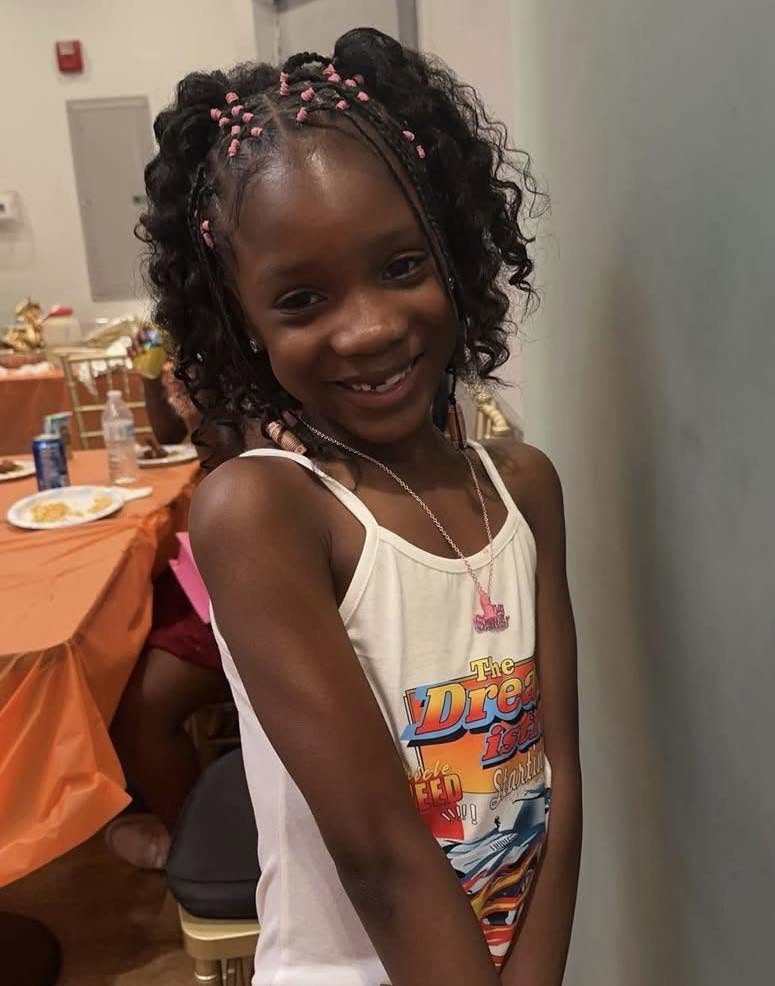

 With more than a dozen people coming forward to state they reported abuse in the home of Fatima Kone, the 10-year-old from Smyrna who allegedly died at the hands of her father, Badara Kone, 49, and stepmother, Adiaratou Coulibaly, 37, Division of Family Services Office of Children’s Services (DFS) are getting questions about how the case was handled. In addition, there are concerns that other children could meet the same fate even though many people reported suspected abuse.
“When is someone going to investigate DFS?” MJ Carter commented on social media about the case. “I hope every single worker involved with this family is questioned. Someone needs to ask questions and demand answers.”
DFS is not allowed to release details on cases filed, how many cases were filed against a particular family nor details about an investigation. However, there are multiple people coming forward to say at least ten reports of abuse on Fatima and her brothers were filed with DFS. Reports are that those cases were all closed, but there is no way to confirm that due to DFS privacy laws.
According to police, troopers responded to Oakwynn Circle in Smyrna when they received a call of a child unresponsive. When they arrived, they found Fatima dead in her room on May 28. After investigating, witnesses reported that Badara Kone had struck Fatima many times with a leather belt. Her brothers, 15 and 11, helped her to bed after the beating. Troopers had the boys transported to an area hospital for precautionary wellness evaluations where it was determined they had also been continuously abused.
Fatima’s father was arrested that night and initially charged with continuous child abuse and child abuse fourth degree. Initially he was held on a $17,000 cash bond. On June 1, after the medical examiner determined Fatima had died of multiple blunt-force trauma, charges were increased to murder by abuse or neglect, second degree. Kone’s bond was raised to $180,000 cash.
There were no charges against Coulibaly, who is named as the stepmother of the children, at first. However, the investigation revealed she had allegedly subjected Fatima to severe and prolonged abuse after her father struck her numerous times with the belt, using various objects and forced exercises. Coulibaly was arrested in New York by the United States Marshals Service First State Fugitive Task Force and the New York/New Jersey Regional Fugitive Task Force.
Coulibaly was being held by the New York City Department of Correction and once she is extradited to Delaware, will be charged with murder by abuse or neglect second degree. There are unconfirmed reports that Kone and Coulibaly faced abuse charges in other cities where they lived, including New York and Philadelphia, but had never been charged.
In Delaware, when a member of the public calls in suspected abuse, DFS immediately documents the allegations, prioritizes the case based on the Structured Decision Making (SDM) assessment and either assigns a caseworker, refers to law enforcement or closes it. The SDM determines if the case is a Priority 1 which needs response within 24 hours as there is imminent danger; Priority 2 which requires response within 72 hours or Priority 3 which requires response within 10 days. There is no way of determining how the Kone cases were prioritized as the records are sealed for privacy reasons.
In all cases, a DFS investigation caseworker is assigned to make face-to-face contact with the child and family. DFS also coordinates with law enforcement, Department of Justice and Children’s Advocacy Center. Once the investigation is complete, the caseworker decides if the allegations are substantiated or unsubstantiated.
When a mandated reporter, such as a teacher, guidance counselor or doctor calls in suspected abuse, they must provide their name, contact information and employers. Although DFS does not share that information with the family, it is documented in the case file. However, beyond that requirement, DFS does not prioritize a call from a mandated reporter higher than one called in by the public.
DFS does not track the number of children who were injured or killed by abuse or neglect who had a case, whether open or closed on file with their office. The state only tracks child fatalities and near deaths that occur as a result of overall child abuse and neglect. In 2024, the Child Protective Accountability Commission (CPAC) and Child Death Review Commission (CDRC) reported 59 severe abuse cases with 50 near deaths and nine deaths.
Although DFS has been rated highly in some areas such as quality assurance programs, statewide data systems and excellent staff training, the department has been identified as needing improvement in key child welfare outcomes. This includes preventing re-abuse and timely reunification. Evaluations of the department also found that there is ineffective triage and screening as well as lack of consistency in engaging parents when abuse is identified.
One issue is that the abuse hotline has historically operated an ineffective wide net. This has led to full investigations into low-risk families or focus on teens with behavioral issues which may lead to more severe abuse cases missed.
The department has historically been understaffed. This mean that caseworkers had a significantly high caseload. Because of the nature of the abuse hotline, caseworkers also spent considerable time on investigations that weren’t about abuse or neglect. Caseworkers found that they were not supporting broad engagement of families or able to keep children and families safe. One reported that, in 2011, it was no longer social work but “drive by visits” to make sure kids were physically okay, clean and going to school.”
Because it is not possible for the public to see the cases on file with DSF here in Delaware or those filed in other states, unless they become part of a court record, speculation will continue on how a 10-year-old child did not get the protection she needed. It is likely this case will be reviewed for years to come by DSF and those who are tasked with protecting children.