




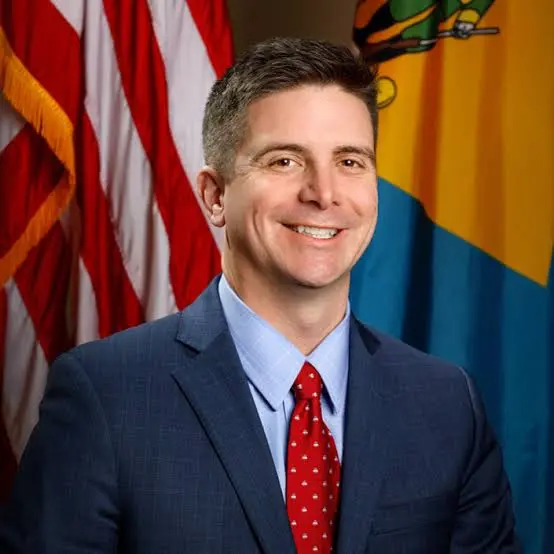

Milford Times sent questions to all candidates running for election in the primary on September 15, 2026. Both candidates received the same questions, and they are reprinted here with the exact answers provided by the candidate.
 Q: Kent and Sussex counties continue to face rising housing costs, while many residents are concerned about preserving the character of existing neighborhoods. What specific policies would you support to increase housing affordability while protecting property rights and maintaining the quality of life in our communities?
A: Housing affordability is a serious issue, but I do not believe the answer is simply increasing density and giving developers greater control over our communities.
That is why I opposed Senate Substitute 2 for Senate Bill 23. The legislation calls for increased housing density and reduces local control over development decisions. It uses the very real need for affordable housing to justify policies that provide significant benefits to developers without guaranteeing that the housing created will actually remain affordable for working families.
I believe we should focus much more directly on helping families achieve sustainable homeownership.
Working alongside nonprofit organizations such as Habitat for Humanity and Milford Housing Development Corporation, we can help families obtain affordable housing while also providing the tools necessary for long-term success. Programs that incorporate financial literacy, homeownership education, and sweat equity do more than help someone get into a house. They help families understand budgeting, credit, maintenance, and the responsibilities that allow them to remain successful homeowners and build generational wealth.
We should also look at innovative approaches being used elsewhere rather than simply having taxpayers provide large direct down-payment subsidies.
For example, shared-risk or loan-guarantee models can allow the state to assume a small portion of the lending risk in partnership with local financial institutions. If the state helped guarantee a limited portion of a qualifying mortgage, such as 5%, local banks could potentially serve responsible borrowers who might otherwise fall just outside traditional underwriting requirements.
That approach can leverage a relatively small amount of public resources to help more families qualify for homeownership without simply injecting thousands of dollars of direct subsidies into each transaction. Direct down-payment subsidies can increase purchasing power without increasing housing supply, potentially placing additional upward pressure on prices, particularly in the lower-cost portion of the housing market.
Our goal should not simply be to build more units or spend more taxpayer money. It should be to create sustainable pathways to homeownership that allow working families to build equity, financial stability, and generational wealth while protecting property rights and maintaining the character of our communities.
Q: Many Delaware families continue to face higher costs for groceries, utilities, insurance, and other everyday expenses. What do you believe is the most important action the General Assembly can take to strengthen Delaware’s economy and reduce the financial burden on working families?
A: The General Assembly needs to begin with a simple question: How do we allow working families to keep more of the money they earn?
I have supported specific legislation to accomplish that.
I authored House Bill 126 to eliminate Delaware state income tax on overtime earnings for full-time hourly workers. When someone works extra hours to support his or her family, I do not believe the state should take an additional share of that sacrifice.
I have also supported legislation to reduce Delaware’s personal income tax rates and legislation to reduce the gross receipts tax imposed on businesses. Gross receipts taxes are particularly harmful to small businesses because they are assessed on revenue rather than profit. A business can owe the tax even when it is barely making money.
I also opposed House Bill 400, which increased numerous fees and taxes imposed on Delaware businesses, including increasing the annual tax on LLCs. At a time when small businesses are struggling with higher labor, insurance, utility, supply, and financing costs, government should not be making it more expensive to operate or create a business.
Delaware cannot control every national economic factor affecting groceries or inflation, but we can control our taxes, fees, regulations, energy policy, and state spending.
My focus is reducing those government-created costs so families and small businesses can keep more of what they earn.
Q: Southern Delaware continues to grow, but many residents still commute long distances for higher-paying jobs. What industries or economic initiatives would you prioritize to create more quality jobs within the district, and what role should state government play in attracting those employers?
A: Before we talk about attracting the next major employer, we need to take care of the employers already here.
Small businesses are the backbone of our local economy. My wife and I have spent more than 15 years building small businesses, so I understand firsthand what increasing taxes, regulations, insurance, utilities, payroll, and government fees mean to an employer.
That is one reason I opposed House Bill 400 and its increases in LLC and incorporation-related fees. We should be making Delaware more attractive for entrepreneurs, not putting another financial obstacle in front of them.
The second major opportunity is healthcare.
I authored House Bill 318 to eliminate Delaware’s Certificate of Public Review system. Under the current system, healthcare providers are required to receive government approval before making major investments, including certain capital expenditures exceeding $5.8 million, increasing bed capacity by more than 10%, and constructing or establishing certain healthcare facilities.
I believe that system restricts competition and makes it harder for healthcare providers to expand into growing communities like ours. Eliminating those barriers can encourage greater investment, more healthcare options for residents, and additional well-paying healthcare jobs in Sussex County.
The third component of economic development is education.
When an employer considers bringing hundreds of quality jobs into an area, executives are also asking where their employees will live and where their children will attend school.
The latest Delaware results show that only 40% of third graders are proficient in English language arts, meaning 60% are not reading proficiently at that critical grade level. Statewide, fewer than half of students in grades three through eight are proficient in reading and math, and only 18% of Delaware 11th graders are proficient in math.
Those numbers are not only an education issue. They are an economic-development issue.
If we want to recruit employers that provide high-paying careers, we need excellent schools, a prepared workforce, a strong healthcare system, and an environment where existing businesses and new employers can succeed.
Q: Population growth has increased demand on roads, schools, emergency services, water, wastewater systems, and public safety. How should Delaware balance continued growth with the infrastructure investments needed to support it, and who should bear the cost of those improvements?
A: My philosophy is straightforward: new growth needs to pay for new growth.
Southern Delaware has experienced extraordinary development, but infrastructure has not kept pace. Roads become congested, schools need additional capacity, volunteer fire companies and EMS providers receive more calls, and water and wastewater systems face additional pressure.
Too often, the development occurs first and taxpayers are handed the bill afterward.
I support meaningful development impact fees that reflect the actual infrastructure demands created by new construction. Those funds should help support roads and transportation infrastructure, schools, first responders, water and wastewater systems, and other community needs directly associated with that growth.
We also need stronger coordination between state transportation planning, school districts, county and municipal governments, first responders, and developers before projects are approved rather than trying to solve these problems after thousands of homes have already been constructed.
People who have lived here for decades, and in some cases generations, should not be asked to pay higher taxes to build the infrastructure necessitated by new development.
Q: Several large data center projects have been proposed across Delaware. Supporters cite economic development and tax revenue, while opponents raise concerns about electricity demand, water usage, environmental impacts, and effects on surrounding communities. Under what circumstances would you support or oppose future data center development?
A: Based on their potential environmental impacts, enormous electricity requirements, and impact on our natural resources, I have serious concerns about large-scale data centers in Delaware and would oppose projects that place those burdens on surrounding communities.
One of my greatest concerns is electricity.
For too long, Delaware has pursued green-energy mandates without ensuring that we have sufficient reliable generation within our state. Delaware already imports a significant amount of its electricity. Adding massive new electricity consumers such as data centers will place even greater pressure on our electrical grid and ultimately contribute to higher costs for residents and businesses.
Our families should not see their electric bills increase so that a massive corporate development can consume extraordinary amounts of power.
I would also closely examine water usage, impacts on wetlands and other natural resources, noise, emergency-service requirements, transmission infrastructure, and the effect on neighboring property owners.
I am not willing to sacrifice Delaware’s natural resources or make electricity more expensive for families simply to claim a data center project.
Q: Agriculture remains one of Delaware’s most important industries, yet productive farmland continues to be converted to residential and commercial development.
A: Farmland preservation needs to remain one of Delaware’s highest priorities, and I believe we need to put substantially more resources behind it.
This is about much more than preserving open space. Agriculture is an industry, an economic engine, and a way of life that has been passed down through generations of Delaware families.
Throughout our district, families such as the Staytons, Webbs, Shockleys, Wilkins’, Wells’, and many others have maintained farms and agricultural land through generations. Our responsibility should be to create an environment where the next generation can afford to continue that heritage rather than feeling that selling the farm for development is their only viable financial option.
I support increasing funding for Delaware’s voluntary farmland-preservation program and expanding incentives that make preservation financially attractive while respecting the property rights of the landowner.
We also need to focus on the next generation of agriculture.
The cost of land, equipment, financing, insurance, and operating expenses makes it extremely difficult for someone who was not born into an existing farm to enter the industry. We should explore programs that help first-time farmers access land, financing, education, and agricultural business opportunities.
Q: Delaware continues to experience the effects of opioid addiction and overdose deaths, placing strain on families, healthcare providers, law enforcement, and social services. What role should state government play in addressing the opioid crisis, and what specific policies would you support to reduce addiction while expanding access to treatment and recovery services?
A: Delaware has significant resources available to address addiction, including $350 million of opioid-settlement funding. My concern is that too much of our policy has focused on managing active addiction rather than helping people reach long-term recovery.
I opposed Senate Bill 249, Delaware’s substance-use “harm-reduction” legislation. Among other provisions, the bill establishes a framework under which harm-reduction programs can distribute supplies associated with drug use, including needles, syringes, cookers, cotton, tourniquets, water, mouthpieces, filters, and straws.
I do not believe our ultimate goal should be making it easier or safer for someone to remain addicted. Our goal should be helping that person become free from addiction.
That means putting substantially more resources into long-term treatment and recovery.
Fifteen days of treatment is not enough for people who have spent years battling addiction. We need longer-term recovery opportunities that address not only the physical addiction but also mental health, employment, family relationships, housing, trauma, and the other underlying issues that often accompany substance abuse.
Organizations such as Adult & Teen Challenge and Love INC understand that recovery requires relationships, accountability, compassion, and time. They work with individuals to address root causes and help them rebuild their lives rather than simply addressing the immediate crisis.
There is absolutely a role for overdose prevention and emergency intervention, but that cannot become the finish line.
The measure of success should not be how many supplies government distributes. It should be how many people we help achieve sustained recovery, rebuild their families, return to work, and regain control of their lives.
Q: Communities throughout Delaware are seeing increased concerns related to homelessness, including access to affordable housing, mental health services, addiction treatment, and public safety. What policies do you believe would most effectively address homelessness while balancing compassion for those in need with the concerns of residents, businesses, and local governments?
A: Homelessness requires empathy, but genuine empathy means helping people out of homelessness rather than simply making it easier for them to remain homeless.
That is why I opposed House Bill 454.
The legislation would permit individuals experiencing homelessness to conduct what it defines as “life-sustaining activities” in public spaces and would limit the ability of state and local governments to address those activities.
I do not believe allowing someone to live indefinitely in a public park, sleep in public spaces, establish encampments, or conduct everyday living activities in places never intended for habitation solves homelessness. In many cases, it does the opposite. It normalizes a situation that should trigger intervention and assistance.
The same principle that guides my approach to addiction applies here, we need to address the root cause.
For one individual, that may be housing affordability. For another, it may be mental illness, addiction, loss of employment, domestic violence, family breakdown, or a combination of circumstances.
Government should work with nonprofits, faith-based organizations, mental-health professionals, addiction-treatment providers, employers, and housing organizations to build individualized pathways toward stability and independence.
That includes emergency shelter when someone is in crisis, but it must also include treatment, employment assistance, financial literacy, recovery programs, and accountability.
Compassion is not telling someone it is acceptable to remain on the street indefinitely. Compassion is walking alongside that person and helping provide the tools and support necessary to take control of his or her life again.
Q: Why Should Voters Choose You to Represent Them?
A: I was born and raised in this community, graduated from Milford High School and the University of Delaware, built local small businesses here with my wife including Fur Baby Pet Resort and the Farmacy Market, served as Mayor of Milford, and have represented our communities in the Delaware House since 2018.
Those experiences shape the way I approach public service.
As a small-business owner, I understand what it means to make payroll, create jobs, balance a budget, and deal with the real-world consequences of taxes, regulations, insurance costs, and government decisions.
As a former mayor, I understand local government and the importance of infrastructure, economic development, public safety, and maintaining the character of the communities we call home.
And as a state representative, I have turned the concerns I hear from residents into legislative action on education, healthcare, government spending, election integrity, public safety, development, and affordability.
But representing this district is about much more than legislation.
When residents have been left with unpaved roads by developers, faced problems with infrastructure in their communities, fought to protect environmentally sensitive areas, or needed someone to stand beside them when dealing with government, I have worked directly with them.
I believe that is the difference between simply talking about public service and having a record of doing it.
I am not asking voters to judge me based on promises about what I might do. I am asking them to look at my record, my experience, my accessibility, and the work I have already done for the people of our communities.
If given the opportunity to continue serving, I will keep doing what I have done from the beginning: listen, show up, fight for the people I represent, and put our communities first.