




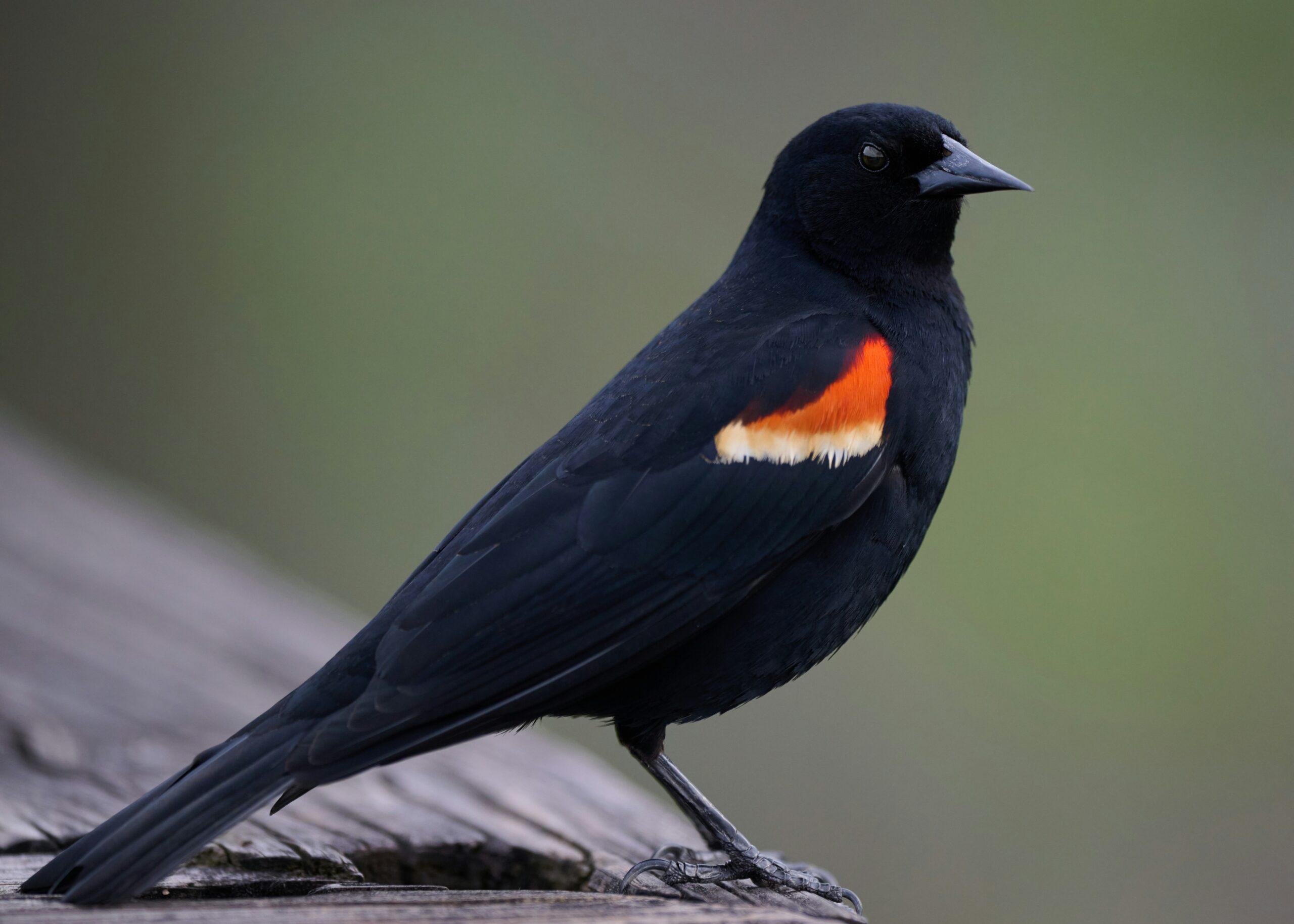

The red-ringed blackbird is a familiar sight and sound around Delaware wetlands, fields and roadside marshes. The fiercely defend their nests, often dive-bombing people, pets or predators that wander too close.
The scientific name for the bird is Agelaius phoeniceus.
Male birds are jet-black with vibrant red and yellow shoulder patches, known as epaulets. When they or their nest is threatened, they flare the epaulets. Females are brown with pale eyebrows and may be mistaken for a large sparrow.
The red-wing blackbird stands at between seven and nine inches tall and can way up to 3 ounces.
Males perch prominently on cattails and shrubs. Their habitat is marshes, fields and roadside ditches.
Their song sounds like “conk-a-ree,” used to declare their nesting territory.
Red-wing blackbirds are polygamous, with one male guarding the next of several females. They lay three to five pale blue eggs in cup grass and reed nests built in wetland regions, often found in marsh vegetation. The nests are usually found between 3 and 15 feet up.
Eggs are incubated by the female for 11 to 13 days and fledging’s leave the nest after 11 to 14 days. Juvenile male red-wing blackbirds are heavily scalloped in brown.
In the summer, their diet consists of insects, but they switch to grains and seeds in the winter. They tend to forage on the ground but do visit backyard feeders.
During migration, the red-wing blackbird gathers in enormous flocks and may do so when roosting in winter. They may number in the thousands. Although grackles can be predators, the red-wing blackbird sometimes flocks with them plus cowbirds and starlings. Fall migration begins between September and November while spring migration begins between February and early April.
In the wild, the birds can live up to four years although there have been cases of the birds living up to 15 years. Predators include snakes, racoons, hawks and grackles.
Next in the series is the common grackle.