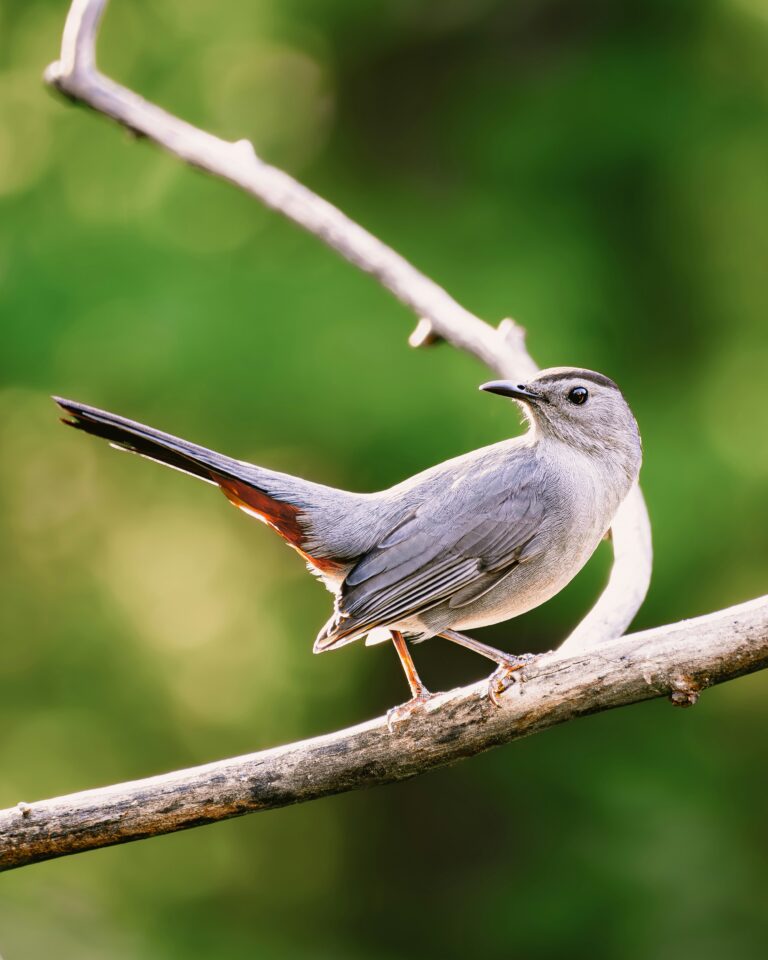





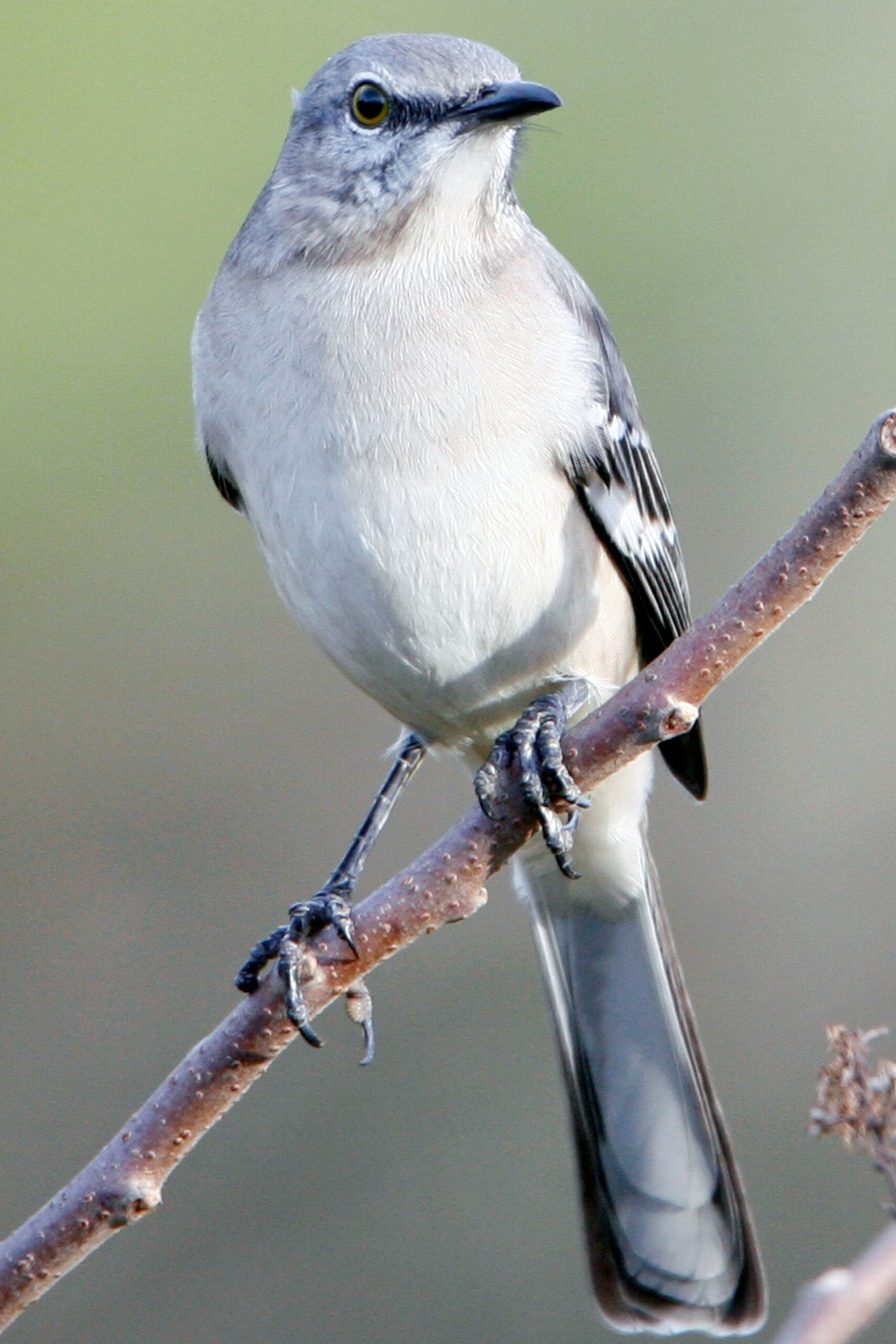

The Northern Mockingbird, scientific name mimus polyglottos, is actually one of the most recognizable birds in backyards. They are very territorial and defend their territory with bravado. They are also able to mimic over 200 sounds in its lifetime, from other birds to alarm clocks and squeaky gates.
The bird is gray and white. When they fly, they are striking, flashing white wing patches with dramatic flair. The plumage is gray above and white below with a large white patch, white outer tail feathers and yellowish eyes. The juvenile has faintly spotted breast and dark eyes.
Northern mockingbirds are between eight and ten inches tall, weighing about 2 ounces. They can live six to eight years in the wild.
They are found year-round in Delaware and can be found in open spaces, lawns, hedges and forest edges. Nests are in a dense shrub or tree, usually three to ten feet up. The nest is a bulky, open cup of twigs, grass and other plant material.
Northern Hummingbirds lay two to six blue-green eggs with spots. The female incubates the eggs for 12 to 13 days and the fledgling leaves the nest at between 12 and 16 days.
As mentioned, the bird can mimic a wide range of noises, often with precision and flair, performing long, showy concerts from rooftops. Males sing day and night, especially during mating season and may continue signing under moonlight.
The birds are fiercely protective, chasing away intruders, including much larger animals. They have also been known to attack their own reflection in windows or mirrors, thinking it is a competitor.
Northern mockingbirds feed on insects, berries and fruits, shifting with the seasons. They will visit suet feeders on occasion. To attract them, plant fruiting trees, shrubs and vines for winter sustenance.
Known to be charismatic, clever and confident, mockingbirds are as much performers as they are survivors in suburban neighborhoods.
Predators include cats, hawks, snakes and jays.
Northern mockingbirds are the state bird of Arkansas, Florida, Mississippi, Tennessee and Texas.
The next in the series will focus on the red-winged blackbird.