






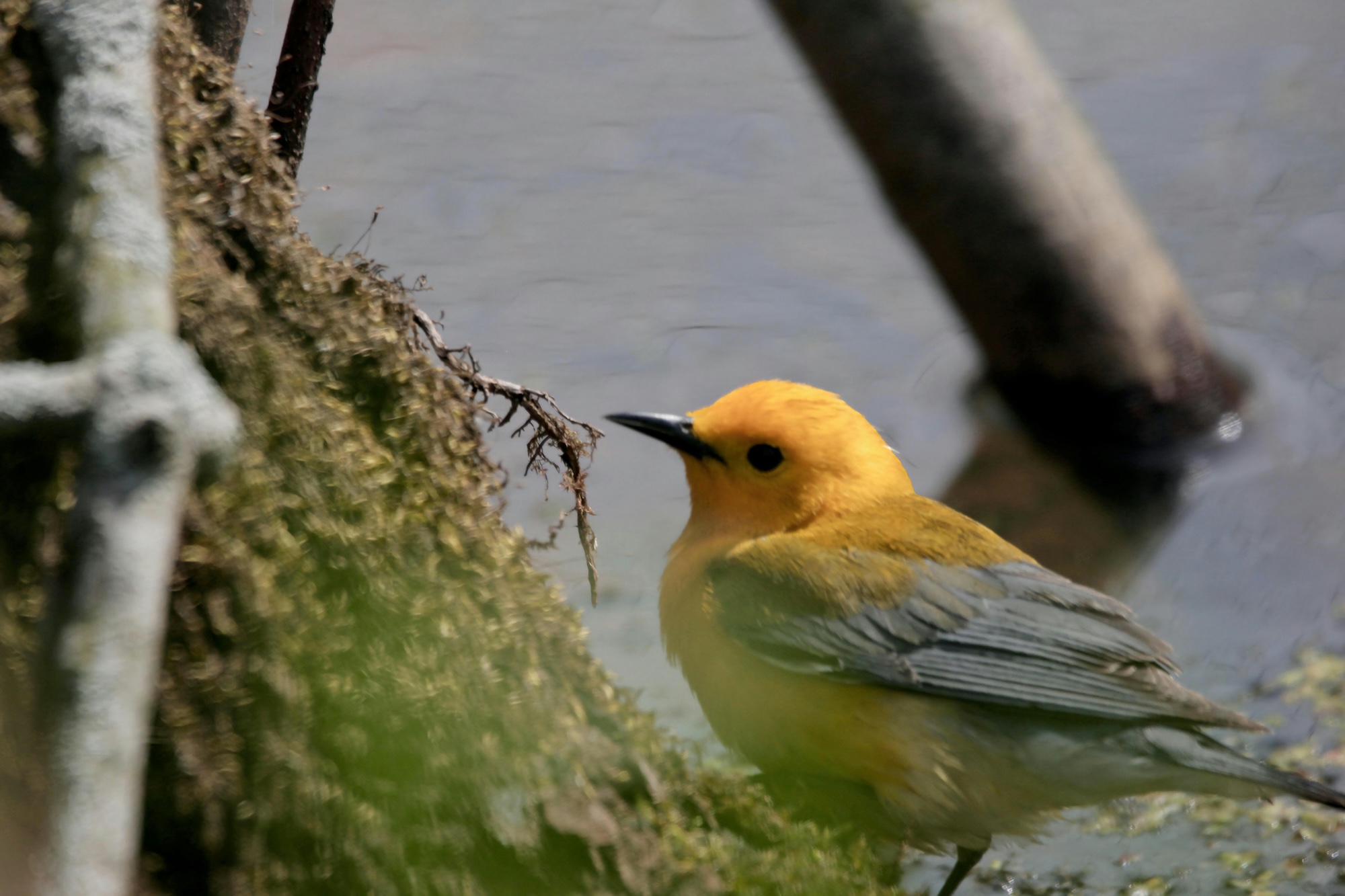
The prothonotary warbler, scientific name protonotaria citrea, stands out in backyards near swampy woods and shaded wetlands. The bird gets its name from the old clerks of the Catholic Church who wore golden robes similar to the bird’s plumage.
Males are deep yellow with blue-gray wings and a clean white belly. Females are slightly duller but still stand out in the leaves.
Prothonotary warblers’ nest in tree cavities which is rare among the warbler species. They often use old woodpecker holes near the water but sometimes use next boxes if the habitat is right.
The colorful birds are just under six inches tall and weigh about a half ounce. They lay four to seven white eggs that are speckled.
The birds forage slowly through low vegetation and overhanging branches, searching for insects and spiders. Their diet consists of insects, snails and spiders.
Their call is a ringing “sweet-sweet-sweet-sweet” and can carry across marshes or rivers in late spring.
Migrating birds, prothonotary warblers travel to Central and South America in winter.
Today, habitat loss poses a threat to the birds, but careful conservation has helped preserve the species in eastern forests. Other predators are snakes, raccoons, starlings and squirrels.
Next is the Kentucky Warbler