



In a case that ended up before the United States Supreme Court, William Fensterer, who was 21 at the time, was eventually acquitted of the murder of his 17-year-old fiancé, Stephanie Ann Swift. Swift was found murdered on September 30, 1981.
The case began when the body of a teenage girl was found in a blue Camaro in the parking lot of Milford Plaza on September 30, 1981. She was identified as Swift who lived in Parson Thorne Apartments at the time. An autopsy revealed that Swift had not been sexually assaulted. Her body was discovered by Joyce Porter, an employee of Leggett Department Store. News reports state that Porter noticed the girl’s “long red hair” and that she was slumped over in the car.
The Camaro belonged to her fiancé, Fensterer, who as an accountant at a fertilizer dealer on Rehoboth Boulevard, The Reeds Inc. Newspaper reports at the time the body was found reported that police had stepped up enforcement of loitering laws at Milford Plaza that summer to stop teenagers from congregating there at night when businesses were closed, but police did not believe Swift’s death was related to that. In fact, they believed she had been killed elsewhere.
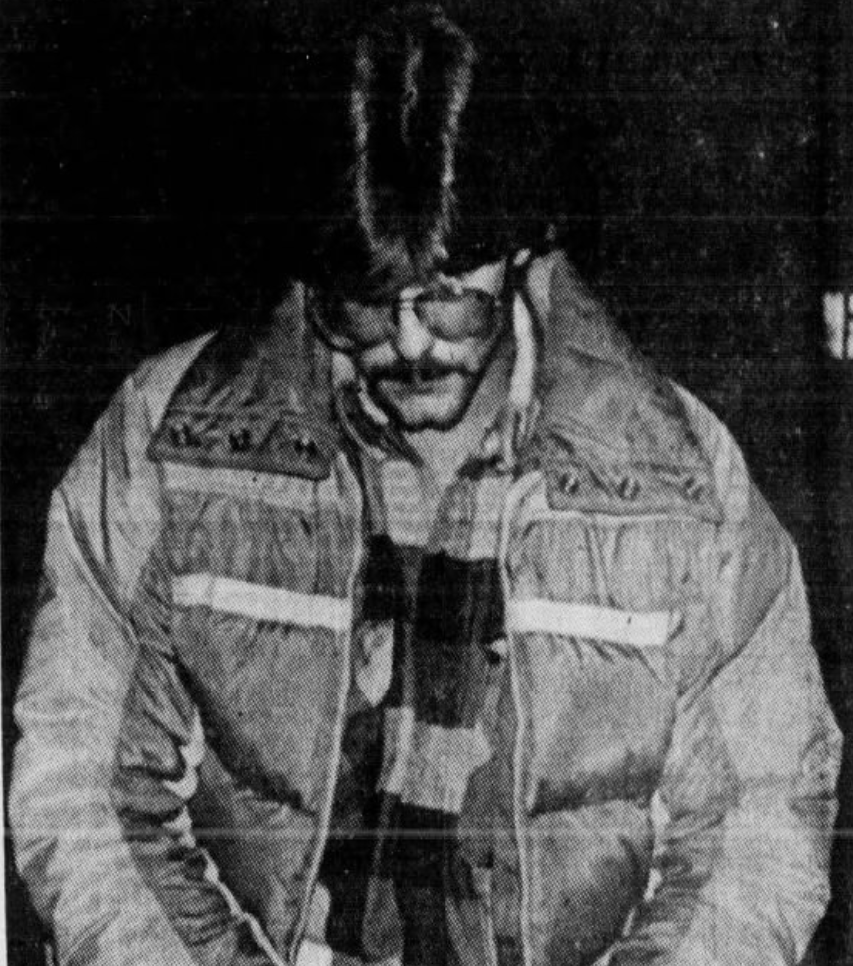
Fensterer was taken from the couple’s apartment in handcuffs the night her body was found but was not initially considered a suspect. Police later stated that he had not been in handcuffs but went willingly with police. On October 2, 1981, police asked for the public’s help in solving the crime. Swift was a senior at Indian River High School. She had recently moved from her parents’ home on Possum Point Road in Millsboro.
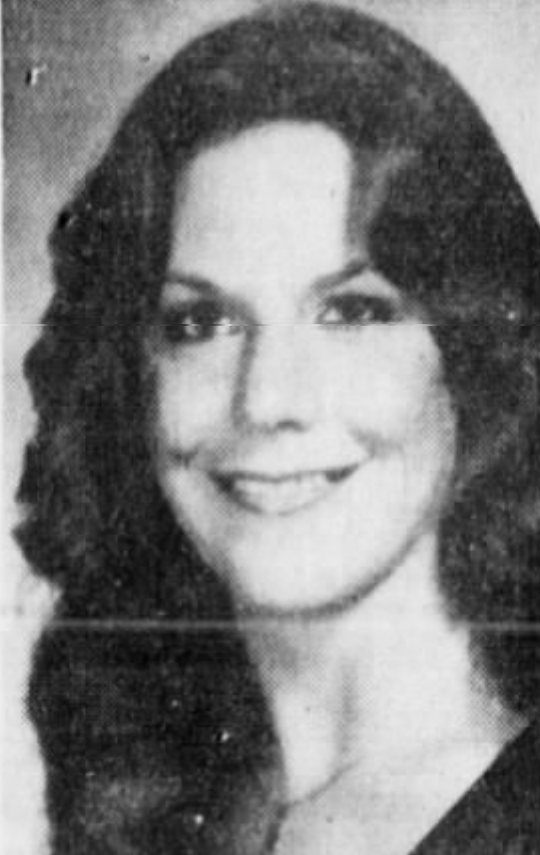
Swift was described as beautiful, intelligent and “very mature” for her age.
“She was full of life, a happy high school senior busy with the activities of her senior year, her engagement and shopping for wedding gowns,” Shirley Swift, her mother, said to reporters. Swift was described as 5’7”, about 135 pounds with dark blonde hair and hazel eyes.
On her calendar, April 10 was circled as that was the day she and Fensterer planned to marry. She and Fensterer had purchased an engagement ring on September 24 and planned to have engagement photos taken on September 28.
When she was discovered, witnesses claimed she was “dressed to the nines,” wearing a brand-new dress and a flower in her hair. Shirley Swift last saw her daughter on the Thursday before she died when she stopped by her parents’ house on the way to school that day.
“She was happy and everything seemed fine,” Mrs. Swift said. “Since she had moved away from home in June, she often stopped by on her way to school in the morning to chat with her me before I went to work.”
According to Mrs. Swift, she and her daughter had been shopping for wedding gowns and planning the wedding.
The murder shocked the entire town of Milford, and many believed Swift was killed by someone who knew her. Although the car belonged to her fiancé, Swift had been driving it while he drove her vehicle. She was seen in the Camaro the day before.
An autopsy, performed by Dr. Judith Tobin, revealed Swift died of strangulation by ligature, but police would not say what they believed was used as a weapon. Fensterer had reported Swift missing the morning of September 29.
Fensterer and Swift had been introduced by mutual friends. At the time, Fensterer lived in Ocean View but moved to Milford when he accepted an accounting job in June. Swift joined him soon after.
On November 2, 1981, Fensterer was arrested and charged with the murder of Swift. He was arrested as he left work that Monday. Police believed Fensterer strangled Swift in their apartment and then moved her body to the Milford Plaza. He was arraigned and ordered held without bail, held at the Sussex Correctional Institution in Georgetown.
After his arrest, police did not release much information about the crime, but acknowledged physical evidence had been removed from the apartment and was undergoing testing at the FBI headquarters in Washington, DC.
At his arraignment, Fensterer gave an address in Fenwick Island, stating he now lived with his parents. He told the judge he had lived in Delaware about three years. News reports stated that he appeared bewildered and wept softly as he awaited the arraignment. When he stood before the judge, he responded clearly.
On Thursday, November 5, Fensterer was ordered held for a grand jury hearing. His attorney requested that the public be barred from the proceeding, but Judge Merrill C. Trader denied the request. Fensterer was released on $100,000 bond, about $371,000 in today’s dollars.
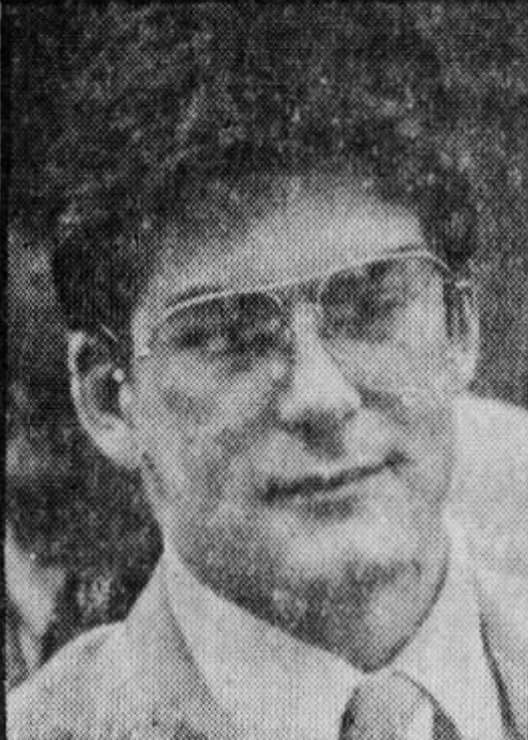
The trial began three years later with jury selection beginning on January 3, 1984. By this time, police had released that they believed Fensterer strangled Swift with a blue pet leash which was entwined with hair and stained with vomit. Fensterer claimed that he had last seen Swift at 1:30 PM when she drove him back to his job after they had lunch together.
Fensterer told police he had arrived home from work to find Swift was not there. He drove to her parents’ home to pick up their pets who the Swift’s had cared for while the couple took a weekend trip. He expressed concern to them regarding his lack of knowledge of Swift’s whereabouts.
The trial was delayed by a few days due to a lack of prospective jurors. On the day the trial was to start, Judge George R. Wright postponed it because the prosecution mistakenly thought the trial was supposed to being on another day. The trial began on Monday, January 10, 1984.
Prosecutors argued that Fensterer killed Swift in a jealous rage as he believed she was still involved with an old boyfriend. Defense attorneys claimed that at the time of her death, the couple was well on the track to get married. They claimed that Fensterer arrived home to find Swift missing and expressed concerns to her parents when he picked up the couple’s dog and cat.
The case hinged on the time of death. The prosecution argued that Swift died between 2 and 10 PM based on her stomach contents during the autopsy. Swift and Fensterer had lunch at Pasqualini’s Restaurant and there were remnants of Italian food in her stomach. Parson Thorne Apartment manager Leslie Sheppherd told police the Camaro and Swift’s Mercury Cougar were parked at the apartment the evening of September 28, although Fensterer claimed that Swift was missing at that time.
There were discrepancies in Sheppherd’s recollection, however. He initially told police he saw the two cars around 7 PM, but Swift’s parents confirmed he was at their home at that time. Sheppherd later changed his time to 7:27 PM. Gail P. Brown, a department store employee in the Milford Plaza, told police she saw the Camaro in the parking lot at 9:15 PM on September 29 while Porter testified she found Swift’s body around 9:10 AM the next day.
Sheppherd acknowledged in court he initially gave the wrong time but claims he was repairing an outside light that evening. He returned to his apartment, and his wife was watching a game show that came on at 7:30 PM, so he revised is time to 7:27 PM.
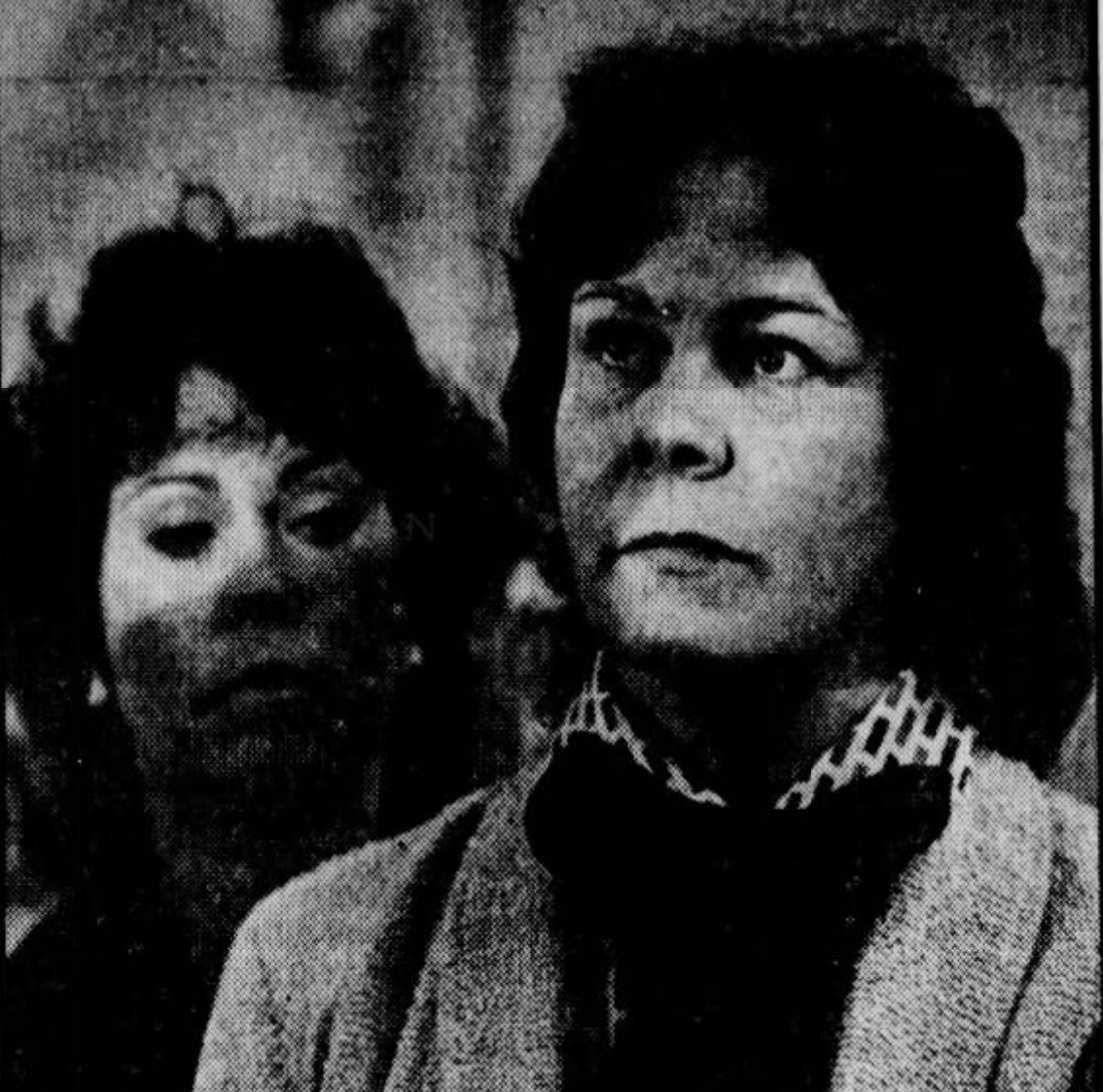
Mrs. Swift also gave conflicting times to the police. She initially told them that Fensterer was still at her house at 6:50 PM but later said that he actually left around 6:40 PM.
In addition to the time of death, a cat leash removed from the home also became pivotal in the case, both during the trial and later. Then Police Chief Richard Carmean testified that after Swift’s body was found, Fensterer attempted to remove the leash from the apartment and Carmean advised him to leave it.
“He straightened it up, looked out the window, and pulled the leash very slowly through his. hand,” Richard M. Huff, Jr., Fensterer’s boss, who was in the apartment at the time, testified. “He was like in shock.”
Agent Allen Robillard of the FBI, whose testimony would be pivotal later, stated that two head hairs identical to Swift’s were found on the leash and that one had been forcibly removed from her head. Testimony also revolved around a reddish-brown stain found on the leash. Another factor that led to questions about the crime was a long black hair that police said “blew away” before they could collect it from Swift’s body.
FBI chemist Roger M. Martz testified that the substance lifted from the stain had the same characteristics as Swift’s stomach contents, but he was unable to say whether the stain was vomit. Police reported that Swift had vomited while being strangled.
Furthering the jealousy motive, Huff testified that Fensterer told him he had doubts about marrying Swift because he was “worried about her.” Huff claimed Fensterer stated he would sometimes come home and find a male in the apartment. He also stated that Fensterer called him the day Swift’s body was found and told him “She’s dead. Come on over.”
When Huff arrived, he found Fensterer leaning against the police chief’s car, crying. He and Fensterer went into the apartment and Fensterer sat on the couch, burying his head in his hands. Huff also testified that Fensterer had called him three times on September 29 telling him Swift had not come home.
Tobin testified that marks on Swift’s upper back were consistent with injuries that could be caused by a metal clamp on the leash. In addition to strangulation, Swift had suffered blunt force blows to the chest and head. Marks on her wrists also indicated she had been held. Based on the stomach contents, Tobin estimated the girl had died between 2 and 10 PM, but that she likely died between 3:30 and 8 PM.
Defense attorneys argued that Swift died during the afternoon when her fiancé was at work while the prosecution argued that Fensterer murdered Swift when he returned home from work or after returning from her parents’ home after picking up the pets. That theory fit with testimony that both vehicles were in the parking lot of the apartment complex at 7:27 PM.
The defense argued that since there were stomach contents that were recognizable, Swift must have died within a few hours of eating lunch, but Tobin pointed out that if Swift were emotionally upset, it could take longer for the stomach to empty. However, she did acknowledge that starchy foods like those eaten by Swift and Fensterer digest faster than other types of food.
Tobin was also asked about her initial report to police that Swift died between 6 and 7 PM. Tobin claimed she did not say that but may have said it could have been around that time although there is no way to pinpoint a timeline like that.
A police detective reported that Fensterer told him he had discovered love letters from an old boyfriend the night she died and had thrown them away. He claimed he was searching for clues about Swift’s whereabouts and discovered the letters. A note found in Fensterer’s dresser written in Swift’s handwriting accused him of lying and hiding things from her.
A witness testified that the Cougar was at the complex around 9:45 AM the day Swift disappeared and that she was leaving the apartment, arguing with a man. The man was not Fensterer as co-workers testified he did not leave the office that morning.
Fensterer testified during the trial, stating that he and Swift had “made love” that morning before he left for work and discussed wedding plans over lunch that day.
“I kissed her goodbye and said I’d see her at 5,” Fensterer said. He then stated that Swift never returned to the apartment. He also claimed he had a very normal jealousy over Swift, but that he was not concerned about her old boyfriend.
The weekend before she died, Swift and Fensterer traveled to Atlantic City with Swift’s grandmother. The grandmother stated that Fensterer was openly worried that Swift was still seeing John King, the old boyfriend. Fensterer refuted that claim, stating that the couple was very happy. A waitress who served the couple at lunch also confirmed they seemed very happy.
Swift was supposed to pick up the couple’s pets from her parents’ home, but she had not done so nor was she at the apartment. Fensterer left an obscenity-laced note for her before driving to get the animals. He states he drank a beer with Swift’s mother before heading back home and arriving at the apartment after 8 PM.
Mrs. Swift claimed he left her home around 6:40 PM which would have placed him back at the apartment just after 7 PM. It also conflicted with Sheppherd’s testimony that both cars were in the parking lot around 7:30 PM.
Fensterer also denied Hull’s account of his actions with the cat leash.
A defense pathologist told the jury that Swift likely died between 3 and 4 PM, refuting Tobin’s testimony about the time of death. Dr. Cyril Wecht, chief pathologist at a hospital in Pittsburgh, said that the large amount of undigested food in Swift’s stomach indicated she died hours earlier than Tobin’s estimate.
Another witness refuted the testimony of Sheppherd. Wallace Shanley, an investigator hired by the Fensterer family, walked to the light that Sheppherd was repairing and found that the parking spaces for the couple’s apartment were not visible.
The case went to the jury on January 31, 1984, consisting of seven women and five men. On Friday, February 3, the jury was still undecided and sent home for the weekend. On Wednesday, February 8, 1984, the jury found Fensterer guilty of second-degree murder.
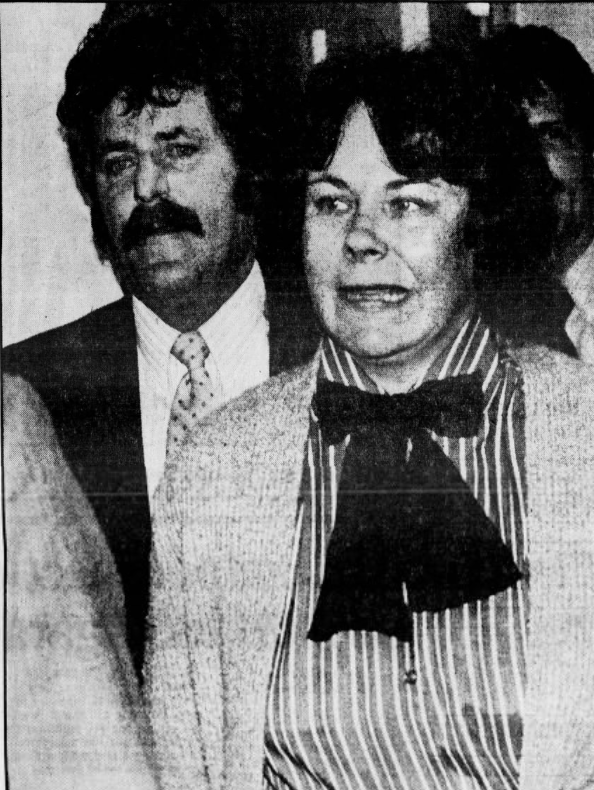
As expected, the Swift family applauded the jury’s decision while the Fensterer family seemed shocked at the verdict. A. news account on Thursday, February 9 reported that Fensterer had been placed in the hospital at the Delaware Correctional Center to prepare him for entry into the general population. According to prison officials, Fensterer was visibly distraught after the verdict.
Attorneys for Fensterer immediately filed a motion for a new trial arguing that two Allen charges given to the jury amounted to coercing jurors to reach a verdict. After a few days of deliberation, Judge Wright told the jury that the minority should re-evaluate the evidence but not to abandon their conscientious feelings, although they should “hammer out a verdict.”
Later that day, Fensterer was sentenced to life in prison with the eligibility of parole after 11½ years. Fensterer was visibly upset after the sentencing. He was transferred to the Sussex Correctional Center after sentencing.
On May 1, 1985, the Delaware Supreme Court overturned Fensterer’s conviction, agreeing with his attorneys that his Sixth Amendment rights were violated. The reversal hinged on the testimony of FBI Agent Robillard violated Fensterer’s constitutional rights. The agent could not remember which of the three methods he used to reach the conclusion that a hair found on the cat leash was forcibly removed. The court felt that this was significant because the testimony of the agent was central to the case. The Delaware Supreme Court reversed the conviction and remanded the case for further proceedings.
In 1986, however, the United States Supreme Court issued a landmark ruling when they overturned the Delaware Supreme Court. They determined the FBI testimony was not unconstitutional as the jury could decide if the witness was credible. In another landmark decision, however, the Delaware Supreme Court once again overturned his conviction, this time because the testimony violated the Delaware Rule of Evidence.
On June 17, 1986, Fensterer was released on $50,000 secured bail to await his second trial. The second trial began January 29, 1987. Many of the same witnesses testified at the trial, although there was no testimony about the hair found on the cat leash. Fensterer again took the stand and denied murdering his fiancé.
On February 6, 1987, a two-man, ten-woman jury acquitted Fensterer of the murder.
“It’s been a long six years,” Fensterer said, who almost appeared to faint on the courthouse stops. The Swifts quietly left the courtroom, refusing comment.
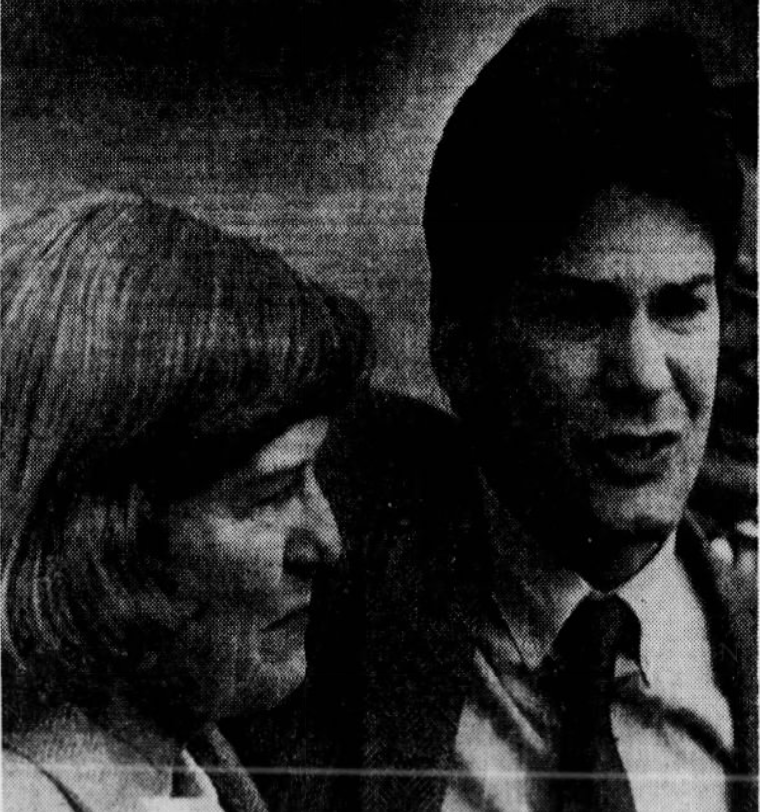
An article published after Fensterer’s first conviction reminded the public that the murder of Stephanie Swift ruined two families.
“They were a young handsome couple perhaps too young for the plans they were making,” Rowan Scarborough wrote in The Morning News on February 29, 1984. “She was tall and blond and liked to wear fashionable clothes. High cheek bones accentuated a sculpted face that would fit a woman of 25. He was short and trip and wore preppy clothes. His hair seemed styled and his manner unassuming.”
The article discussed how Fensterer’s mother, Joyce, planned to write to him every day he was in prison. Swift’s parents had moved out of their Millsboro home a month after their daughter’s murder as Mrs. Swift could not look at her daughter’s vacant bedroom. John, a bricklayer, had thick, rough hands that trembled throughout the trial. Mrs. Swift brought red roses to the courtroom the first day of the trial.
After the trial, news reports state that Fensterer planned to return to Fenwick Island where he lived with his family, get on with his life and get back to work. No information can be found on Fensterer’s whereabouts today. Swift’s father, John, died in 2014 and her mother, Shirley, is listed as surviving him. Swift’s brother, John “Jack” Swift died in 2021.