



On October 30, 1953, Clarence Welch Jr., president of the John H. Mulholland Company, went missing from his home. Relatives of Welch were very concerned and knew something was wrong.
Welch rose from the position of “office boy” to president of the company. His neighbors told police he was a solid citizen. One month before he disappeared, Welch purchased a controlling interest in the Mulholland Company, the nation’s leading manufacturer of wooden ice cream spoons and sticks. The company was then renamed the Welch Manufacturing Company.
Charles Welch, Sr., the father of Welch, feared foul play, telling a reporter with The Morning News that he was afraid his son had been hurt.
“He never would have stayed away unless there is something awfully wrong,” Welch Sr. said. “He has always been such a good family man.”
However, friends of Welch, although they declined to say why, did not believe he was a victim of foul play. On November 16, 1953, police announced they also did not believe he was a victim.
“There is very little that anyone knows about this,” then Mayor Edward Evans said. “It was a complete bombshell. He’s a very good friend of mine. A successful, well-liked individual with a wide circle of friends, and active in civic enterprises. Yes, I’ll buy every bit of that. He was an active Rotarian and a 32nd degree Mason.”
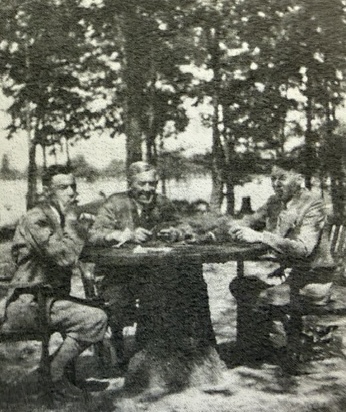
Evans continued, saying he had served on council with Welch for three or four years and felt there was no man more filled with civic pride.
“He has always been a solid citizen,” Evans said. “This has been a great shock to all of his friends. He comes from a fine family. Milford, you know, is a town of 5,200 people, where everyone knows his next-door neighbor and the fellow around the corner, too. And none of us know what to make of it.”
Soon after his disappearance, police learned that the Farmer’s Bank had recalled a loan estimated at $150,000, about $1.8 million today. The funds were used to purchase the company.
Then-Milford Police Chief Samuel G. Powell stated that Welch’s car was missing and had not been located. There had been reports of sightings, but investigations turned up nothing.
“He just vanished,” Powell said. “We have no reason to suspect foul play.”
Welch had a wife, Hilda and two children, Richard, 16 and Martha Lorraine, 10.
“When he left, I had no idea he wasn’t coming back,” Mrs. Welch said. “He didn’t tell me anything or give me any reason to believe there were any business troubles. After all, I’m an officer in the firm myself. He never stayed away like this before. Perhaps he has suffered amnesia or met with foul play.” Mrs. Welch served as Vice-President of the Board.
Welch was born May 13, 1912, and married Hilda Sockrider on August 22, 1934. He was the son of Clarence Sr. and Lillie Redden Welch.
According to friends, Welch graduated from high school but never attended college. Instead, he read and educated himself in business. Described as a big, impressive man, he matured physically after leaving high school. Welch took a job in 1928, working under Harry H. Mulholland, Sr., a former state senator and president pro-tempore of the Senate in 1945, while still in high school.
Welch was valedictorian of his class at Milford High School and went to work full-time for Mulholland, eventually rising to the office of president. The company was founded by John H. Mulholland who invented the wooden ice cream spoon. John was Harry Mullholland Jr.’s grandfather.
Welch was supposed to have been in Detroit on business which is why his disappearance was not known for a few days. His wife saw him off on October 30 and received a telegram from him stating he was in Chicago and would be home the next night. That was the last she heard from him. Police sent his description to 13 eastern states.
Welch was described as six feet, 200 pounds, dark gray hair, heavy build, dark complexion, brown eyes. He was believed to be enroute to New York City driving a 1951 light green Cadillac four-door sedan with the Delaware registration 6509.
On November 20, 1953, The Morning News announced that controlling interest in the Welch Manufacturing Company had been sold to the Farmer’s Bank for $175,000, about $2.2 million today. The proceedings were brief and there was no competitive bid. No representatives of company management were present and Welch was still missing.
At the time of the sale to the Farmer’s Bank, the Milford plant had reduced operations as the cost of gumwood in the area had increased. Much of the operations had been moved to another plant in Indianhead, Maryland.
Three days later, it was reported that Welch had been found in a Bretton Hall Hotel at 86th and Broadway in New York. According to the hotel, Welch checked in on November 18, registered as Carl Winters of Cambridge, Maryland. The prominent businessman had attempted suicide. A maid discovered Welch in the room with a noose around his neck although he was uninjured. The maid also discovered a note asking anyone who found it to notify Major W. Sockrider of 214 Northwest Second Street in Milford. Sockrider was Welch’s brother-in-law.
“Don’t go into the bathroom,” the note read. “Call the police.”
A noose was found around Welch’s neck and the other attached ot an overhead pipe. Papers in the hotel room identified him as Clarence Welch, 49, but listed no address for him. Several other notes were found in the room, but only the one listing the name Sockrider was disclosed by the police.
After a doctor’s examination, Welch was taken to Bellevue Hospital where he was reported in fair condition. His wife and other family members arrived in New York on Saturday, November 21 after police notified the family he had been found.
On December 9, 1953, Welch was released from the hospital and returned to Milford to recuperate. His attorney, Robert Tunnell, told reporters Welch was under the care of a physician but seemed to be recovering. The bank was supervising the operation of the firm.
After his return to Milford, the cause of Welch’s disappearance became obvious. At the Mulholland Company, Welch emerged as a rising star. Starting as an office boy, now known as an administrative assistant, Welch rose to the position of Treasurer and General Manager by 1942. Eventually, he became the Executive Vice-President and, in 1948, was awarded a contract giving him full control of the business.
Welch steered Mulholland into national prominence and he built a strong friendship with company salesman Howard W. Black. Over the years, Black loaned Welch small sums for company purposes. In 1953, Welch’s boss, Harry Jr., began to notice inconsistency in the company accounts. On March 13, 1953, Mulholland, who was in Florida at the time, learned the corporate account at Milford Trust Company was overdrawn. He contacted the company bookkeeper, noted in court records as Donohoe, and found that Welch had improperly withdrawn $35,000, about $335,000 today.
Mulholland called a special meeting of the directors on March 20 and instead of firing Welch, the board placed stricter oversights on Welch’s authority. All corporate checks were required to have the signatures of two officers. Welch was away when the meeting took place, but when he returned, he convinced Mulholland not to send the resolution to the banks as it would hurt his prestige with employees and hinder any possibility of borrowing money to clear up his own personal account.
Instead, Welch suggested that Mulholland take over accounts payable, tender to Welch the ones to be paid with checks that Welch would sign. For some reason, Mulholland agreed, paid the accounts payable and handed the checks to Welch, allowing him to sign them despite the board resolution.
Black was unaware of the new constraints placed on Welch and, when Welch approached Black for a loan of $25,000, about $300,000 today, to purchase stock and clear debts, Black agreed. The loan was secured with a corporate note.
Despite the new controls on the accounts, Welch withdrew $9,500, about $119,885 today, from Mulholland accounts in July 1953. Mulholland discovered the withdrawal and took the resolution to Milford Trust Company, informing them that Mulholland now required two signatures on all checks. Mulholland then called Welch.
“Harry, I know what you want to talk to me about. I’m ashamed to talk to you,” Welch said according to court documents. “I can’t face you now, and I will stay out until I can get the money to buy your stock or quit.” The court felt that this temporarily suspended his duties with Mulholland.
Welch remained absent from Mulholland from August 9 until September 29. Prior to August 13, which was the date his note with Black was due, Welch called Black in Michigan and suggested they meet in Detroit. Black agreed, believing that Welch planned to pay his loan. The two met to discuss the terms of the loan and Welch proposed that Black purchase stock in a new company he was setting up, sealing the agreement with another loan for $8,000, about $100,000 today.
A check was sent in the name of the corporation, but Welch returned it and asked that it be made out to him personally. A new check was sent in Welch’s name only.
Using this agreement with Black, Welch convinced the Farmer’s Bank of Delaware to lend him funds to purchase Mulholland. He then used the bank funds, the embezzled $9,000, and the money borrowed from Black to buy the controlling interest in the company on September 29.
On November 7, Mulholland went to Milford Trust Company to inquire where Welch obtained the $25,000 paid to the corporation in July. He learned of Black’s check to Welch and immediately contacted Black. At this time, Welch was missing and Black did not know where he was. He told Mulholland that he held a note from the corporation for $25,000 and had been promised 200 shares in the Welch Manufacturing Company. Until his conversation with Mulholland, Black was unaware that Welch was not authorized to make such an agreement.
The disappearance occurred soon after the Farmer’s bank, tipped off to internal company thefts by Mulholland, withdrew the loan funds and eventually purchased the company at a sheriff’s sale. The $25,000 owed to Black was never paid.
Black took the company to court to win a judgment for the money, and the case was ruled in his favor. His reputation damaged and his corporate legacy in tatters, Welch decided to take matters into his own hands. In December 1954, Welch incorporated Mulco Products, Inc., starting his own manufacturing company that created wooden spoons.
In 1956, Black petitioned the court for payment of the money Welch still owed him from the court battle. Welch challenged the judgment, filing a petition in the Court of Chancery and, in a surprising decision, the court concluded that Welch had the implied and apparent authority to borrow the money on behalf of the corporation. Welch’s suicide attempt worked in his favor.
“The transaction was never consummated in that Welch became ill,” Judge Terry stated in his decision. “The pledgee of his shares foreclosed its loan, thus divesting Welch completely of any interest whatsoever in the corporation.” Black was never paid the $25,000.
In September 1957, Welch sold his home to his lawyer who placed it in trust. This indicates he was still protecting himself from legal ramifications.
In 1963, Welch left Mulco as plastic spoons were rising in popularity. He and his son, Stephen Richard Welch, founded Mohawk Electrical Systems which manufactures cable harnesses, wiring assemblies, circuitry boards, electromechanical parts for the oil and gas industry.
Welch’s wife, Hilda, died in 1968 and he remarried Virginia, who died in 1982. Richard Welch retired from Mohawk in 2006. His son, Scott, still runs the family business. Richard died in 2018. Martha Lorraine Welch married George I. Clendaniel Jr. the son of George L. Clendaniel, Sr. Clendaniel was a civil engineer with the American Bridge Division of the United States Stell Corp. at the time of their marriage.