





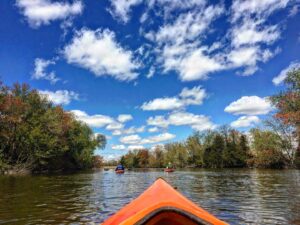
 If you have ever wondered what is growing beneath the surface of Delaware’s rivers, bays, ponds, streams and ditches, Submerged Aquatic Vegetation (SAV) seekers may be exactly what you need. Abbott’s Mill will offer the training on April 22 from 8:30 AM to 12 Noon. SAV Seekers are community scientists helping to monitor the underwater grasses that sustain local waterways.
The training is an introductory course that sets those interested in waterway vegetation on the path to conduct comprehensive, adaptable transect-based monitoring effort across fresh and brackish waters with ongoing support from Program Coordinators.
The training is offered in three parts. This training is part one and includes classroom learning with hands-on learning. Part 2 is in-field training at a monitoring site near where the participant lives. Seekers will be grouped by location for this part of the training. Part 3 is an open-book knowledge test. Once all three parts are completed successfully, SAV Seekers can begin collecting data that will contribute to Delaware’s statewide database.
Classes include instruction on SAV basics, such as what makes SAV special, why it matters and how volunteer monitoring supports restoration efforts. Attendees will also learn how to identify Delaware’s SAV species using identification keys and pressed specimens, learning to recognize key features like leaf shape, arrangement and flowering parts.
Field methods are also part of the training as participants learn how to set up monitoring transects, assess habitat conditions, measure water quality parameters and document SAV coverage. Attendees will also receive training on using Survey 123 and iNaturalist apps as well as paper datasheets to record observations. All training includes outdoor field demonstrations in order to allow them to practice the full monitoring protocol.
Once participants complete Part 1, in-field trainings will be coordinated with groups of volunteers in the area where the participant lives. This ensures they will learn at a site similar to where they will eventually monitor and reduce travel time. After completing field training and passing the examination, participants will be able to contribute valuable data to Delaware’s statewide SAV monitoring program which helps scientists and managers track vital habitats while also guiding restoration efforts.
There is no charge for the training but registration is required.