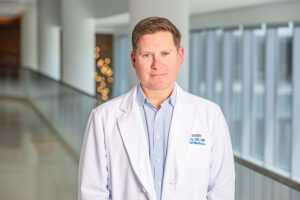






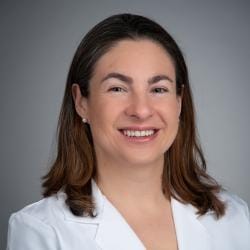
 A pediatric neurologist at Nemours Children’s Health has received a prestigious national award to advance research into one of the most common forms of brain injury affecting newborns.
Dr. Elizabeth Wright-Jin has been awarded a Career Development Award from the American Academy of Neurology to support her research on hypoxic ischemic encephalopathy, or HIE, a condition caused by reduced blood flow or oxygen to a baby’s brain, often during a difficult birth.
The award will provide $450,000 in funding over three years to support Wright-Jin’s ongoing investigation into how a mother’s immune cells may influence a newborn’s recovery following brain injury.
Wright-Jin, a neonatal neurologist and early-stage investigator at Nemours Children’s Health, Delaware Valley, has previously developed mouse models that have helped researchers better understand the mechanisms behind HIE. Her latest research seeks to determine whether maternal immune cells play a protective role in helping an infant’s brain heal after injury.
“We know that the mom’s immune system has been exposed to many pathogens throughout her lifetime. That experience of her immune system allows her cells to react to subsequent ‘threats’ in more sophisticated ways than the newborn immune system, which is still immature,” Wright-Jin said. “We hope that our research will identify mechanisms for treating damaging inflammation after brain injury, to ultimately reduce the extent of harm to brain cells in the newborns.”
Researchers are also investigating how maternal immune cells reach the infant and whether they are transferred through umbilical cord blood or remain within the child in locations such as bone marrow, the spleen, or circulating blood.
A key focus of the project is identifying which maternal immune cells may contribute to recovery and which could potentially worsen inflammation following injury.
Wright-Jin believes understanding these differences could eventually lead to personalized treatments that use a mother’s own immune cells to improve outcomes for newborns affected by brain injuries.
“I suspect that we are going to learn that mom-baby interactions are dynamic and complex, but likely influential to the outcome of HIE,” she said.
Hypoxic ischemic encephalopathy affects an estimated one to three infants per 1,000 births in the United States. The condition can result in lifelong complications, including developmental delays, cerebral palsy, epilepsy, autism spectrum disorders, and, in severe cases, death.
Hypoxic-ischemic encephalopathy (HIE) is a serious type of newborn brain injury that occurs when an infant’s brain does not receive enough oxygen and blood flow before, during, or shortly after birth. The condition can range from mild to severe and may lead to lifelong complications, including developmental delays, cerebral palsy, epilepsy, learning disabilities, and other neurological impairments.
HIE is most often associated with complications during pregnancy or delivery, such as placental abruption, umbilical cord problems, uterine rupture, maternal health emergencies, or prolonged labor that reduces oxygen delivery to the baby. These may include infections involving the fetal membranes, placental abruption, umbilical cord complications, or other medical emergencies that reduce oxygen delivery to the baby.
In Delaware, HIE is one of the leading causes of newborn brain injuries and is most commonly linked to birth asphyxia. Based on national and state estimates, birth asphyxia occurs in approximately two out of every 1,000 live births, making HIE a relatively rare but significant cause of infant disability and mortality. Delaware’s elevated rates of preterm birth and low birth weight further increase the risk of HIE and other neonatal brain injuries among vulnerable newborns.
The Career Development Award is designed to support promising early-career physician-scientists as they establish independent research programs and pursue innovative studies that could lead to advances in patient care.
Nemours officials said the award recognizes Wright-Jin’s growing contributions to neonatal neurology and her efforts to improve outcomes for infants affected by serious neurological conditions.
Nemours Children’s Health is one of the nation’s largest pediatric health systems, operating two freestanding children’s hospitals and more than 70 primary and specialty care practices across multiple states. In addition to clinical care, the organization supports pediatric research, education, advocacy, and community health initiatives through the Nemours Foundation.