







With the school year underway, families are once again facing the daily question: What should children have for lunch?
For some families, the answer is a packed lunch from home. For others, it is the meal offered at school. Either option can provide children with a nutritious midday meal, and healthy lunches do not have to involve complicated recipes, expensive ingredients or hours of preparation.
Parents may be surprised to learn how closely school meals are regulated.
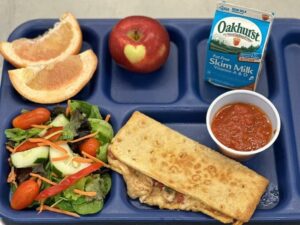
Meals served through the federal National School Lunch Program must meet nutrition standards established by the U.S. Department of Agriculture. Schools are required to offer fruits, vegetables, grains, protein foods and milk, with portion and calorie requirements adjusted for different age groups.
The standards also address the types of foods being served. At least 80 percent of grains offered during the school week must be whole-grain rich. Saturated fat must account for less than 10 percent of calories, and schools must meet limits on sodium. Additional requirements limiting added sugars and further reducing sodium are also being phased in.
Research cited by the Centers for Disease Control and Prevention indicates that students participating in school meal programs consume more whole grains, milk, fruits and vegetables during meals and have better overall diet quality than students who do not participate.
That does not mean children will love everything on the cafeteria tray. However, parents who choose school lunch can know that the meals are designed around established nutritional standards.
For children who prefer bringing lunch from home, a simple formula can make packing easier: include a protein, a fruit or vegetable, a grain or other carbohydrate and, when appropriate, a dairy food.
A turkey and cheese sandwich with grapes and carrots works. So does chicken in a whole-grain wrap with cucumber slices and fruit. Cheese cubes, crackers, sliced turkey and berries can create an easy snack-style lunch without much preparation.
Sometimes presentation makes a difference. A whole apple may return home untouched while apple slices disappear. Grapes, berries, orange sections, melon cubes, baby carrots, cucumber slices and sweet pepper strips are easy to portion into small containers.
Parents do not need to introduce a new vegetable every day. Packing fruits and vegetables children already enjoy increases the likelihood that the food will actually be eaten.
Last night’s dinner can also become tomorrow’s lunch.
Leftover grilled chicken can become a wrap, pasta can become a cold pasta salad, and rice can be paired with chicken and vegetables. An insulated container makes it possible to send warm foods such as soup, pasta or other leftovers.
Repurposing dinner saves time, reduces food waste and can provide more variety than making the same sandwich every morning.
Children may also be more willing to eat lunches they helped select. Rather than asking an open-ended question about what they want, parents can offer choices: strawberries or grapes? Carrots or cucumbers? Turkey or chicken?
Older children can take on even more responsibility by packing part or all of their lunch the night before.
Perhaps most importantly, a nutritious lunch does not have to look like a carefully arranged social media photograph.
A school cafeteria lunch can be a healthy choice. So can a turkey sandwich packed at home. There is also room in a balanced diet for a small treat or a favorite food.
The goal is not perfection. It is providing children with a satisfying meal that offers a variety of nutrients and enough energy to get through the rest of the school day.
Whether lunch comes from the cafeteria line or a lunchbox packed at home, keeping the focus on balance, variety and foods children will actually eat can make the school-lunch decision easier for the entire family.