






 Every student in the Milford School District can eat breakfast and lunch at school for free, regardless of family income.
The district is continuing its free breakfast and lunch program for students during the 2026-27 school year. There is no income qualification for students and no distinction at the cafeteria line between children whose families could afford to purchase meals and those who could not. District employees continue to pay for meals they purchase.
While the program provides an obvious financial benefit to families, universal access to school meals can accomplish something equally important: removing the stigma that can accompany an inability to pay for food.
For decades, federal free and reduced-price meal programs have provided an important safety net for children from lower-income households. However, income-based programs can also unintentionally identify students whose families are experiencing financial hardship.
Universal free meals change that dynamic.
A student whose family is struggling financially can go through the same cafeteria line as every other student. There is no need to worry about whether money is available in a meal account or whether classmates know who qualifies for assistance.
The U.S. Department of Agriculture identifies reduced stigma and the elimination of unpaid meal charges as benefits of providing school meals at no cost to all students.
For children, that distinction can be significant. When every student has access to the same free meal, breakfast is simply breakfast and lunch is simply lunch.
Free school meals can be particularly important for children experiencing food insecurity.
For some students, breakfast and lunch at school may be among the most dependable meals they receive during the day. Access to both meals means that, at least while school is in session, children do not have to depend on their family’s financial circumstances to determine whether they can eat.
Hunger also affects more than physical health. Research cited by the Centers for Disease Control and Prevention has associated participation in school breakfast programs with improved attendance and academic performance.
A child who is hungry may have difficulty concentrating on mathematics, reading or history when the more immediate concern is food.
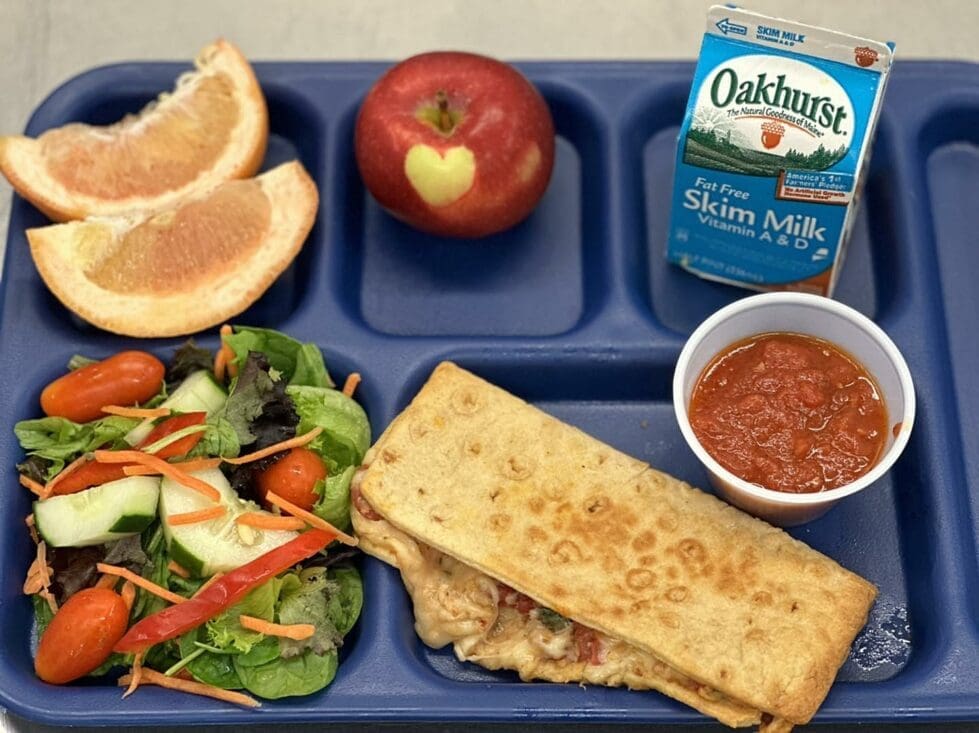
School meals also must meet federal nutrition standards. Meals served through the National School Lunch Program and School Breakfast Program must follow U.S. Department of Agriculture requirements governing fruits, vegetables, grains, protein foods, milk, calories, saturated fat and sodium.
Research cited by the CDC has found that students participating in school meal programs have better overall diet quality during meals and consume more whole grains, milk, fruits and vegetables than students who do not participate. That makes the cafeteria more than a source of free food. It provides students access to meals designed to meet established nutritional standards.
Universal free meals cannot eliminate food insecurity. Families may still struggle to provide food during evenings, weekends, holidays and summer breaks..However, Milford’s program removes breakfast and lunch from that equation during the school day.
It also eliminates the need for families to decide whether they can afford to put money into a student’s meal account and removes the possibility that a child’s financial circumstances will determine whether that student can eat alongside classmates.
Perhaps most importantly, there is no label attached to the student receiving the meal.
A child whose family is experiencing financial hardship receives breakfast and lunch under exactly the same conditions as a child whose family is financially secure. Neither child needs to know anything about the other’s circumstances.
For Milford students, universal free breakfast and lunch therefore provide something beyond nutrition and financial assistance. The program helps ensure that when students enter the cafeteria, they can simply be students.