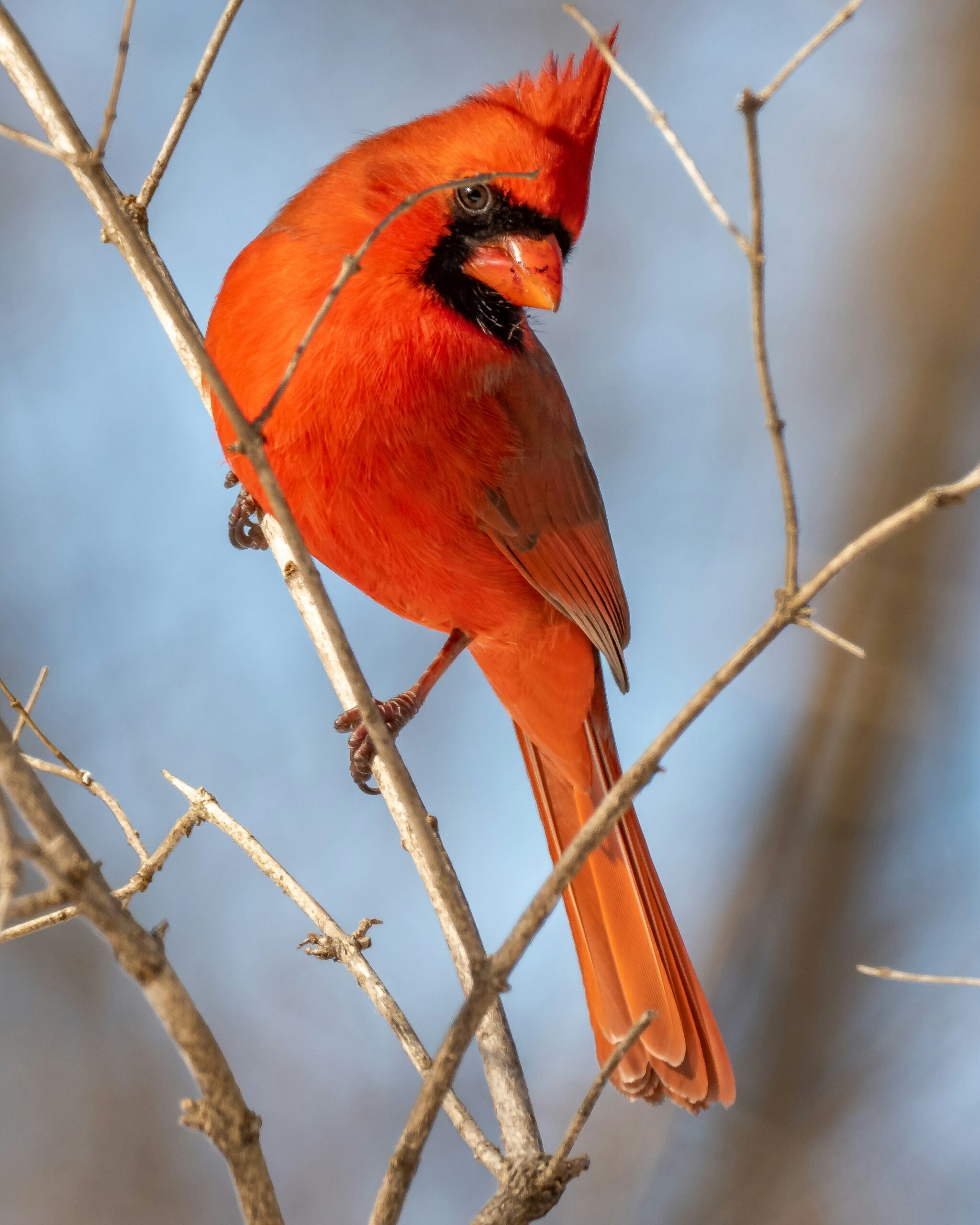


Although it may not seem possible, January and February offer unique opportunities for bird watchers. Although there are fewer birds in the area during the winter, many resident birds remain throughout winter while others come to the area from much colder climates as the winters here are milder.

One favorite backyard bird is the Northern Cardinal with their bright red feathers make them easy to see in the stark landscape of winter. Cardinals are frequent visitors to bird feeders that offer sunflower seeds or safflower.
Black-Capped Chickadees are also common in the winter. These are small, friendly birds that fly energetically through the trees and shrubs. They have a distinctive “chick-a-dee-dee-dee” call and can often be seen at backyard feeders. Chickadees like to spend time with titmice or nuthatches when the cold weather hits.

A bird found here in winter with an adorable name, the Tufted Titmouse, is elegant, curious and found at many feeders during cold weather. They are gray with a crest and move quickly through branches. The Tufted Titmouse prefers sunflower seeds or suet in feeders.

If you notice a bird hanging upside down to a tree trunk looking for insects or seeds, it is likely a White-Breasted Nuthatch. They have a compact body and move in a downward motion. This unusual behavior makes them easy to see.

The European Starling and House Sparrow are also abundant in this area in the winter. Starlings are

glossy black while sparrows are brown and numerous in winter.
If you live near open fields, you may see owls and raptors. Red-tailed or rough-legged hawks are common in the winter as they head south. If the fields are surrounded by woods, you may also spot a horned owl.

The best way to attract birds in winter is to set up feeders with high-energy foods like peanuts, suet and sunflower seeds. Because natural food is scarce in winter, feeders attract attention. Place feeders away from buildings and near trees or shrubs if possible to give the birds protection from predators.

If you want to view waterfowl, ponds and rivers throughout the area can provide glimpses of canvasback, goldeneye, scaup, mallards, geese and other common waterfowl. Bring binoculars and go early in the morning. Dress warmly and invest in a field guide to help identify the birds. Move quietly and slowly. It is also a good idea to bring a notebook to track the birds you see as nature groups like to know what types of birds are in the area.
Winter here can be cold but it is still rich in birdlife if you know where to look. By adding feeders stocked with high-energy foods or taking a short walk to a body of water, you can find many bird species, whether you are a beginner or expert.