






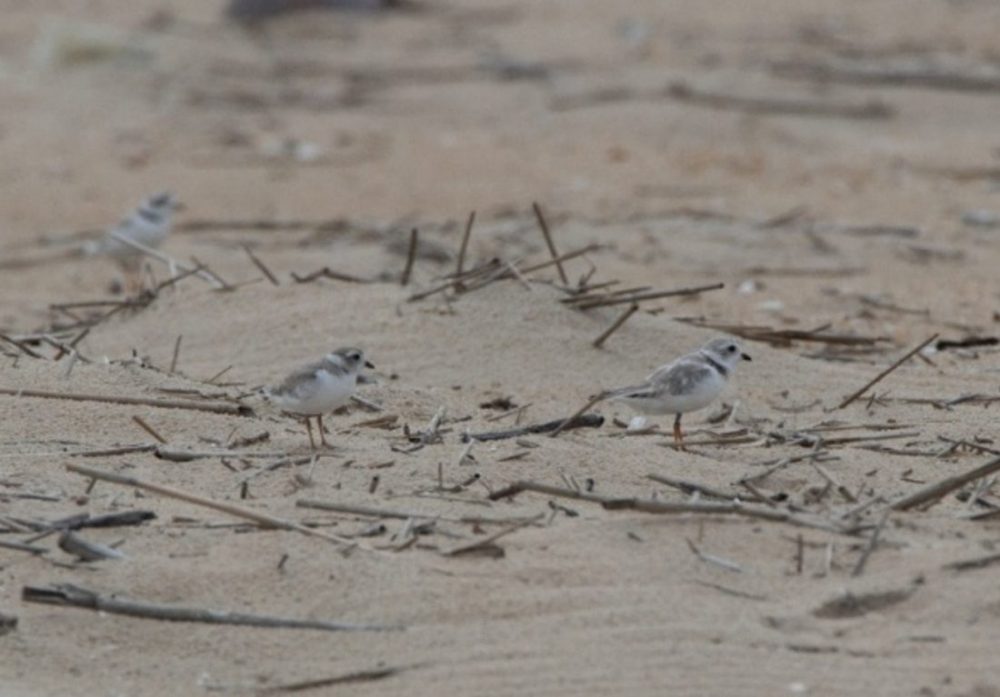
Ten pairs of piping plovers were recorded nesting at The Point at Cape Henlopen State Park according to DNREC officials. Piping plovers are federally listed threatened and state-listed endangered species. Although the birds experienced nesting success in 2026, there has been a decrease in adult pairs.
The ten nesting plovers were a record high since intensive monitoring began in 1989. There were 15 pair recorded at Fowler Beach on Prime Hook National Wildlife Refuge, for a total of 25 nesting pairs statewide. This is down from 30 pairs in 2025.
Piping plovers face many challenges in their breeding territories, including red fox, coyotes, ghost crabs and other predators. Weather conditions can also create challenges for the birds as there were severe storms, prolonged heat waves and drought which contributed to chick and nest loss.
The protection of piping plovers is a partnership between DNREC’s Division of Fish and Wildlife as well as the Division of Parks and Recreation, the U.S. Fish and Wildlife Service and the US Department of Agriculture’s Wildlife Services.
Another endangered species, the least tern, experienced notable increases in breeding and population in 2026. Delaware has colonies of least turns located at The Point in Cape Henlopen State Park and Fowler Beach at Prime Hook National Wildlife Refuge. In 2026, new predator fencing at both sites protected nesting areas. This increased adult pairs from 127 to 208, numbers that had not been seen in the state since the 1990s.
The fencing increased nest success with 138 fledges in 2026 compared to 45 in 2025. The increase in least terns attracted a pair of common terns in Cape Henlopen State Park, the first nest of its kind since the 1990s. The goal is to continue attracting common terns and black skimmers to the park.
Seven pairs of American oystercatchers were also identified at Cape Henlopen State Park, Delaware Seashore State Park and Prime Hook National Wildlife Refuge. The birds were able to hatch five chicks from three nests and, for the first time since 2019, DNREC were able to observe the fledging of an oystercatcher chick from a mainland beach. Predation plays a large role in the lack of productivity of beach nesting oystercatchers with pairs in the Inland Bays producing more than pairs on mainland beaches.
For more information on the 2026 season and the ongoing beach-nesting bird projects, visit DNREC’s Beach-Nesting Bird webpage.
.