



Shorter days mean more deer are on the side of the road and DNREC is reminding drivers to take precautions to avoid accidents. When clocks turn back on November 1, more drivers will be on the road when it is dark, making it even more important to be aware of possible deer on roadways.
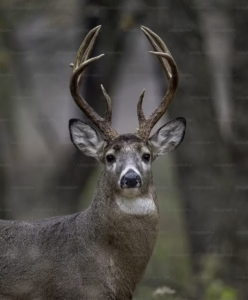
“Starting in early October, we remind Delaware drivers to take extra precautions with rut activity approaching. Bucks chasing does will soon begin repeatedly across Delaware roadways, unaware of the danger they pose to themselves and motorists,” DNREC Division of Fish and Wildlife biologist Sam Millman, said. “Bucks will start expanding their home ranges as the rut nears, especially when traveling on dark backroads and roadways lined by woodlands and forests, where white-tailed deer are more likely to cross.”
Deer rut, or the mating season, generally runs from mid- to late-October through late November and into December. Adopting safer driving habits now can help motorists prepare for the weeks when deer activity surges.
The average white-tailed deer weighs about 140 pounds while larger bucks can weigh over 200 pounds. A deer-vehicle collision is equivalent to hitting a small top-load washing machine in the case of a smaller animal or a mid-sized refrigerator if the deer is larger. Colliding with a n animal that size can result in severe injury to those in the vehicle while other vehicles may become collateral damage. The vehicle itself can be totaled or need major repairs.
The Office of Highway Safety (OHS) states that most deer collisions in Delaware occur between 5 AM and 7 AM as well as between 5 PM and midnight. From 2021 to 2025, Delaware recorded over 8,000 deer-related crashes, resulting in 312 injuries, 20 of them serious. Statistics also indicate that deer-related crashes occur more often in October, November and December, representing 47 percent of all deer incidents from 2021 to 2025.
“OHS is reminding drivers to remain alert for deer, particularly during dawn and dusk when deer are more active,” Director of the Delaware Office of Highway Safety Sharon Bryson said. “With the end of daylight-saving time bringing changes to morning and evening commutes, we urge drivers to take precautions against sun glare. Motorists should slow down when direct sunlight obstructs their vision, increase following distance to allow for additional reaction time and wear polarized sunglasses to help reduce glare.”
Motorists should scan open fields and the edge of wooded area for deer who may be heading toward the roadway. Keep in mind that seeing one deer likely means others are nearby, especially during rut season. Never trust that a deer will remain on one side of the road because a vehicle is approaching. Slow down or pull over and stop to allow the deer to either cross the road or retreat. Move forward slowly until you are sure there are no additional animals approaching.
“Deer mating season is here and with it comes an increased risk of deer collisions across Delaware,” Lieutenant Tyler Wright, Director of Public Information for the Delaware State Police, said. “Slow down, stay focused and be prepared for the unexpected, especially during dawn and dusk when deer are most active. If you are involved in a collision, pull over to the side of the road if you can, then call 9-1-1. A trooper or local officer will respond and take a report. Do not touch the animal or get too close as an injured deer may bite or kick, causing serious injury.”
Other safety reminders from OHS include to always wear a seatbelt and slow down at night, on curves and in bad weather. Use high beams when there is no oncoming traffic to spot deer eyes along the roadside. Watch for “deer crossing” signs and slow down in those areas. If you spot a deer, one tip is to slow down and honk your horn with one long blast to frighten them away. Do not depend on deer whistles, deer fences and reflectors to deter deer. Never swerve to miss a deer but brake and stay in your lane. Swerving increases the risk of hitting an oncoming vehicle, pole or tree.
For more information on safe driving, visit the Arrive Alive website.