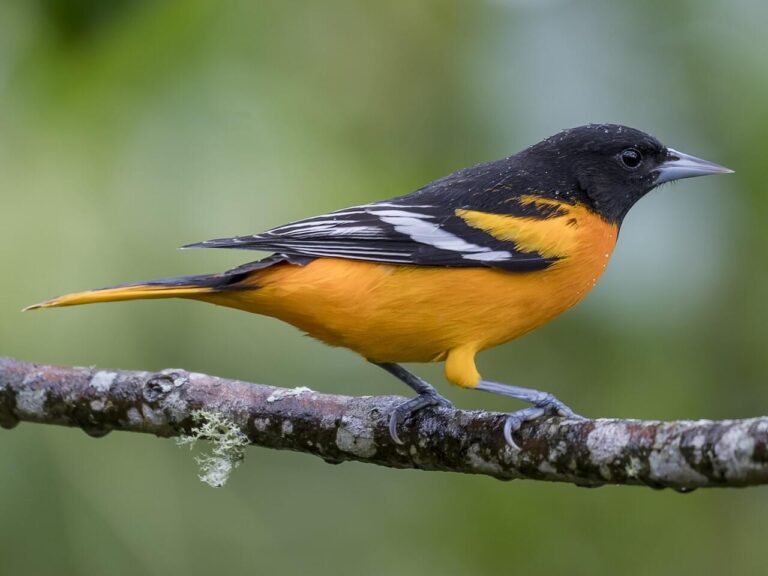






A more subdued, smaller cousin to the Baltimore oriole, the orchard oriole, scientific name icterus spurius, is one of the earliest migrating birds in the area. Many leave their northern breeding grounds by mid-to-late summer.
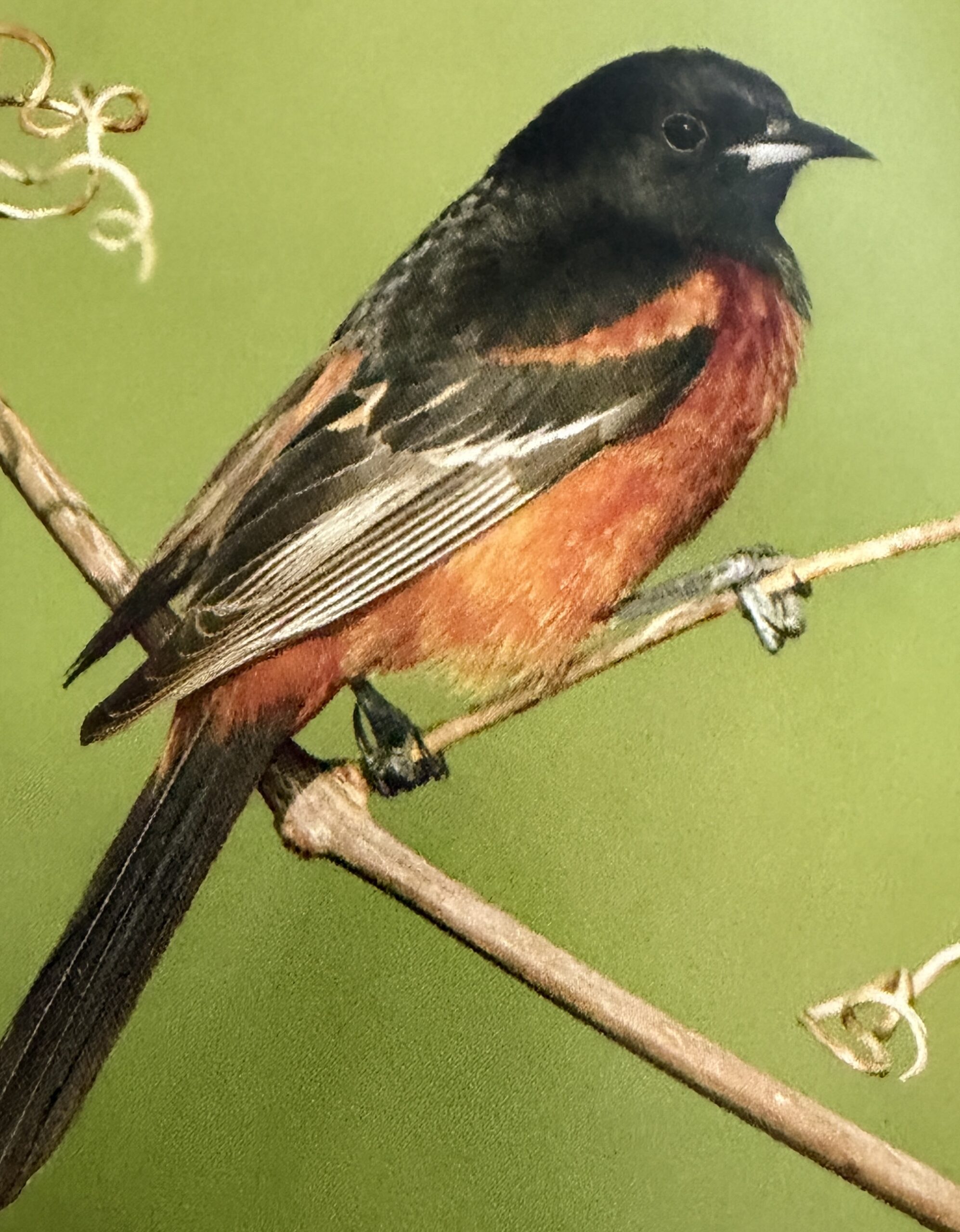
The males in this type of oriole have a unique chestnut-red breast and belly. In addition, they have a black hood and upperparts. The females are a bright yellow green with subtle wing bars. Juvenile orchard orioles resemble females until they are grown. They have relatively short tails and a thin, picklike downcurved bill with a bluish base.
The orchard oriole can be found in open woodlands, orchards, farms and riverside groves.
They can be recognized by their acrobatics, hopping through foliage to grab caterpillars, beetles and flower nectar.
Orchard orioles feed on insects, fruit and nectar. All ages shift to an all fruit-based diet just before they migrate. They often forage lower than Baltimore orioles. Orchard orioles are known to flick their tail sideways and are loosely territorial. They do sometimes visit hummingbird feeders.
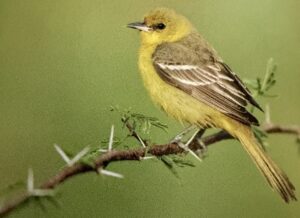
Their lifespan is about four to six years in the wild. They grow to about 7 inches and weigh around an ounce.
Their nests are deep, woven pouch nests suspended from branch tips. The elegant structures often sway in the breeze.
Orchard orioles lay between four and six eggs which are pale with dark markings. The eggs are incubated by the female for 12 to 14 days. The fledglings leave the nest at between 11 and 14 days.
Less flashy in color than their Baltimore cousins, the orchard oriole has a melodic song and are helpful in controlling insects. Their song sounds like a short series of musical whistles with raspy notes. They can also sing a blackbird like “chuck” and have been known for rapid chattering.
Predators are jays, snakes, squirrels and raccoons.
Next is the prothonotary warbler.