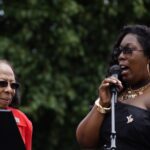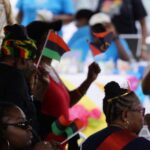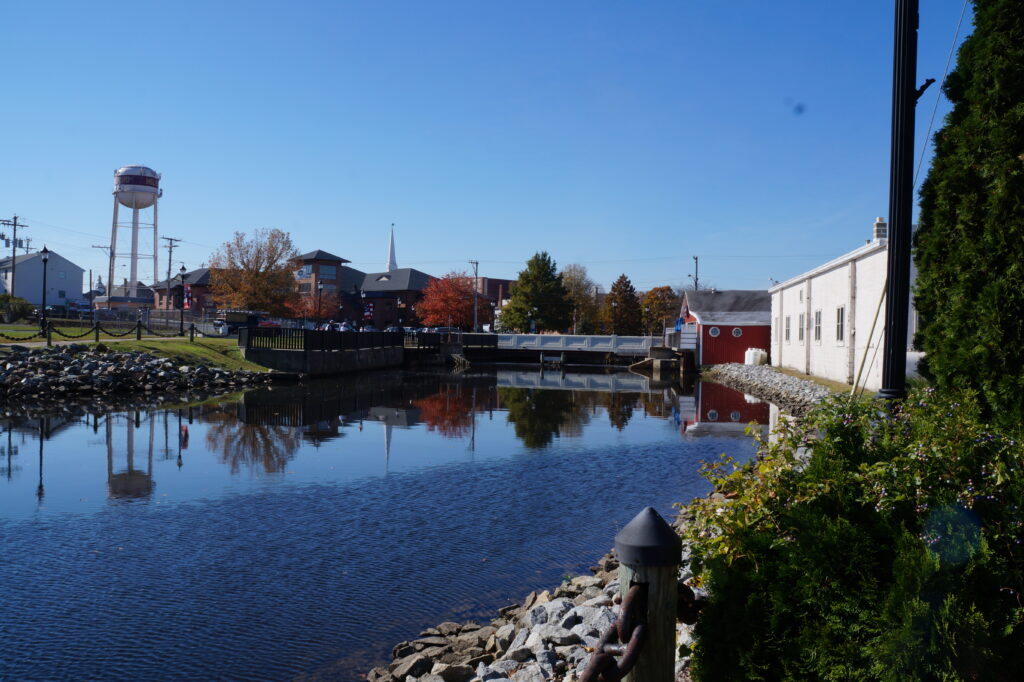






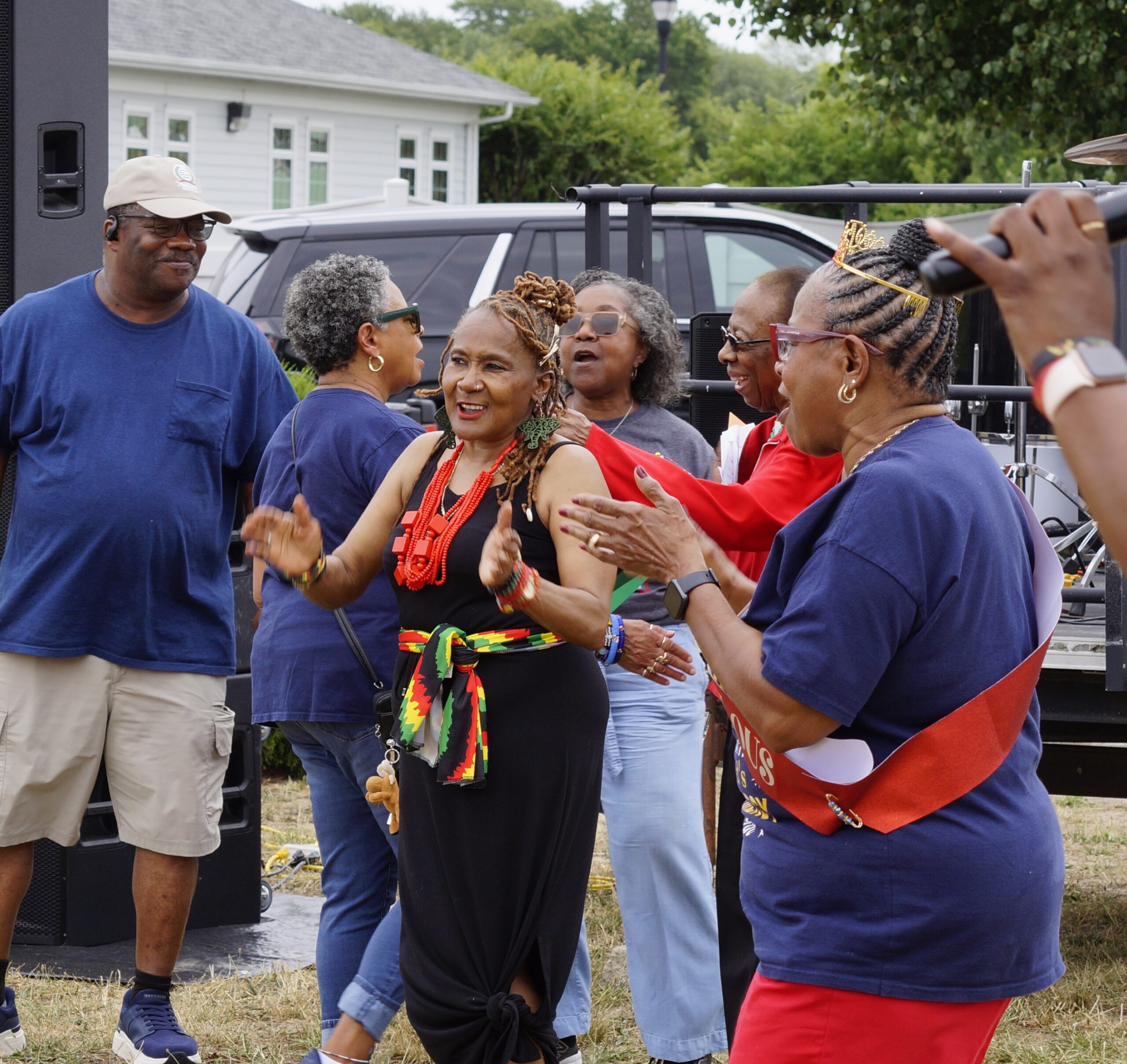

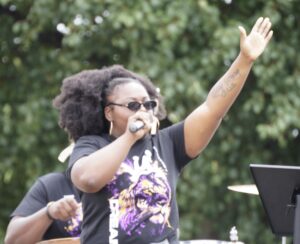
 The City of Milford celebrated Juneteenth on Friday, June 19 in Bicentennial Park with music, vendors, food trucks and more. Dr. Reba Hollingsworth, who will turn 100 years old in October, provided the crowd with details on what Juneteenth meant.
“It became a national holiday on Thursday, June 17, 2021, when President Joseph Biden, who is the only president to reside in Delaware, signed the proclamation,” Hollingsworth said. “Later, Governor John Carney signed Bouse Bill 119 on October 10, 1921, making it a state holiday. Juneteenth is actually one of the oldest known celebrations recognizing the end of slavery in the United States.”
Hollingsworth continued, pointing out that although the Emancipation Proclamation was issued on January 1, 1863, it did not immediately free all enslaved people.
 “Texas was seen as a safe haven for slavery well after the proclamation and it was not until June 19, 1865, that several Union regiments of the United States Colored Troops, led by Major General Gordon Granger, with a proclamation from the Executive of the United States, all slaves are free,” Hollingsworth said. “This evolves into absolute equality of personal rights and rights of property between former masters and slaves, and the connection, therefore, existing between them becomes that of employer and hired help. The enslaved were advised to remain quietly in their present home and work for wages. They were informed that they would not be allowed to select military posts, and they will not be provided land, either there or elsewhere. The enslaved people were oblivious to the fact that they had been granted freedom by President Abraham Lincoln two years earlier. The white slave owners of Texas had been informed that all slaves were freed by the proclamation, but they did not tell their slaves.”
The first Juneteenth celebration, led by Elias Dibble and Sandy Parker, was held on June 19, 1866 in Houston, Texas. Several thousand black Texans marched with U.S. flags along with blue and white banners to a grove in Houston’s second ward for speeches, music and a celebratory meal. Although the celebration was to recognize the day all slaves were proclaimed free in the United States, Hollingsworth stated that it may have been premature.
 “When Abraham Lincoln crafted the Emancipation Proclamation, it was because he hated the monstrous practice of slavery,” Hollingsworth said. “He believed that a house divided against itself could not stand. He thought slavery was an abomination, a hideous plague defiling the nation’s soul founded in selfishness and need. There is some evidence that suggest Mr. Lincoln’s proclamation was a tactical move designed not to free more then three million slaves in the United States, but to keep as many slaves as possible in slavery until he could gain support for his real plan. He wanted to free negroes gradually as he shipped them out of the country.”
Eventually, Lincoln developed a plan that would compensate slave owners in the United States. Since Delaware was the smallest of the slaveholding states, he decided to submit the proposition to the state. The federal government would pay Delaware the sum of $900,000, about $18 million today, paid over ten years, that Delaware would use to compensate any slaveowner who freed their slaves. Lincoln felt this would lead to a gradual emancipation of slaves from year to year.
“The proposition passed the Senate, but it did not pass the House,” Hollingsworth said. “President Lincoln and the Republican party were unpopular in Delaware. They were called “n—– lovers.” Lincoln, because of his dark skin, was charged with being confused by his own racial identity. He, like all humans, had Negro blood in his DNA.”
 Lincoln knew that failing to issue the Emancipation Proclamation could mean the end of the union. He played politics with southern slaveowners and made deals to prevent them from freeing the slaves in areas which depended on slavery, so the Emancipation Proclamation was actually a way to keep slavery alive in the south, Hollingsworth said.
“In his own words, Abraham Lincoln said the Emancipation Proclamation did not end slavery, in and of itself and that it would not make anyone free beyond the reach of our military,” Hollingsworth said. “This document made slavery legal and illegal at the same time. As you read the Emancipation Proclamation, you will note that it is not a real Emancipation Proclamation as it did not free all slaves.”
Hollingsworth stated that the document did not free slaves in the border states that had just joined the union nor did it apply to states under union control. Slavery in some states, including Delaware, was not abolished by the proclamation until the 13th amendment was ratified on December 18, 1865. Slavery was not abolished in Delaware until 1901, the third to the last to ratify the amendment. Kentucky did not ratify the amendment until 1976 and Mississippi not until 1995.
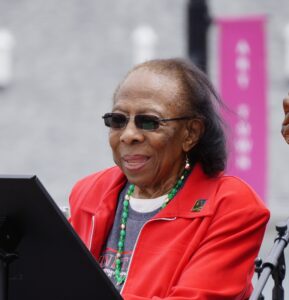 “Juneteenth is a holiday that inspires celebration born from so much tragedy,” Hollingsworth said. “It is a day when we need to remember what this country has done to black people, and it is a day to celebrate what all black Americans have overcome. Juneteenth is an American thing; it is not a black thing.”
Hollingsworth stated that Juneteenth is designed to represent new beginnings for African Americans and that it was important that the past not be forgotten.
“Freedom is what we have, we stand as free people and not let ourselves become slaves again,” Hollingsworth said. “As for you, my brothers and sisters, you were called to be free, so make sure you have love for your fellow man and serve one another in freedom. The struggle continues and will not end until every citizen is true and free. Love your neighbor as you love yourself.”