



 As part of the update to the Comprehensive Plan, Milford Planning Commission discussed the Economic Development section of the plan at a recent meeting. City Planner Rob Pierce explained that Kent Economic Partnership had worked with them to create a draft for the updated plan.
“One of the nice things that we came across was in updating the employment and unemployment data from ten years ago,” William DeCorsi, a consultant with the city, said. “Actually, pretty much all the data was doom and gloom early on when we looked at community profiles, but when you look at the hard numbers, it is not as bad.”
According to statistics, Milford has seen not only a growth in population, but a growth of more than 600 jobs.
“I know how you are accustomed to people saying how they’re going to build this or build that and it is going to bring jobs, and you wonder whether that’s true,” DeCoursi said. “Well, it seems it is because there are more jobs than there were.”
Milford also makes up a significant portion of the economy in both Kent and Sussex County. According to a chart provided to the commission, Milford has a 5.1 percent unemployment rate, compared to Kent County with 5.8 percent and Sussex with 5.3 percent. The rate is lower than the state which has a 5.11 percent unemployment rate. Milfordians also have a shorter commute than those who live in other areas of the county.
Over 34 percent of Milford’s workforce is in management, business, science or art while just over 14 percent were in service occupations. Sales and office occupations made up over 23 percent of the workforce while natural resources, construction and maintenance make up about 9 percent. Production, transportation and material moving materials made up 17 percent of the industries.
“Not only has there been growth, but there is capacity for growth,” DeCouri said. “This is one fo the areas that calls out for discussion. We’ve calculated the percentage of vacant lands across all of your zoning districts, and you have 40 percent vacant for a business park. Space for healthcare is getting tight, but in light industrial, you are only halfway there.”
Commission Chairperson Ian Wright asked if the goal was to have zero lands available across the board and Pierce stated that was the goal. Commissioner Shelby DiCostanzo asked if they wanted all of the non-residential land developed.
“All of this available land is already within city limits, so we’ve already given it a zoning designation,” Pierce said. “I’m not saying we want to develop more, but it is available for development, if we are looking to grow from an economic development standpoint.”
Pierce explained that Lauren Swain, Economic Development and Community Engagement Coordinator worked closely with the business community as well as those who are looking at Milford as a place to expand. DiCostanzo asked Swain if she could get Milford a Costco.
“If one is willing to come to Milford, I would definitely help them,” Swain replied.”
Commissioner Jim Purcell stated that he would like to see more integration between residential and commercial locations that were walkable to employers.
“Something in the objective that would encourage large employment near high-density residential that is walkable or has bus service,” Purcell said. “I would like to try to limit our cars on the street. I wo uld also encourage that we incorp0orate the downtown development district, but also the term of opportunity zone since South Milford has been designated an opportunity zone that includes the downtown Milford area, but also all of the municipal area and the unincorporated area stretching from the river down to approximately Lincoln. All that area is going to be prime for development and private investment.”
Swain stated that when they were drafting the section, that objective was definitely considered. Pierce explained that the main point of updating the section was to have guidelines related to economic development.
“I don’t know that I am really clear on what that is,” DiCostanzo said. “Is it entirely pro-growth? Because if I take my commissioner hat off and put on my community member hat, ‘m like, do we really need industrial? I am not a planner. I don’t know any of that. But I think what I struggle with while we are doing these workshops is understanding is the comprehensive plan always pro-growth, pro-growth, pro-growth? More people living here. More businesses coming here because I understand the tax footprint gets bigger when these lands are developed.”
DeCorsi stated that the comprehensive plan was not necessarily pro-growth as some are preservation minded.
“It is just that for the last 20 years, Milford has been more on the growth side,” DeCorsi said. “Once you set the course and have zoned someone’s property as R2, just so we’re not being controversial, it’s hard to take that away because the person paid money for it and they’re going to want to build on it.”
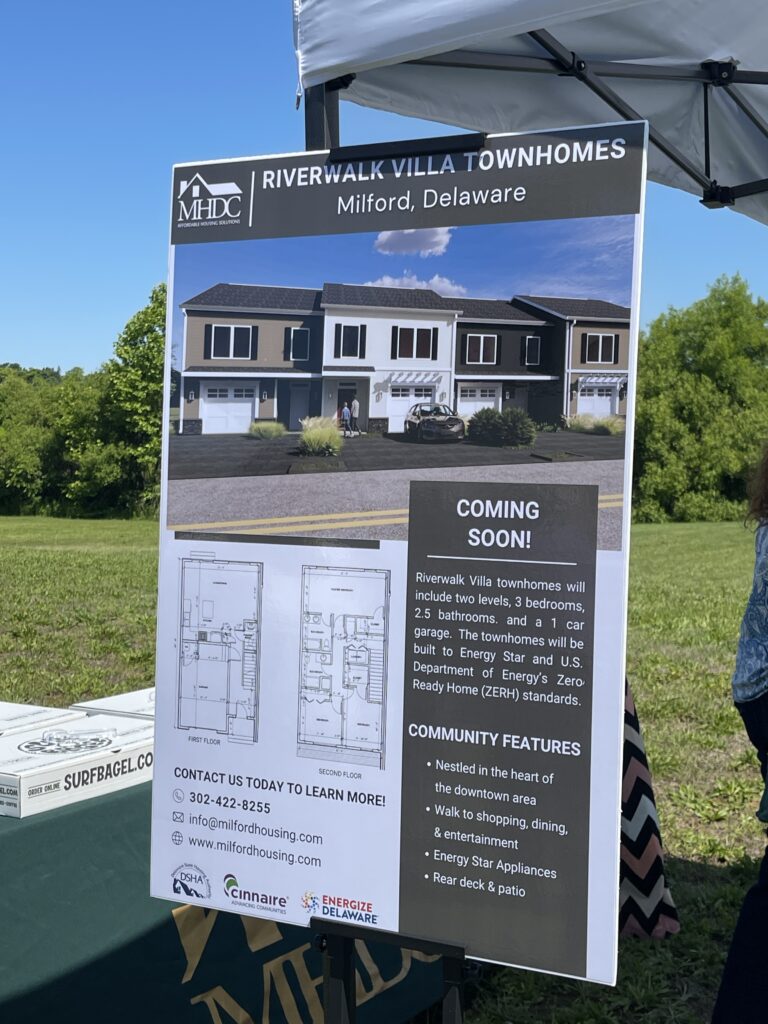
Commissioner Mark Redden agreed with DiCostanzo, pointing out that the city had to allow the residential, even though there would be growing pains with schools and other infrastructure. He felt that residential growth in city limits was not necessarily a bad thing because if they did not build those houses inside town limits, they would be built right outside of town limits, eliminating some of the tax revenue the city could use.
“I just feel like we’re not beholden to it because we’re appointed,” DiCostanzo said. “I just feel like there is public outcry constantly about the residential growth and I don’t know that as a commission we can even address that. I feel like maybe that is the job of council, the elected officials to deal with the constituents. These people aren’t coming to the workshops. They are not being heard. They’re on their keyboard pulpit on social media. So there’s a breakdown in the explanation and education of these, you know, keyboard warriors. We need to educate them, so they understand there are good and bad, there is a good side and a bad side to growth. It is not all evil.”
Wright explained there was a lot of input through a survey and most of the feedback indicated there was a need for more and better jobs. But to bring those jobs, they had to build things which is where the industrial side came in. He also felt affordable housing was important as well. Pierce pointed out that the state was attempting to push municipalities to add more density to create more affordable housing.
“I think Milford is leading the way in that area, but the state is saying do more,” Pierce said.
DiCostanzo felt that messaging was critical to help people understand the purpose of the comprehensive plan. Pierce agreed, stating that letting the public know the city was being deliberate in how they analyze things and make commitments to land that is already zoned for specific purposes.
Pierce explained that in December, the commission would discuss natural resources and open space as part of the comprehensive plan update. The economic development portion of the plan discussed at this meeting is available online.