





 On Monday, November 23, Milford City Council tabled a request for a conditional use and five waivers for the Knight’s Crossing development. This development has been approved near the former Milford Marina since 2020. Milford Planning Commission voted to recommend approval of the request last week.
Although Milford City Council voted 6–2 to table the proposed Knight’s Crossing development, the action does not constitute a denial of the application. The proposed planned unit development remains unresolved and will return to council for consideration after additional information is available, including the traffic impact study currently under review by the Delaware Department of Transportation (DelDOT).
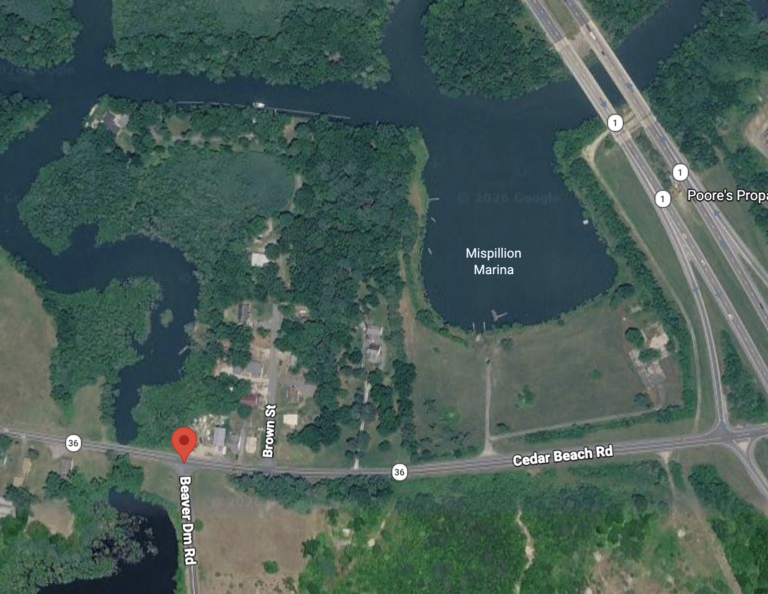
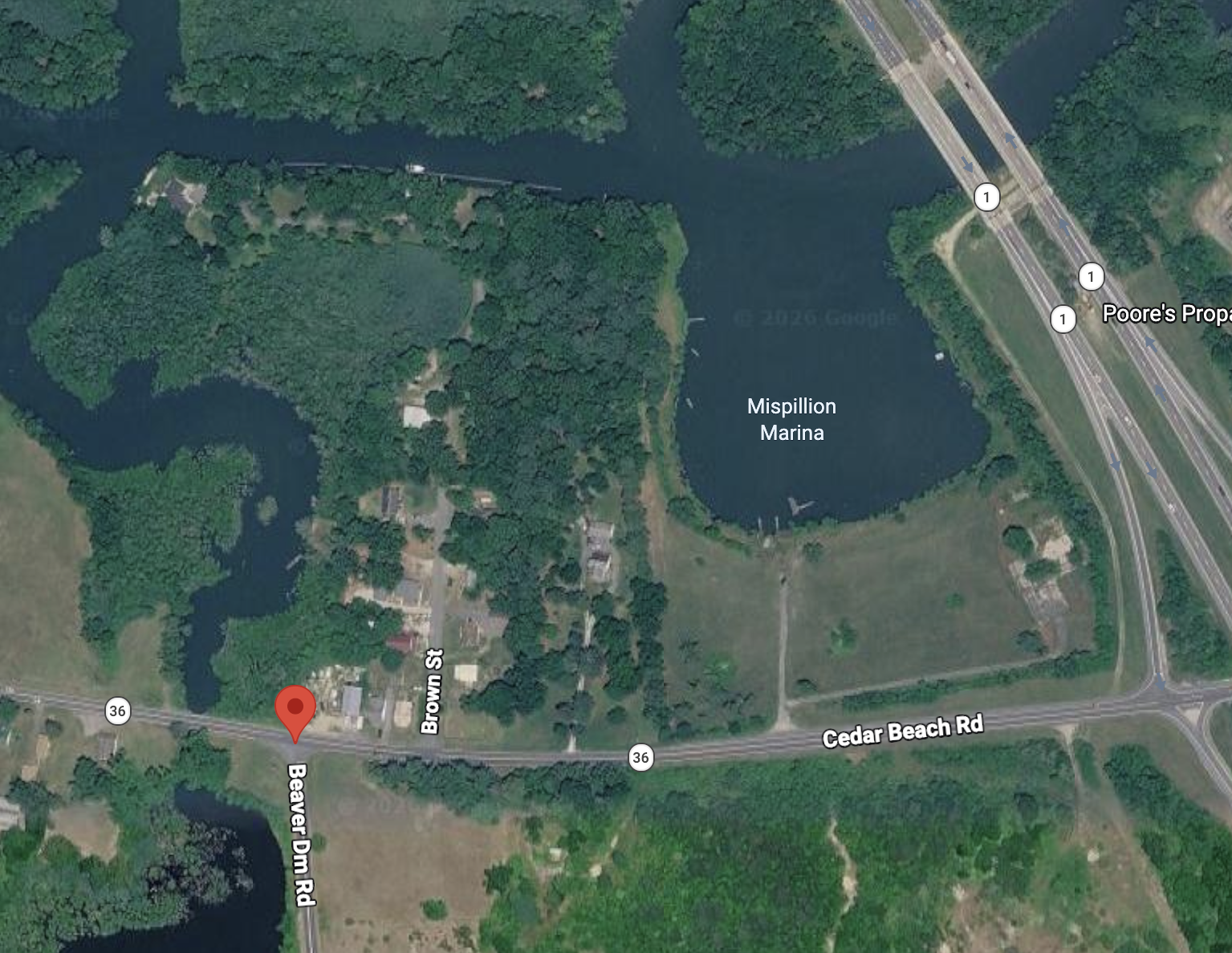
“There is a traffic impact study that is partially underway and actually nearing completion. There are a number of improvements that would come to Cedar Beach and Beaver Dam Road as part of that along the frontage of the community,” David Hutt, an attorney for Stonemark Ventures, the developer, said. “For instance, Beaver Dam will need a shared-use path for pedestrians on both sides which will mean changes to travel lanes. There would be a pedestrian safety area to cross Cedar Beach Road. So, there would be a number of improvements required by DelDOT so they would be required by DelDOT to cover those costs.”
Council members were concerned about the increase in traffic with such a large development. Councilwoman Joan King felt that this request should not have come to council before the traffic impact study was completed. Hutt explained that the developer was willing to do what DelDOT required in order to move this forward and that additional approvals would come before council as the development progressed.
“Mayor, if I could add something, so the state enacted HB450 back this past summer which is going to eliminate traffic impact studies except for very, very, very large projects,” City Planner Rob Pierce said. “I don’t think this project is caught up in that necessarily, but in the future, developers will just pay a fee into a fund that is established by DelDOT for area-wide improvements and there would not be a specific TIS required of applicants.”
In fact, HB450, known as the Reforming Opportunities and Accelerated Development for Delaware Act, was passed for specifically this reason. (ROAD-DE Act). Signed into law in July, the legislation was intended to streamline development approvals, particularly transportation reviews that state officials say have contributed to permitting delays lasting more than two years. Among its provisions, the law raises the threshold for requiring comprehensive traffic impact studies and establishes a statewide transportation impact fee system to help fund roadway improvements. The law is controversial as many believe it takes away local control of development.
“I was concerned when I saw the maps online,” Susan Blevins said during the public hearing regarding the request. “I went to buy my dream home ten years ago in Milford and it was on this map on Cedar Beach Road. It is right next to Brown Street. When I got to the point of doing my mortgage paperwork, my mortgage doubled due to required flood insurance.”
A review of the FEMA flood plain map indicates sections of the property are in a Zone A floodplain. This means the area is designated as having a one percent annual chance of flooding. Under federal regulations, homeowners whose residences are located within the designated flood zone generally must maintain flood insurance if they have a federally backed or regulated mortgage. The requirement would not automatically apply to every residence in the development, however, because flood insurance determinations are based on the location of individual buildings. Construction within the floodplain would also be subject to applicable floodplain management and building requirements.
During council’s question and answer period with Hutt, Councilwoman Nina Pletcher asked what percentage of the property was within the 100-year floodplain.
“I don’t have a percentage available for you, I would have to go in and actually delineate and calculate,” Jim Erickson, an engineer on the project, said. “I can at least identify the areas. It is the western corner of the project. This would be the townhome section and then it goes onto the northern section where the apartments are. We tried to avoid the areas where we knew there was the most risk of flooding. The apartments that are located in that area we plan to raise those buildings to an elevation of between seven and ten feet above the base elevation.”
Julie Morris commented during the public hearing that the developer had not responded to the Preliminary Land Use Service (PLUS) review as required under state law. Hutt mentioned that the property had undergone PLUS review but did not address Morris’ statement after she spoke during the public hearing. A review of the PLUS report in the packet indicated several minor recommendations and Hutt stated during his presentation that the developer was willing to comply with any requests.
“They also have not been compliant with DNREC who have contacted them several times and they have not contacted them back,” Morris said. “In fact, I talked to Stephanie Gibson today who said they were unaware that this project was even moving forward. It was actually pretty surprising because there’s explosives there. Explosives. I cannot even make this up. Not only tat, she told me there have been explosions in the past and that this was a manufacturing site for explosives. It was during the war but it is still a problem.”
A review of employees at DNREC revealed there is no one in the agency named Stephanie Gibson, so it is unclear who Morris spoke to on Monday. The Milford Ordnance Company produced military munitions and fuses during World War II. The plant did not manufacture complete bullets or shells; instead, it produced critical explosive components, including fuses and gunpowder-loaded munitions parts. There was an explosion at the plant on March 19, 1943, when a spark of static electricity ignited gunpowder inside one of the manufacturing sheds, injuring 33 and killing five. There are no documented records of any explosives discovered on the property where Knight’s Crossing is planned nor are there any reports of actual explosions other than when the plant was in operation.
“My family owns property across the street, and the developers sit here and say you have to approve it because it is in the comprehensive plan. Well, you don’t,” Morris said. “The PUD is a conditional use. You do not have to approve it. I guarantee you, if this is approved, we will be suing you because we have very much a lot of concerns with this.”
Brenda Watson, who lives on Cedar Beach Road, opposed the project as the area currently consisted of single-family homes. She felt that with over 500 apartments in Cypress Hall and Winwood on the River, there were enough available to rent in the town. In addition, she was concerned that the townhome would become rental investments as well.
“There are a lot of jobs in the community that already do not support the rent in Winwood as it is too expensive,” Watson said. “We all know renters are not invested in the community. They come and they go and they leave. They have no investment in our community.”
Tom Chilton was concerned about parking, stating that although code required two and a half cars per unit, as children who lived in the development got older, that would require three cars at each unit.
“One gentleman said they had 188 extra spaces on this street, but that is not enough,” Chilton said. “Ten years from now that is going to be a real headache.”
During the council question and answer portion of the meeting, Councilman Dan Marabello asked about the number of parking spaces. Hutt stated that code required the development to have 1,130 parking spaces for the apartments, townhomes and commercial. The plan presented to council had 1,318 spaces, almost 200 more than code required. Marabello also asked if the units would have basements and Hutt stated that some of them would have basements. Pletcher asked about the timeline for construction.
“As far as phasing and timing, we would have to go through full engineering prior to receiving any kind of final approval,” Erickson said. “That process would take some time just to get through that. By the time you break ground and get through Phase I and get through infrastructure, you’d probably be looking at least a year down, but it would be totally demand based, especially for the apartments. So, the shorter answer here is that it would be about six years for the townhomes and 10 to 15 years before it is completed.”
Pletcher was concerned that 15 years from now, the developer could come back to council and ask for a revision if the original plan was not working. Pierce stated that if the developer received final subdivision approval, if they did not begin construction within five years, it was subject to sunsetting unless they could demonstrate that it meets the current ordinance with minor revisions.
“Whatever you adopt this evening, you are governed to during the preliminary major subdivision and site plan phase of this project,’ Pierce said. “Unless they let the PUD expire without getting preliminary approvals for the subdivision or site plans. You are setting the framework for the development of these properties in the near future.”
Councilwoman Nadia Zychal made a motion to table the request until the TIS was completed so that council had more information about how additional traffic would impact the area. Pletcher seconded the motion.
“I vote no and my reason for voting no is that this is preliminary, just for the PUD, there are so many things that have to be continuously evaluated, and we’ll have those checks and balances,” Councilwoman Katrina Wilson said. “It is ironic to me that so many people who are new here have no idea the work that’s been put into our town. It’s so crazy because some of the developments you live in would not be there if we had said no growth. To me, the growth in this town has been managed very well. There are always going to be pitfalls. There are always going to be developers who do not hold up their end of the bargain. We need to address them, but we have to do our due diligence to be sure those in front of us now will do the right thing and do our town proud.”
Wilson continued, stating that waivers are based on individual needs and are common. She pointed out that no two developments are going to be alike and as she recalled, PUDs were created so the town could have more diversity.
“A lot of folks, me included, couldn’t afford that $350,000 house on a two-acre lot,” Wilson said. “We thought about this and, it wasn’t done quickly, we wanted to try to accommodate all of our people. It is not perfect, but at the same time, we want that affordable house. A lot of the working class in Milford are upper middle class, so this is affordable for them. We’ve got more work to do for low and middle income, but we are getting there.”
Councilman Jason James voted yes to table the request as he felt he needed more information on the wetlands and traffic impacts. He did feel significant work had been done on the project and that PUDs were a good thing for the area as a diverse mixture of housing helps with affordability. He was glad that the motion was to table and not to deny.
“I vote no on tabling it. I believe that what the developer is proposing is preliminary and although I am concerned about the traffic, I believe the engineers will figure out the best way to proceed,” Councilman Danny Perez said. “I think the development is great for the community. We need it. I think it is positive. I understand the issues with the wetlands and drainage and all that, but I think the professionals will address those.”
King also voted yes to table the motion, stating she was not in support of “building to build.” She wanted to see the impact study and had concerns about the floodplain. Marabello also voted yes to table the request as there were too many unknowns, so a short delay was warranted.
“We need to be fair to both citizens and the developer at the same time,” Councilwoman Madula Kalesis said. “If council does not feel comfortable voting to move forward, I would hate to see it go down without everyone on the same page. So, in fairness to all parties, I vote yes.”
Zychal also voted yes to table the matter.
“I am not against development. I want smart development, a development that is accountable to the public because once something is built, it is here for a very long time,” Zychal said. “It is incumbent on us as council to make sure that it is part of what our vision of the town is supposed to be, what best serves the people who are here, the people who want to be here. It is not saying no, but it is not committing to anything that could possibly be something that puts us in any kind of obligation or jeopardy so we don’t later say we should have considered something else.”
Pletcher also voted to defer as she felt the public comments at the meeting offered valid concerns. She wanted to hear from various agencies and not be tone deaf to the requests of citizens. She felt that once all the agency reports were in, council could make a better, more informed decision.
The motion passed by a vote of 6 to 2. The matter will return to an agenda once the final agency reports are available.