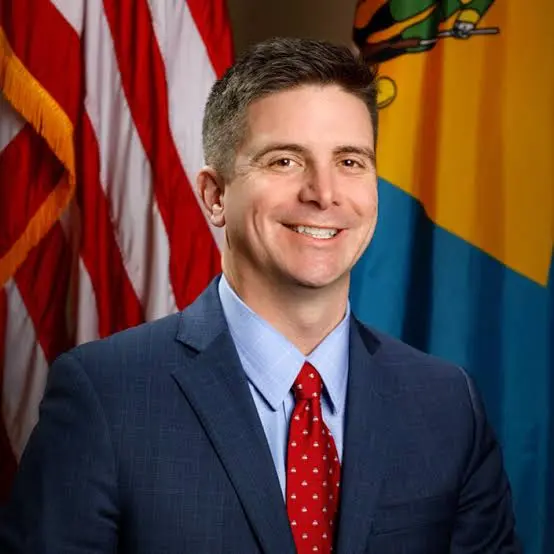





Milford Times sent questions to all four candidates running in the 33rd and 36th Representative District. Josh Pennington’s responses are published here in his own words. As of press time, we had not received responses from Andy Gorlich or Morgan Hudson.
 The Southern Kent County areas continue to experience residential and commercial growth. What do you believe is the greatest challenge associated with that growth, and what action should the General Assembly take to ensure infrastructure and public services keep pace with development?
The greatest challenge associated with residential and commercial growth, is ensuring that we have the appropriate infrastructure to accommodate this growth and figuring out we continue to protect local interests. There is also the very real concern over how such growth impacts the environment, and the threat of losing agricultural lands. There are numerous routes which the General Assembly needs to evaluate which actions may be taken to keep pace with development. First, I believe that when it comes to commercial growth, we need to incentivize reviving unused buildings for local businesses to take root. We need to invest into small businesses to help pump economic growth in and around small towns, to bolster job growth in the local economy.
We need to consider our primary and secondary roads as well. There are many secondary roads which are in need of repair and maintenance. As population continues to grow, and tourism each summer brings thousands of visitors to our state, back-roads can become as easily busy as our main roads or highways. We need to ensure that our current roads are maintained well to accommodate this travel. In addition, there are many roads in and around the 33rd District which are prone to flooding during higher tides and heavy rains. Safety and accessibility should always be a priority for repair and maintenance, and we need to focus on fixing what we already have so that we do not leave residents behind.
As for environment and agriculture, these should be the highest of concerns for any legislative body. Sometimes, the more we take, the less we have. Agricultural lands and environment need more protections to ensure that we are not losing what makes Delaware a great place to live. There are already programs in place, such as the Aglands Preservation Program, which allows farmland owners to enter into a two-phase agreement which allows for long-term agricultural land preservation. However, it would be worthwhile to revisit how the legislature can improve such programs to keep them modern, and flexible with diverse agricultural needs in mind. Delaware’s agricultural industry is not a one-size fits all. Poultry and other animal products, vegetable crops including soybeans and corn, as well as peaches, apples, etc. are viable industries which requires support. There are unique challenges and needs which exist to keep these farms afloat. I would certainly be interested in seeing how we can keep programs such as the Aglands Preservation Program viable for the needs of Delaware Farmers, and other programs we can implement to ensure we support farmers properly for generations to come.
Housing costs have made it increasingly difficult for many working families, seniors and young adults to find housing they can afford. What specific state policies would you support to increase the supply of affordable and workforce housing in the 33rd District?
Affordable housing is indeed a major obstacle facing many Delawareans. We need to consider both renters and homeowners. Most Delawareans are renters, so we need to take a serious look at how we can alleviate the burdens which they face. One possible solution is looking into capping how much base rent can increase per year. There are many communities in which amenities may disappear, infrastructure goes without needed improvement, and the value for what tenants pay for can actually go down while the price of rent goes up. Renters are simply not always getting fair value for what they pay for. Additionally, there are many renters who live on fixed incomes, and are already burdened with the increasing costs of food, utilities, and medical care. This has certainly come up in conversations with constituents while door-knocking and has been a major concern in several communities.
For homeowners, and those looking to be homeowners, we have to also be honest about what is available in the housing market in Delaware. Homes which can cost half a million dollars or more, are not affordable for average Delaware families. Sometimes, the homes being built are not even built to last. There is no one simple answer for how we can tackle all of these issues, but it would be valuable to see a more diverse range of homes being built, which offer(s) more flexible pricing, and can allow for more people to afford a home. Furthermore, we can also allocate more to Delaware’s current services designed to help individuals become homeowners, so that more people can receive guidance and services on their way to becoming homeowners.
Little Living proposed a cottage-style development near Frederica designed to provide smaller, lower-cost homes for working residents. The project encountered obstacles under Kent County’s existing zoning and growth policies and did not move forward as proposed.
Do you believe state government should intervene when county or municipal zoning regulations create barriers to alternative affordable-housing projects such as cottage communities and tiny homes? If so, what authority should remain with local governments and what authority should the state have?
Generally, I do not believe it is always appropriate for the state to override local and county jurisdictions. That takes away from the role of local government and can cause damage to the relationships between state and local government. I do believe that it should be the job of legislators to take part in conversations with County and Local elected leaders, in order to learn what barriers may exist for proposed communities such as Little Living. After all, it is the leaders at local level of government who will understand the needs of their community the best. Rather than solely intervening, we need to facilitate partnerships with local governments, early on, and wherever possible, in order to make sure sustainable housing projects can take place without threatening the historic spaces of our towns. I think if we allow local leaders to come and speak at Legislative Hall and vice versa encourage legislators to come to local town halls, we can certainly build a better understanding on how to navigate jurisdiction and how state and local government can work together in this regard.
The General Assembly has considered legislation intended to increase Delaware’s housing supply by requiring or encouraging changes to local land-use and zoning practices. Critics argue that land-use decisions should remain primarily under local control, while supporters contend that Delaware’s housing shortage requires statewide action.
Where do you believe the appropriate balance lies between local control and state intervention when addressing housing affordability?
In continuing the discussion on housing in Delaware, I understand that there has been a lot of debate on the matter of SB 23, which was signed into law this past July. I understand that many local community leaders do not feel as though this legislation allows them to have a voice in how we tackle housing in Delaware. Similar to the previous response, I do not think we cannot expect to enforce a “blanket” mandate on redoing land use and zoning practices, as a sole issue to addressing housing. What works in one town, community, or county, may not work for another. I believe the state should be responsible for meeting and planning with local leaders at town, city, and county levels to survey current ordinances, and determine the best course of action for improving affordable housing across our diverse communities. We need to look at this as a partnership between state and local government.
Many towns and cities in Delaware definitely want and need more affordable housing, especially for our senior populations and families. I understand where ordinances and zoning can sometimes appear as barriers. After all, many of our towns and cities are well over 200 years old and it can be difficult to figure out how we reconcile our historic spaces with the need to grow to accommodate growing populations within reason. What we need to consider, is how to foster a diverse market, with housing options geared towards affordability for Delawareans first. With this in mind it would be the role of local government to discern how diverse housing construction can best be implemented in respective jurisdiction with public input, expertise from organizations and non-profits who have expertise in affordable housing practices, and collaboration with our local government leaders.
I think it would also be worthwhile to consider how the types of homes we can bring into Delaware, with emphasis on diverse options which are within the affordable means of Delawareans. Most people cannot afford homes which are well over $400,000.00-$500,00.00+. Most of our younger population certainly cannot. When I was in the market to purchase a home a few years ago, I certainly would never have been able to afford anything in that market-range. I was able to find an opportunity for a home that was in a much lower bracket, but there’s a lot of people who do not have that opportunity. If we expect younger people to stay in Delaware and build a life here, we need to start evaluating how we can invest in new homes which are going to be within realistic budgets and holistic to the average person or family. Many Delawareans are growing tired from seeing new homes or developments crop up which are not within their means. We need to ensure future development meets the needs of the community and empower Delawareans with the tools they need in order ensure they can have better options for affordable housing.
Communities throughout Delaware are dealing with homelessness while local governments, nonprofit organizations and state agencies sometimes disagree over responsibility, funding and appropriate solutions. What should Delaware’s state government do differently to reduce homelessness, and what responsibility should municipalities and counties have?
I believe that we need to look at the topic of homelessness as not something we can solve with a singular solution, or bill. Rather, we need consistent dedication to tackling the causes of homelessness, while also providing those currently facing homelessness services to help them re-build their lives. Mental health and economic barriers are massive contributors to rising homelessness. While Delaware has several non-profits and services to help those affected by homelessness, they are often overwhelmed, understaffed, and cannot always render services seamlessly. I think we may be able to improve upon this by focusing on establishing a stronger sense of collaboration and communication within current non-profits and other services at both local and state-wide levels. We need to also address the gaps in chronic homelessness and improve economic stability and bolster mental health services.
Delaware has a lot of room to grow for improving mental health services in both in-patient and out-patient treatment. I believe the legislature needs to dedicate efforts to bettering these services and foster the long-term support and services necessary to ensure people get the help they need. While we seek to better help those currently experiencing homelessness, we need to focus as well on helping those who are at risk of becoming homeless. Most of us are very well aware we are one accident, house-fire, medical bill, or a few missed bills from becoming unhoused. In our communities, we need to shift our attitudes away from viewing homelessness as a marker of someone’s personal character, or just another statistic. We need to see them as individuals. Humans, with a story. Many of Delaware’s unhoused are veterans, persons with disabilities, and as I previously mentioned, those experiencing severe mental health. I think the solutions require that we move with empathy and kindness, meet our non-profit services, shelters, and local state service centers where they are at and structure services to be more efficient and person centered.
Delaware continues to devote significant public resources to addiction prevention, treatment and recovery. What do you believe is working, what is not working, and what changes would you support in how the state spends opioid settlement funds and other resources intended to address substance-use disorder?
I have seen first-hand what opioids and the addiction crisis can do to a family. Unfortunately, many people have had such experiences. Seeing a family member struggle through addiction, and how it not only hurts them but their family as well, is an immense and difficult situation to grasp when going through the motions of your loved one struggling with their addiction. I believe that Delaware has a good basis for how to treat the immediate problems, and I think responsible measures for detox, and harm reduction are vital to the equation. However, I feel as though we can go further.
The state needs to improve on follow through for long term support, and accountability which is person centered. I think more funds can be allocated to resources aimed at helping those who have been through addiction to receive long term help in educational and vocational support, stable housing with focus on reintegrating into the community, as well as strong mental health services to ensure long-term success. Of course, we also need to be aware of what factors may lead to active addiction. A person may turn to opiates due to a variety of reasons. For example, untreated underlying conditions, grief and loss, trauma involving abuse and exploitation (especially in childhood), can be factors as to why a person may be susceptible to substance abuse as a way to regulate or “self-medicate”.
I believe, similarly to the matter of homelessness, that it is imperative that we do what we can to make mental health and community resources more available, and effective. I think it is important that we ensure resources are diversified, which can go a long way to helping a variety of persons struggling with substance abuse. We cannot put everyone in one boat when it comes to treatment. Some people benefit from faith-based approaches, others benefit from peer-to-peer counseling and accountability. Veterans may require services which are designed and led by veterans. Individuals who are LGBTQ+ may very well need services that are designed to help those who identify as LGBTQ+. So on and so forth. I believe that we have the basis for getting this work done, and now what we must do is continue to ensure that help exists for people on a person-centered basis. I believe that this is something we should consider in all future legislation aimed at combating substance abuse in Delaware.
Data-center development has become a significant issue in Delaware because of concerns involving electricity demand, water use, land use, noise, infrastructure and transparency, as well as potential economic benefits. The General Assembly has considered legislation addressing data-center development, including a temporary moratorium.
Should Delaware encourage, restrict or place additional conditions on large-scale data-center development? What requirements should apply before a data center is permitted to locate in or near communities such as those in the 33rd District?
I believe we need to be tough on data centers, especially amid the rise of AI and the threats posed to the environment. I would support a moratorium, as well as further restrictions, on massive data center projects. If there is something that a lot of Delawareans across the political spectrum have come close to agreeing on, it’s that we need to keep data centers at bay. There’s been a lot of great work done so far to regulate and keep data center projects accountable. A lot of people wish to ban data centers in Delaware out-right. I definitely lean towards that sentiment, I am open to going further where needed to ensure that data center projects do not come at the cost of Delawareans in the forms of harm to our environment or agricultural lands, noise pollution, higher utility bills, or improper over-development which does not benefit residents.
Adult-use recreational marijuana is now legal in Delaware, and retail marijuana businesses are beginning to become part of communities across the state. Do you believe Delaware’s current laws governing retail marijuana strike the appropriate balance between allowing a legal industry to operate and addressing concerns involving location, public safety and community impact? What, if anything, would you change?
I believe it is too early to determine if there is an imbalance between the current laws regarding recreational marijuana, and community interests or public safety. I do believe we need to ensure that safe use of marijuana remains a top priority, and discourage operating of motor vehicles or other equipment while using marijuana products for recreational use. However, I would be willing to explore if we need to reevaluate whether or not someone who uses marijuana for recreational use ought to be disqualified from employment during screenings. Similar protections already exist for those who use marijuana for medicinal reasons. In most lines of work, individuals are not prohibited from consuming alcohol in their off-hours, so it may be time to consider similarly whether we should ease our attitudes towards recreational marijuana in the same light. Of course, there should never be any consumption of such substances while engaging in employment or employment related activities.
The 33rd District has experienced considerable residential growth, but economic development does not always produce jobs that allow residents to support a family. What industries or types of employers should Delaware work to attract to the Milford area, and what specific state policies would you support to bring more year-round, higher-paying jobs to the district?
One particular industry that I believe is beneficial to areas such as Milford, as well as our other towns in the region, is the restaurant industry. Delaware is always hungry for a health restaurant market, and I believe that we need to support and encourage the well-being of this industry. Delaware has many great restaurants, which carry history and legacy while serving local people with quality food and celebrating culinary heritage as well.
Growing up I witnessed first-hand what a local deli and restaurant can do for a community. When I was younger there was a Deli that was owned by Pete and his brothers that me, my mother and sister would visit weekly. I used to play with the dough while waiting for a pizza to be cooked or actually kneading the dough to make our own special pizza. Later on Pete built & opened the Frederica Pizza and Pasta House. Most people didn’t think it would work as the town didn’t get a lot of traffic when it was first built. However, that was quickly shut down once the restaurant opened and the people flocked in. Now it gets well over enough business and is even part of the summer tourism season. This is why I think that by supporting the restaurant industry we can support local employee workforce which helps boost the economy at the local level.
On a related note, I think if we also encourage more food trucks, which have become highly popular in the area these past several years, we can bring more diverse and feasible options which will bring more employment opportunities as well. The restaurant industry is not the only one I think needs further assistance or investment. As mentioned in an earlier question, our agricultural industry, which itself is part of the greater Milford area, and made up of family farms and ventures, is also in need of greater support at the state level. In addition, I believe it would also be worthwhile to attract more businesses which provide fun and interactive activities for persons of all ages. It would great to see more arcade style business, or indoor-trampoline parks, and the like, come to the greater Milford-and Kent County as a whole, to provide more options for recreational activities.
I think that the state can certainly help by streamlining processes for starting and registering small businesses and updating tax codes to be more friendly to small businesses. According to Delaware’s Small Business Bureau, just over half of Delawareans are employed by a small business. Delaware’s Small Business Bureau helps provide assistance through various incentive programs, and I think we should consider if small businesses might benefit from looking into how we can improve such existing programs and application processes to make them more accessible to entrepreneurs. We can also look at how to continue making it easier to file paperwork and obtain appropriate licensing for new businesses, and how we provide supporting resources to ensure they have guidance.
Furthermore, we need to meet businesses where they are at and listen to what they need. For example. the new Delaware Commercial Corridor, aimed at providing financial assistance to local businesses in downtown areas, is an example of how we reinvest in small businesses to help them continue thriving. On a personal note, I have several family members who have small businesses. While not in the Milford area, I know that they would sincerely benefit from having more of these kinds of incentives to operate and grow their ventures. Not only to feed their families, but to offer competitive employment opportunities to bring more job growth and employment stability.
Milford sits in both Kent and Sussex counties, meaning decisions involving roads, housing, economic development, schools and infrastructure often involve multiple levels of government. What is one state-level investment or policy change you believe would have the greatest positive impact on the Milford area over the next several years, and how would you work to accomplish it?
There are multiple topics we can focus on for creating positive impacts for areas such as Milford in future legislation. Asides from the concerns surrounding data centers, AI flock cameras have also become a relevant concern. In addition, with our growing population there is a significant push to make Milford more walk-able and navigable on the road, since Milford lies in the heart where two highways meet. However, if I had to look at one long-term investment in helping areas such as Milford, it would be seeing how we can ensure longevity for water and sewer operations, in both existing infrastructure as well as future projects. While the state does not fund the City of Milford’s water and sewer directly, there are grant and loan programs which the state facilitates to bridge funding gaps where needed. I think this is something we need to streamline for areas such as Milford, and other towns in the 33rd District, to ensure that water and sewer services can keep up with growing population needs at the municipal and county levels. It is vital that we ensure that Delawareans have reliable and safe access to clean drinking water and efficient sewer systems.
The General Election will be held November 3, 2026.