






With the school year underway, backpacks are once again being loaded with laptops, textbooks, water bottles, lunches and school supplies. But when students carry too much—or wear their backpacks incorrectly—the daily trip to and from school can become a pain in the neck, shoulders and back.
The American Academy of Pediatrics recommends that a loaded backpack weigh no more than 15 percent of a child’s body weight. That means a 60-pound child should carry no more than about nine pounds, while a 100-pound student should keep the load to 15 pounds or less.
Parents don’t necessarily need a scale to recognize a problem. A child who leans forward while walking, struggles to put the backpack on or take it off, or complains of back, neck or shoulder pain may be carrying too much. Narrow straps that dig into the shoulders can also contribute to discomfort, while an overloaded backpack may affect balance and increase the risk of falls.
Heavy backpacks have not been shown to cause scoliosis or other long-term spinal problems, according to the AAP. However, an improperly fitted or overloaded backpack can cause muscle strain and pain.
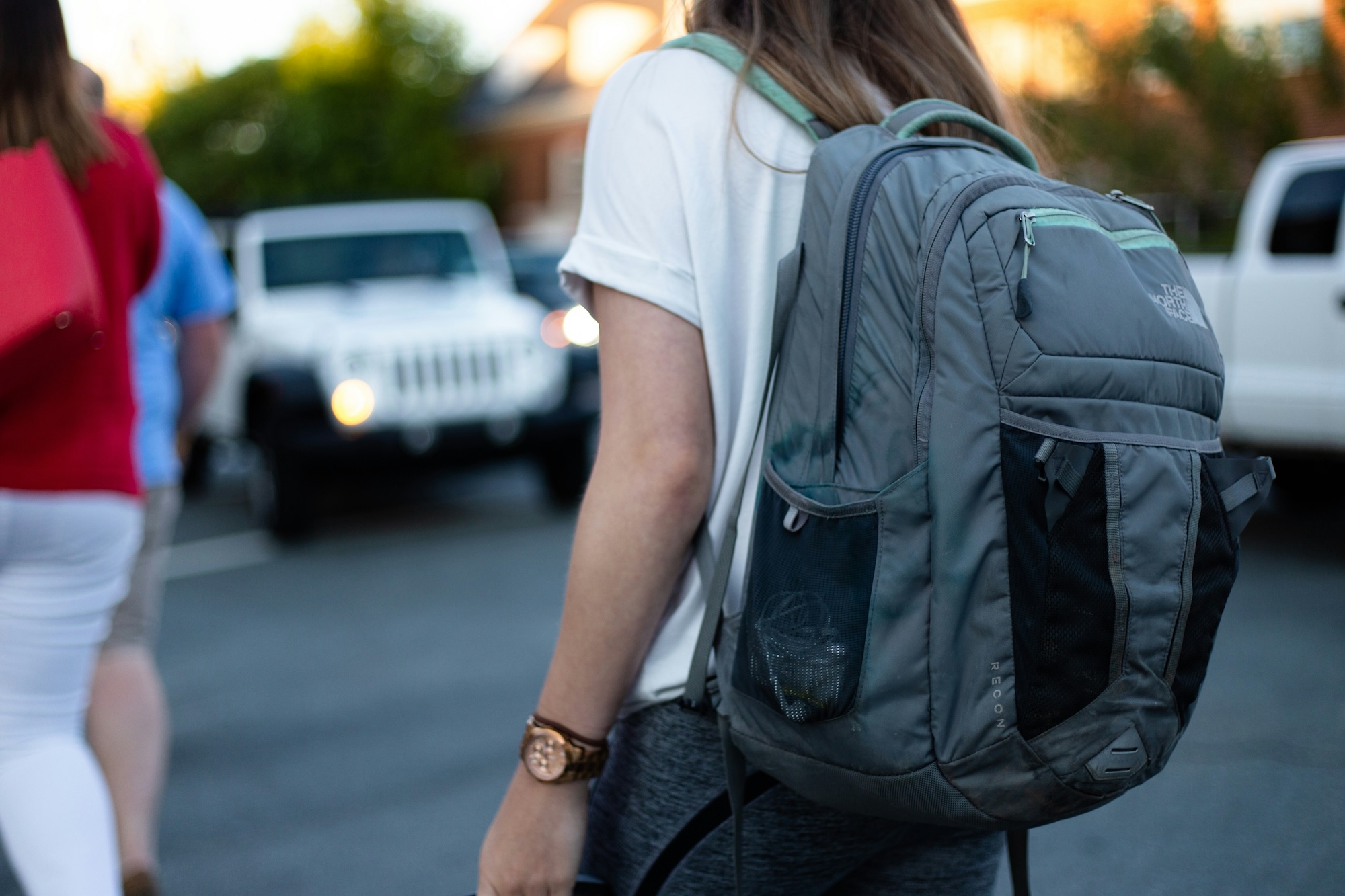
The safest backpack is appropriately sized for the child and has two broad, padded shoulder straps. A padded back adds comfort, while a waist belt or chest strap can help distribute weight more evenly. Both shoulder straps should be used rather than slinging the backpack over one shoulder. The straps should be adjusted so the backpack stays close to the body and rests around the middle of the back rather than hanging toward the child’s buttocks.
How the backpack is packed also matters. Heavier items, including textbooks and computers, should be placed closest to the child’s back, with other items distributed among the backpack’s compartments.
One of the easiest ways to prevent an overloaded backpack is also one of the simplest: clean it out. Parents can go through backpacks with their children once a week, removing old papers, unnecessary books, extra supplies and other items that tend to accumulate. Students should also use lockers when available and carry only what they need for that particular day.
Parents should not simply dismiss persistent pain as part of carrying books to school. The AAP recommends talking with a child’s pediatrician about back pain, particularly pain that occurs at times other than when the backpack is being worn.