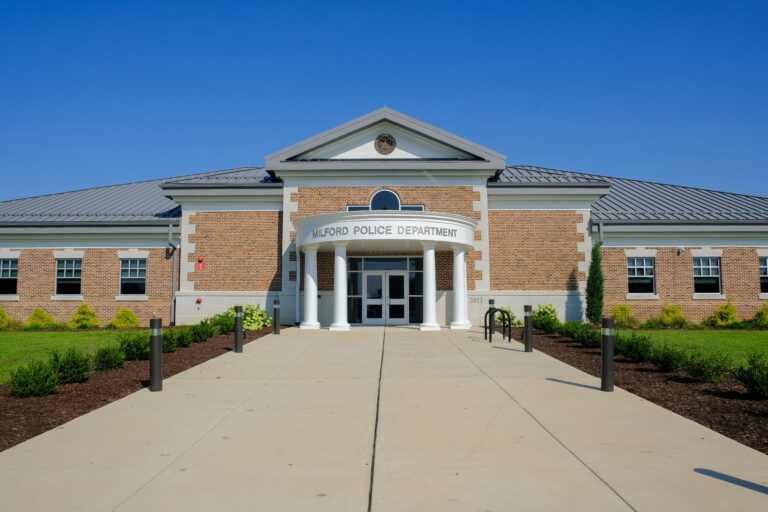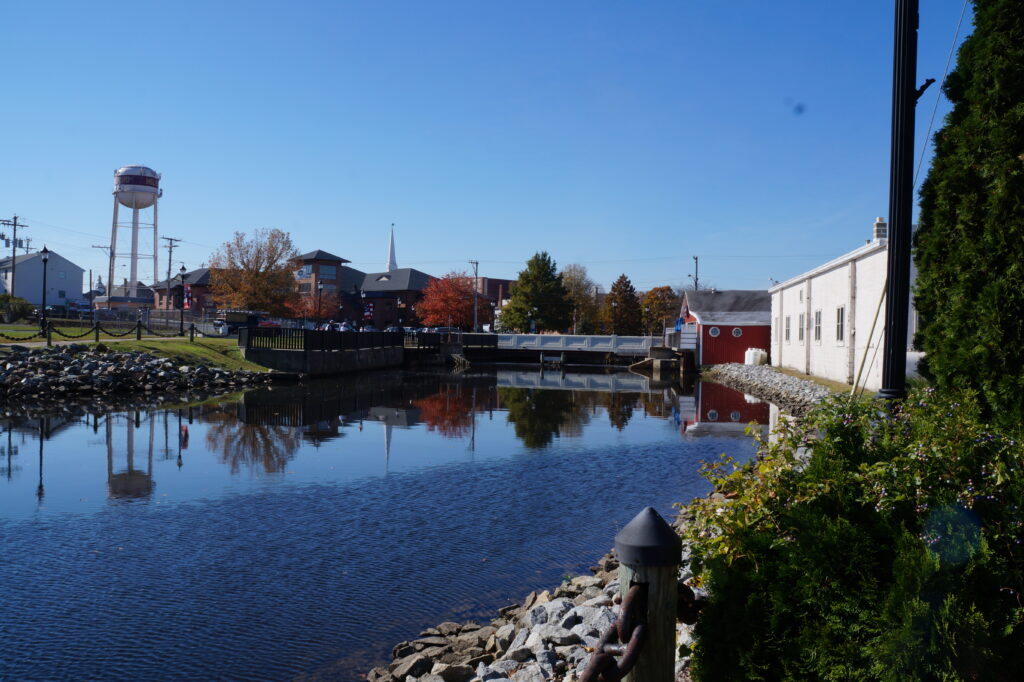






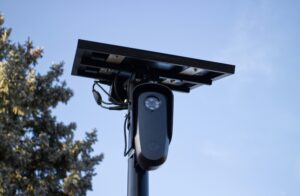
 Recently, social media posts have cropped up in the Milford area warning residents about Flock cameras that have been installed throughout town. The cameras are used to record license plates and passing vehicles.
“The Milford Police Department utilize Automated License Plate Recognition (ALPR) cameras as part of our crime‑prevention and investigative tools,” Chief Cecilia Ashe said. “The cameras capture license plate numbers and basic vehicle characteristics—such as make, model, color, and distinguishing features.”
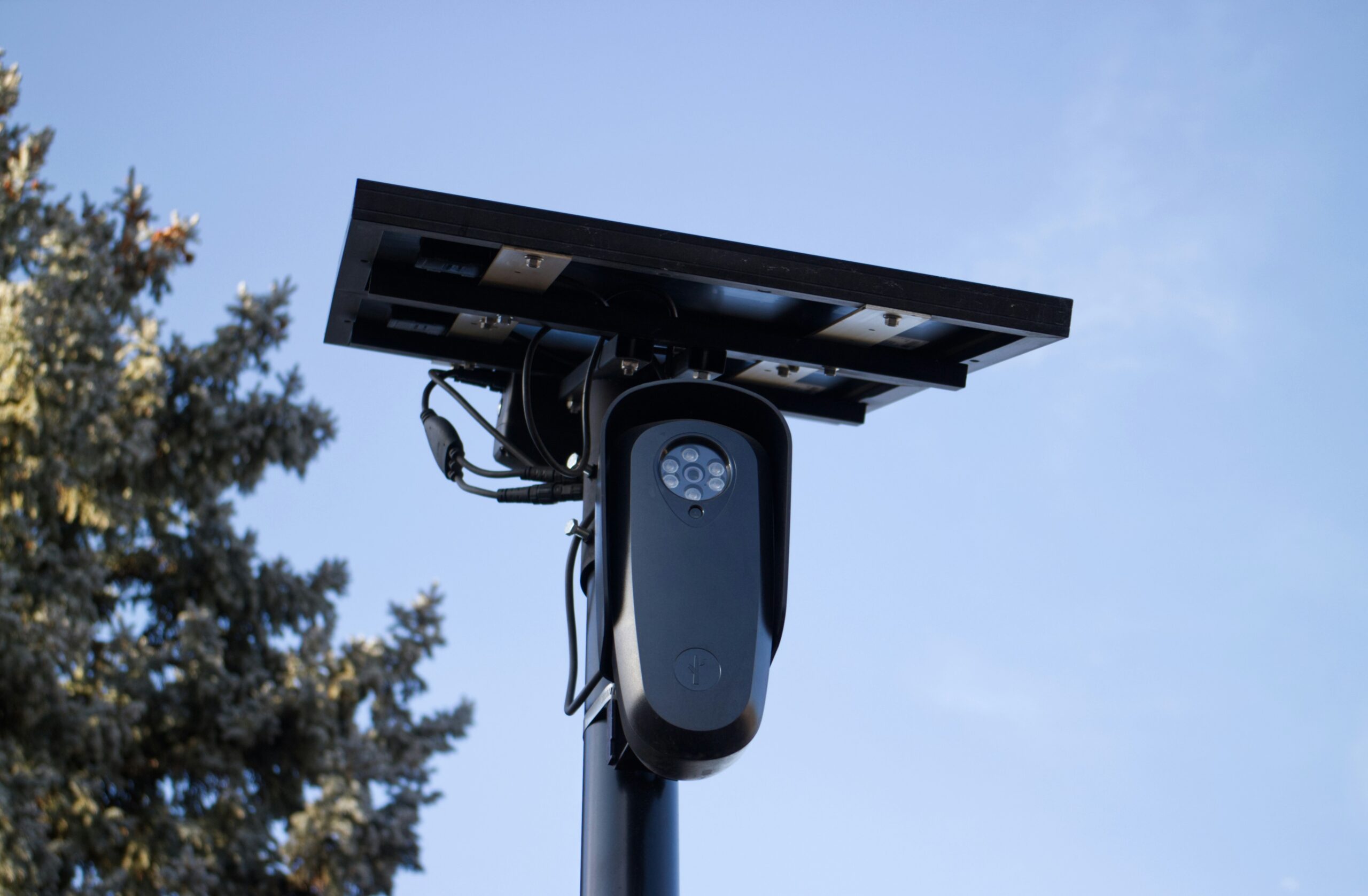
The term Flock camera refers to those manufactured by Flock Safety, which is a brand of the camera. Not all cameras are manufactured or installed by Flock. The cameras, regardless of brand, are specialized, solar-powered video cameras. Not all cameras installed are used by law enforcement as private businesses and neighborhood HOAs sometimes use them as well.
Flock cameras are not speed cameras or general surveillance tools that capture human faces. The only thing the camera captures is passing vehicles where they record their license plate and a vehicle fingerprint as Ashe described. This would be the make, model, color and any unique identifying features such as bumper stickers, roof racks or damage.
“The system is designed with strict privacy protections and is used only for legitimate law‑enforcement purposes,” Ashe said. “The cameras are placed in public areas where there is no expectation of privacy, similar to any other traffic or security camera.”
When an image is captured, the vehicle’s details are checked against local, state and national crime databases which may include AMBER or Silver Alerts, stolen vehicle lists. If a match is found, police are alerted immediately.
As a protection, data is typically encrypted and automatically deleted after 30 days unless the video is actively tied to a criminal investigation. Ashe explained that the cameras are very beneficial to police.
“ALPR cameras are a force multiplier that help officers solve and prevent crime more efficiently,” Ashe said. “They help provide investigative leads in cases such as burglaries, missing persons, hit‑and‑runs, and violent crimes. “
Although there were no published reports of Flock cameras solving a crime in the Milford area, they have been used in other areas for that purpose. In 2024, residents of Greenville experienced a series of break-ins where intruders entered occupied homes and stole property while the residents were sleeping. New Castle Police used Flock cameras to identify an out-of-state license plate from Pennsylvania, tying it to the robberies.
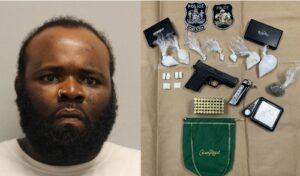
In January, the system alerted authorities that the suspect vehicle was near Temple University. The police there were notified and they apprehended 20-year old Jahid Robinson. Inside his vehicle, police found property linking him to the Greenville burglaries. Robinson pled guilty to second-degree burglary for the crimes.
In Rehoboth Beach, a Flock camera were instrumental in identifying and capturing suspects in multiple hit-and-run accidents. The system allowed officers to track down vehicles after they led the scene, even when witnesses could only provide partial license plate information.
Despite this success, many myths exist on social media regarding Flock cameras. One myth is that they use facial recognition to track identity. This is false as the cameras only capture point-in-time images of the backs of vehicles, license plates and visual markers. The software is incapable of scanning or recognizing human faces and cannot identify a driver.
Another myth is that the cameras are a form of warrantless mass tracking. Courts have repeatedly ruled that there no expectation of privacy on public roadways. Therefore, license plate reading is legal. The cameras do not provide real-time, GPS-style tracking of an entire journey but simply snap a photo when a vehicle passes a camera at a specific location.
By default, the camera companies do not share data with federal agencies nor do they sell the information, debunking the myth that the cameras are used by U.S. Immigration and Customs Enforcement (ICE). The business, HOA or police agency that purchases the camera owns 100 percent of the data. All captured data is also deleted from servers on a 30-day default rotation which means it cannot be sold to other parties.
The myth that police departments use the cameras to target specific races or genders is also false as the system cannot collect or search for demographic data. Law enforcement cannot search the database for race, gender or age. The entire database consists of license plate numbers; vehicle makes and models. There is no human information included in the database. Civil rights groups have endorsed the use of the technology as it actually removes human bias from traffic stops.
Finally, the myth that police use them to monitor citizens without consequences is also false. The system is built with strict protections. Every search requires a user login and the platform logs exactly who performed the search and why. While there have been isolated incidences of police using the system inappropriately, those cases are extremely rare. In Delaware, it was discovered that Delaware State Police queried the Flock database nine times to track activists associated with an animal-rights organization.
In cases where officers are found to misuse any technology for personal reasons or to circumvent the law, the officers are disciplined. In some cases, officers have been terminated for violating policies related to the camera. Again, the only thing the database can track is vehicle information. It cannot track human identity or recognize faces.
There have been reports of citizens removing or destroying the cameras, but it is important to know that doing so is considered a serious crime. Removing or tampering with a Flock camera in Delaware could result in Class G or F felony charges. These felonies can result in two to seven years in prison, thousands of dollars in fines and a requirement to reimburse the cost of the equipment.
Charges may include theft and property damage as the cameras and their solar-powered attachments are expensive, costing $800 to $1,200 each. They may also include theft or criminal mischief. Destroying or damaging the cameras can lead to charges of tampering, obstruction of justice or all of those crimes. Because the cameras collect and transmit data to law enforcement via cellular and wireless networks, tampering or damaging them can also invoke federal or state laws regarding the destruction of electronic surveillance and communication equipment.
Anyone with questions about the cameras can reach out to Milford Police Department by calling 302-422-8081, sending a message on Facebook or send a message online.