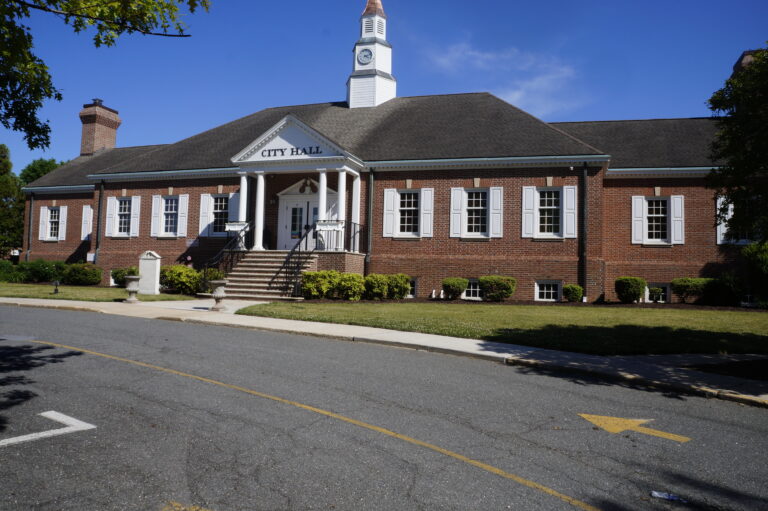





 On the final night of budget hearings, Milford City Council discussed a possible tax increase to cover growing expenses in the city. Almost every department requested additional staff to handle growth, public requests and other duties that require assistance. Staff proposed a 2.5 cent per $100,000 increase, staggered over three years similar to an increase over the past three years to reduce reliance on Realty Transfer Taxes (RTT).
Finance Director Lou Vitola provided a slide which showed that if there was no growth in the city that added additional property taxes, the city revenue from taxes would be $7 million. With anticipated growth and no tax increase, the city would raise approximately $7.2 million.
“Those figures are entirely growth related and related to property additions, projects, expansions to existing homes and businesses and other properties,” Vitola said. “With a 2.5 cent increase, which would increase the average residential household by $3 per month, and that is a high estimate, the tax revenue would be $7.5 million. That increase would be if we did the full 2.5 cent, but I strongly recommend that we follow the program we did the past few years to increase the taxes incrementally.”
Vitola was aware that the idea of raising taxes was uncomfortable. He also said there were some areas that could still be cut in the budget, but that not raising taxes now would simply be pushing the need to do so further down the road.
“Even with this increase, living in the city is still going to be relatively low cost,” Vitola said. “This amount is the ceiling, not the minimum.”
Mayor Todd Culotta asked how the recent county reassessments could impact the city since they would be using those in the future. Vitola explained that since it appeared the reassessments rated commercial properties low and residential high, the city could split the tax rate for different types of property. However, City Solicitor Greg Morris stated that the courts ruled that residential and commercial had to be rated the same.
“Over the past five years, we were fiscally responsible and instituted the penny per year because we did not want to tell the resident that we were surprised that expenses have increased and now we need to increase your taxes 20 percent,” Councilman Jason James said. “I think doing it the way we did was successful, so I think the concept of that is the right concept. I am not sure if 2.5 cents is the right number and it makes me a little uncomfortable, so I would like to take a look at areas of the budget and other buckets of money we may not have included.”
James pointed out that the economy was bad for a lot of people and inflation was crippling, wages were not increasing, but that the city could not solve every household’s problems, but they also did not want to make them worse.
“We are a taxing authority and it’s easy to say we need revenue, let’s just raise taxes,” Culotta said. “But when you tax businesses, they raise prices to absorb it and that causes other impacts. We do have organic growth and we’ve talked about that. We have to learn to live within our means and organic growth should dictate what our budget should look like. Before we talk about balancing the budget with increased revenues on top of a bigger chunk out of utilities, which we did last year, we need to talk about efficiencies and cost savings.”
City Manager Chris Coleman pointed out that the total expected growth rate over the next year was only $200,000. He explained that keeping expenses in line with the revenue, which is what a sustainable budget does, was a good plan but that in just three categories of the budget – medical insurance, property insurance and FLMA – the budget increased by $400,000.
“I just want to be mindful that we really do have to be careful in being penny wise and dollar foolish in having to balance maximizing tax increases and being mindful of people’s personal expenses,” Councilwoman Nadia Zychal said. “But we also have to understand that we have a staff that sacrificed over a lot of years and with growth comes additional obligations and additional workload. So, both burnout and turnover have costs as well. So, just a long-term approach, part of that balance is maintaining a certain flow of cash that does not peak or drop dramatically in a way that is a shock to the system.”
Councilman Danny Perez pointed out that there were ways to restructure the budget and manage growth at the same time. He stated that one of the things the community wanted was a recreation center, but it was important for the city to let the public know those types of things cost money. In his opinion, there were ways to make it clear to the public that growth brings its own challenges but also has benefits.
“I appreciate what you are saying and the reason I brought up those three things was because medical insurance actually reviewed and revisited the last two years,” Coleman said. “There were changes made over the last two years to the medical insurance with the support of council. We can shop around, and maybe save a few dollars, but pretty much we are stuck with the market. The Delaware Family Leave Act is the law, not our choice. We do not want to increase taxes if we don’t have to, but the goal is sound financial practices and moving toward a sustainable budget.”
Culotta pointed out that there were several business owners, retirees who had successful careers and financial experts on council.
“I don’t think council wants to be difficult and say no to everyting,” Culotta said. On the flip side, we can’t just keep saying yes because the house tells us to. I do think we are going in the right direction.”
James felt that the back and forth between council and staff was a good way to iron out the budget process. He felt that the city was in pretty good shape and that it was not all doom and gloom.
“I like to call our people who work with us in the city team members because we are all a team,” James said. “I think the things we’re discussing other cities wish they could talk about these things.”
Zychal pointed out that one of the things James mentioned was sustainable and that was an operative word.
“We have to let the residents know if we are going ahead with two and a half pennies,” Councilman Dan Marabello said. “But I think we tell them the offset is mitigated by the savings we are getting with power. We have to educate our residents of the positive side of this.”
Coleman asked Vitola to remind council how much utilities increased this year and Vitola replied zero. Vitola explained that staff would review the budget to see where adjustments could be made and bring it back to council at a future meeting. The entire presentation can be found online.