






With the 250th anniversary of the United States approaching, it is important to look back at Milford in the days leading up to the Revolutionary War. During this period, the state of Delaware did not officially exist but was known as the “Three Lower Counties of Pennsylvania on the Delaware.” Although Delaware did have a governing body, at this time they actually answered to Pennsylvania.
The two lowest counties were not initially known as Kent and Sussex but instead were called St. Jones and Hoorn Kill. St. Jones was given to the area by the British while Hoorn Kill was Dutch. Kill, or kille, referred to a stream, creek, riverbed or water channel. As English settlers arrived, the names of the counties changed to Kent and Sussex.
“Who named them we do not know, but whoever it was must have been dreaming of the beautiful meadows and woodlands of these divisions in his own native England,” George P. Hynson writes in his book Historical Etchings of Milford, Del. And Vicinity. “For a time, there was not even a village in Kent and only the small settlement of Lewes in Sussex.”
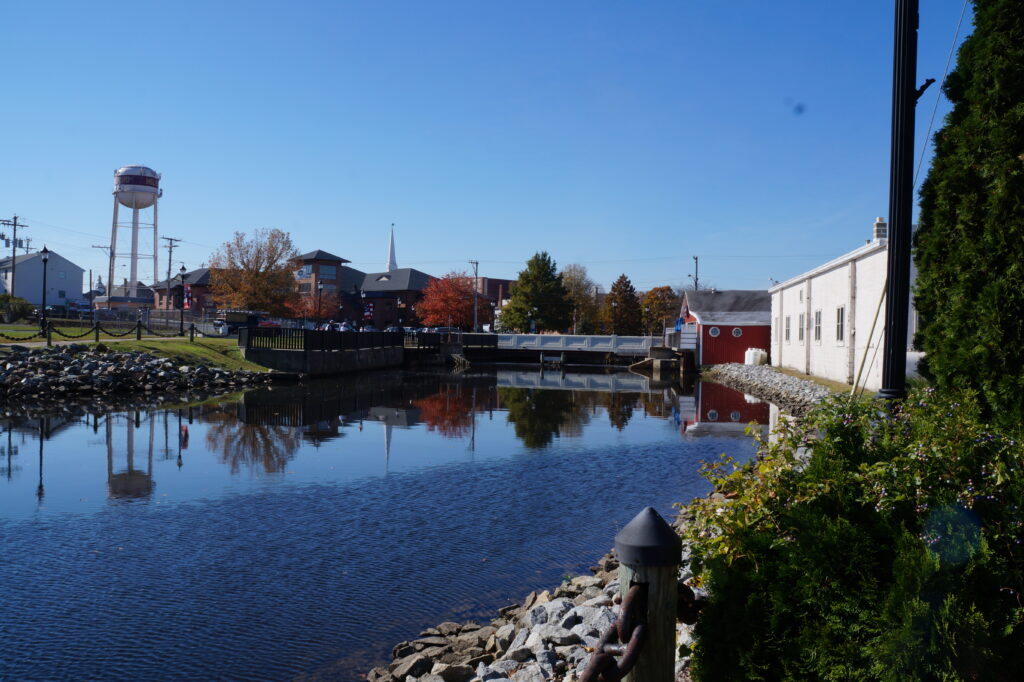
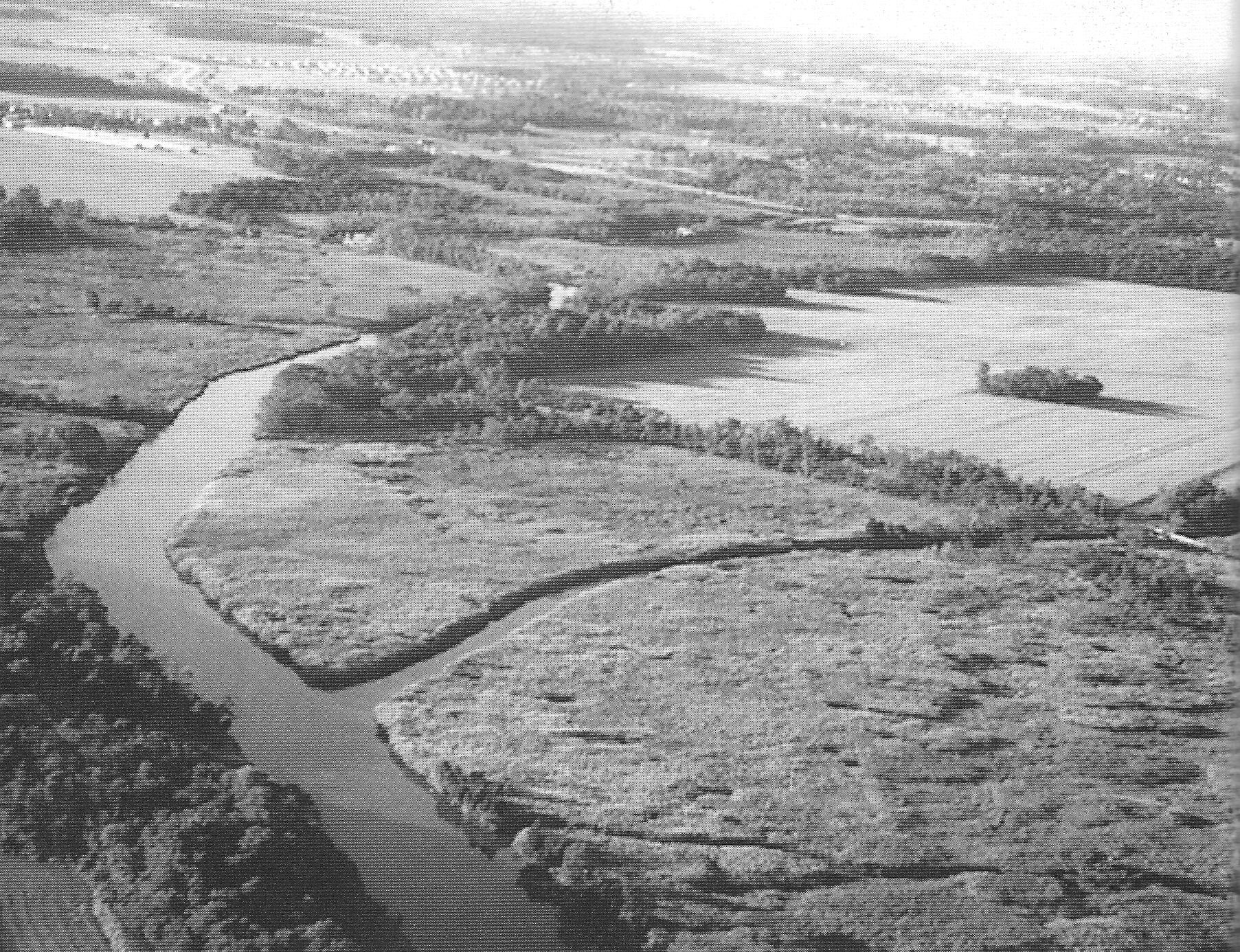
As settlers arrived, some simply took land while others purchased land from the native Americans in the area. Farms were laid out in long parallelograms, each including a strip of marsh so that each farmer could pasture their cattle and communicate via water. Transportation in those days was difficult, either by horseback or ox-drawn carts when possible. For the most part, settlers traveled via stream.
Originally, the town that would become Milford began to grow near New Wharf where there was a place for ships to dock to deliver supplies. Prior to the Revolution, most of the land that is now Milford was the plantation of Joseph Oliver and known as Saw Mill Range. The original owner, Henry Bowman, passed it by inheritance to his son, John, who sold it to Jacob Warrington. Oliver purchased it from Warrington, who was his father-in-law, in 1773.
Oliver was Milford’s first prominent citizen, buying produce from the farmers, selling them the supplies they needed and operating the wharf where supplies arrived or were shipped. Oliver lived in a mansion on Front Street and is described by Hynson.
“It was situated about half the distance between the street and the river,” Hynson wrote. “Let us picture the scene: a large old-fashioned mansion surrounded with all the evidence of prosperity, in the midst of a great lawn that stretched away to the road. Beyond this were woodlands and fields among the clearings. The south the yard and garden leading to the river where the various craft were moored.”
The description of the location of the original mansion appears to be on land between what is now North Walnut Street and Northwest Front Street, as Hynson writes the “lawn is now occupied by the residences of Mrs. Ruth T. Carlisle and Dr. R.Y. Watson.” Those would be what today are called the Watson-Carlisle-Wells building which sit behind the Pikus Building on Northwest Front Street.
There was nothing in South Milford other than the Crapper plantation, what we now call Causey Mansion. This structure was built in 1796 by Levon Crapper and just before the Revolution was valued at $120,000, a value of $5.09 million in today’s money.
Milford Times will continue our research into Milford’s contributions to independence and share those stories with readers over the next few months.