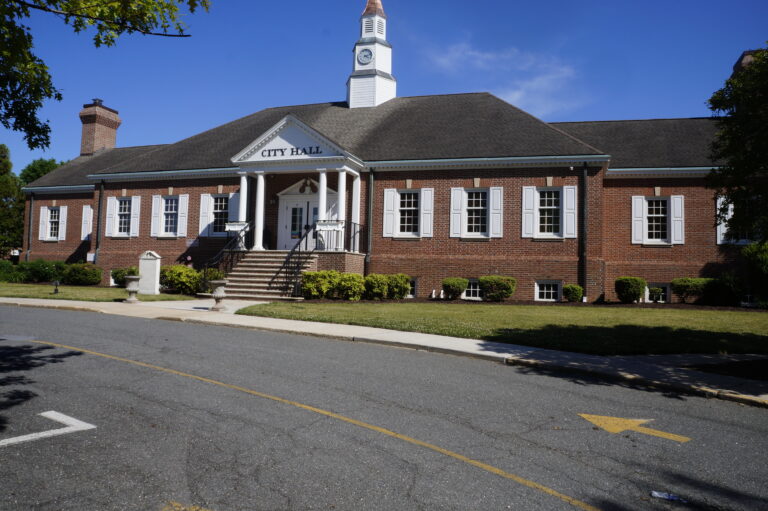






 Group home regulations were discussed at a recent Milford City Council meeting after council members were questioned by neighbors when one opened in a residential neighborhood. Several residents spoke during public comment at the start of the meeting.
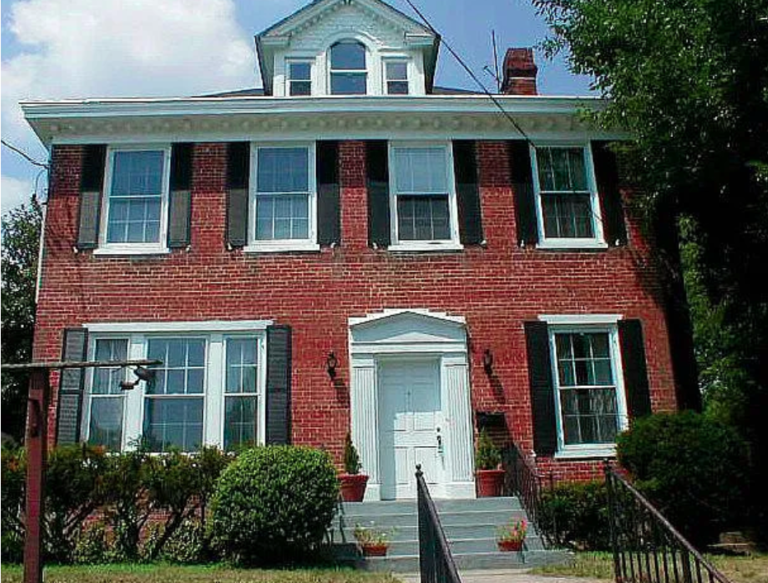
“I want to make sure you understand we’re not against group homes, per se,” Bob Starkey, who lives on West Clarke Avenue, said. “We want to talk about the number of people who can be in a group home more than anything else. In the fall, it came to our attention that the former Gary Simpson house, which is down at the other end of the street from us, was sold to a group home.”
Starkey explained that the home was sold to an entity that forms or rents group homes with the one on his street used as a rehab home.
“We found out that they took a house that had four bedrooms and a single-family house in a residential neighborhood and converted to into a house that can have nine or ten unrelated people living there,” Starkey said. “It is my understanding that this is pretty common. They take old houses, they do a little bit of renovation and convert them into homes that have basically nine or ten people in them in a residential neighborhood that, before, had four or five people living in them.”
Starkey pointed out that he would not be permitted to turn his home into a rental house for that many people and he felt this should apply to a group home. Recently, the state passed new regulations for how towns could manage group homes. Starkey reached out to the sponsor of the bill and questioned the number of people. The response he received was that the legislators did not take those issues into consideration before passing the legislation.
“I would just hope council could regulate how many people lived in a particular home, such as if it has four bedrooms, four people could live there,” Starkey said. “If it is going to be a tenant house, that is going to impact everyone’s property values and destroy the nature of residential neighborhoods. I think I live on a pretty nice street, but since the rehab center opened in the old hospital, there have been three new group homes added and two of them we know are rated for ten people.”
Sue Harris, a founding member and on the board of directors of First State Alliance of Recovery Residences, agreed with Starkey.
“House Bill 114 is not very specific, but it does allow recovery residences to determine how much square footage you need per person,” Harris said. “Our standards for a group home are based on the National Alliance of Recovery Residences, and they usually exceed city or state codes. It is 50 square feet per person per bedroom. If you put two people in a bedroom, you must have a 100 square foot bedroom, so it does not sound as if they are doing it right. There should be no way a four-bedroom house can house ten people. You also have to have community spaces, so you cannot turn a dining room into a bedroom.”
Nina Pletcher, who lives on South Walnut Street, also felt there needed to be better control over group homes.
“We understand and respect that a group home serves a vital role in our community. They provide needed housing and support services, and they deserve to exist in residential neighborhoods under the law,” Pletcher said. “However, what we are experiencing in Ward 2 is not whether group homes should exist, it’s about concentration and impact on our neighborhood. We are seeing a growing concentration and impact in our neighborhood. We are seeing a growing number of properties converted into group homes, many within close proximity to one another.”
Pletcher pointed out that there were currently five or six homes on the market that could be converted to use as a group home which raises concerns among those that live in the area.
“Other municipalities have addressed this challenge by implementing reasonable spacing requirements, monitoring density or creating oversight mechanisms that prevent over concentration while still fully complying with federal and state fair housing laws,” Pletcher said. “So, tonight, I’m asking, what is the city of Milford doing or planning to do to ensure that no single neighborhood bears a disproportionate share of any one type of housing.”
Later in the meeting, City Planner Rob Pierce provided council with information on new regulations regarding where a group home may be established.
“Solicitor [David] Rutt brought to the attention of city council during ordinance adoption that language in there related to group homes was impacted by a bill that was signed by the governor on August 1, 2023, limiting municipal and county zoning ordinances related to certified recovery houses,” Pierce said. “Certified recovery houses must be treated as permitted uses where single-family residences are permitted.”
Pierce pointed out that city regulations require that the lot on which a group home is proposed should not be within 500 feet of a lot on which another group home is located. All required state licenses and permits for the group home must be obtained before a Certificate of Occupancy will be issued and the applicant must submit a floor and plot plan.
“No alteration, addition or other structural change to the interior or exterior of any single-family building in which a group home is proposed to be located shall be permitted if such alteration, addition or other structural change would alter the essential single-family character of the building,” Pierce said.
Pierce provided definitions for the different group home definitions in city code as well as details on a Supreme Court ruling that does not allow a municipality to use “family” in zoning definitions as a way to block a group of recovering individuals from living together. House Bill 114 also prohibits municipalities and counties from drafting ordinances that would essentially prevent a certified recovery house in residential neighborhoods. Mayor Todd Culotta asked Pierce how many non-related residents were permitted in a single-family dwelling. Pierce state up to five.
“So, the group home language is more flexible than our own rental regulations,” Culotta said.
Pierce clarified that the rental code had limitations based on the size of the rooms and that regulations did cap group homes at ten individuals.
“I do want to thank Rob for putting this together,” Councilman Jason James said. “This concern has been expressed by many residents, and I know Councilman Marabello has and probably others who aren’t here this evening, have brought it to council’s attention. I think it is important that everyone has actual information and where Milford falls on this when it comes to state and federal regulations.”
Culotta asked about the 500-foot regulation which did not apply to group homes for the disabled. He confirmed that those could not be limited, but Pierce stated that the city could apply occupancy limitations similar to what is applied by the rental program.
This was simply a discussion and no changes to code were proposed or voted upon by council. The slide presentation Pierce provided to council can be found online.