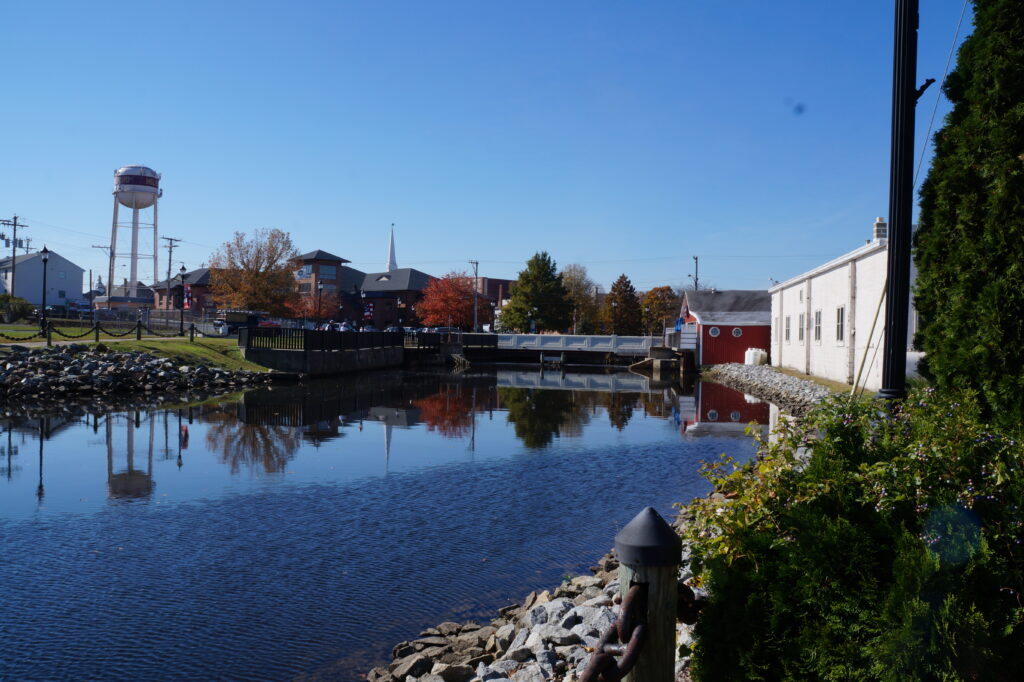







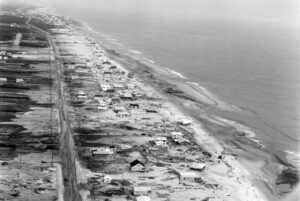
The Ash Wednesday Storm, also known as the Storm of 1962, left a lasting mark on the Delmarva Peninsula and is still remembered by residents today, 64 years later. Although it was not a hurricane, the storm caused $50 million in damages, the equivalent of $540 million today.
The Ash Wednesday storm was a nor’easter which coincided with a spring tide remained stationary over the area for almost 36 hours, causing flooding that lasted more than five hours. The storm was most damaging to beach towns, especially Ocean City and Rehoboth Beach, but also impacted inland towns like Milford.
A DVD available at the Milford Museum, The 62 Storm: Delaware’s Shared Response, explain that initial weather reports did not cause concern among residents. This type of weather is common in March in the Milford area and residents were not alarmed. It was not until around midnight on March 5, it was clear this storm was far from a routine nor’easter.
There has never been a direct hit along the Delaware coast, but nor’easters are very common. They often cause similar damage as a hurricane and derive power from temperature differences between cold and warm air masses, unlike hurricanes which require warm ocean water to remain powerful. Nor’easters get their name from the direction the winds circulate and originate in the westerly wind belt.
An upper level high blocked the storm which was predicted to move up the coast. This caused it to stall over Delmarva. Hurricane Hazel, which struck the area in 1954, had lower sustained winds than the Ash Wednesday storm. It is believed winds reached over 112 miles per hour.
By midnight on March 5, Governor Elbert Carvel declared a state of emergency and ordered evacuation of beach areas. At that time, there were no gauges to tell how high ocean waves were, but eyewitnesses claimed waves as high as 30 feet by March 7. Waves along the coast pushed water into bays and tributaries, causing flooding inland. Towns like Milford, Milton and Millsboro suffered significant flooding.
The stalled Ash Wednesday storm remained for five high tides, adding to the flooding. One of those tides still holds the record for the highest in the state. Bowers and Slaughter Beach were impacted by winds and high tides with many of the homes built along the coast using the same standards as those built inland.
“Many people just laid joints along the marsh and built on top of them,” John Moyer, Jr., who was interviewed as part of the DVD filming, said. “There were no foundations and no support. We had no warning at all about this storm. We had no idea how devastating it would be.”
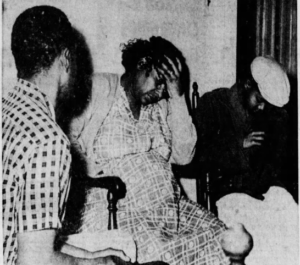
The storm killed seven people in Delaware with five of them in Bowers Beach and one in Slaughter Beach. John A. Waters attempted to evacuate his family in Bowers Beach. According to accounts, Waters woke around 5:30 AM to find water sweeping across the lowlands. He awakened his family and loaded them in the car, but by the time the family was inside, the waters had risen to the point he knew he could not drive out. They decided to remain in the car until the tide fell.
When the tide did not fall, Waters managed to get his son, John Jr. and his wife, who was expecting their ninth child, to a nearby oyster shucking house mounted on stilts. Waters wanted to try to save the family, but his wife told him he wouldn’t make it. They watched helplessly as the car was swept and dragged across the yard by flood waters.
“The windows of the car were down, and I saw my son, Eugene, crawl from the car,” Waters told reporters. “A wave or something must have broken his hold. I knew he was gone, but I didn’t tell my wife.” Waters shouted to the children to close the windows.
A rescue team waving a flag and a boat manned by members of the Dover Fire Company arrived and saw bodies in the car. They pulled Mrs. Waters’ mother, Mamie Whittington, 57, and Alisa Waters, 9, from the vehicle, both still alive. However, Monroe, 12; Rosa, 6; Wayne, 5; Charles 3; and Elizabeth, 15 months had perished. Fishermen searching for a boat found the body of Eugene, 7, in a field a few days later.
“She didn’t know us when we were in the hospital,” Virginia Waters said to reporters about her daughter, Alisa. “She kept telling us, mother, they’re all dead. She knew. She knew.”
Mrs. Richard O’Brien, the wife of a major at Dover Air Force Base was also reported missing. The major returned to their home in Slaughter Beach to find it destroyed. His wife had not been seen since the storm. There is no record of if her body was every found.
The Waters family received $1,494.50 from the American Red Cross to help them find new housing after the tragedy. This is the equivalent of $16,090.72 today.
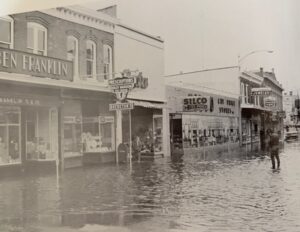
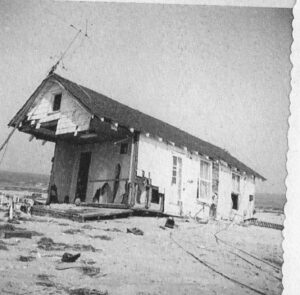
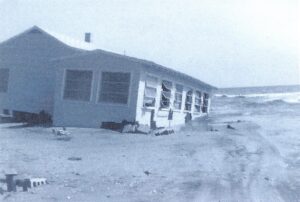
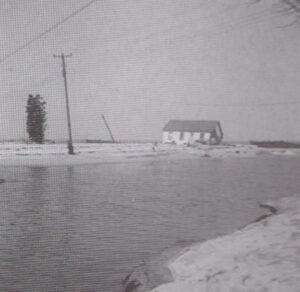
Photos after the storm show downtown Milford streets that looked more like a river. Humes hardware and other businesses downtown suffered flooding. Near what is now Bicentennial Park, the flooding was significant with water above store windows. Homes in Slaughter Beach were destroyed.
Even today, many residents recall seeing boats washed up along the road between Milford and Slaughter Beach. In some areas, prisoners were used to remove debris while young boys earned extra money by shoveling sand or removing debris from beach homes.
Governor Carvel spoke after the storm.
“The invasion of natural forces which devastated the Eastern Coast of our state last Tuesday and Wednesday has resulted in great personal loss of life, property and income,” Carvel said. “The courage, the heroism, the valiant spirit of Delawareans – National Guard, State Police, Volunteer Firemen, Red Cross, State and local officials and employees and private citizens – will be long remembered. The sincere feeling of concern for the desperate plight of our fellowman, displayed by individuals and groups during these trying days, provided a magnificent demonstration of kindness and neighborliness.
The Ash Wednesday storm changed many of the building codes along the Delaware coastline, making them more stringent and restrictive in order to protect people and property.
According to the National Weather Service, there have been storms as strong as the 1962 storm, but none have stalled over the area for that length of time. The Ash Wednesday Storm led to the Delaware Coastal Zone Act in 1971 which was designed to protect the coastline from extensive coastal development. The act banned construction in the middle of beaches which had been common practice prior to this storm. The Atlantic Sands Hotel, for example, stood in the center of Rehoboth Beach before the storm, but was forced to move back to its current location when they rebuilt.