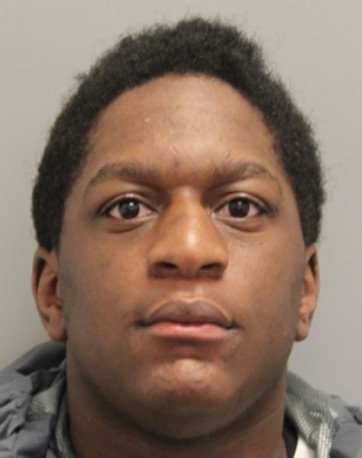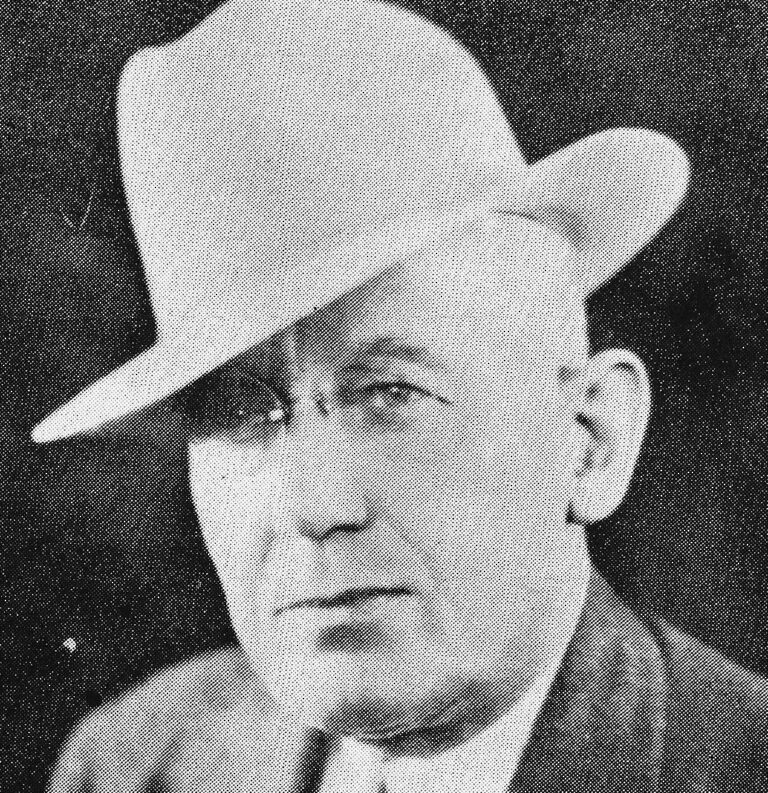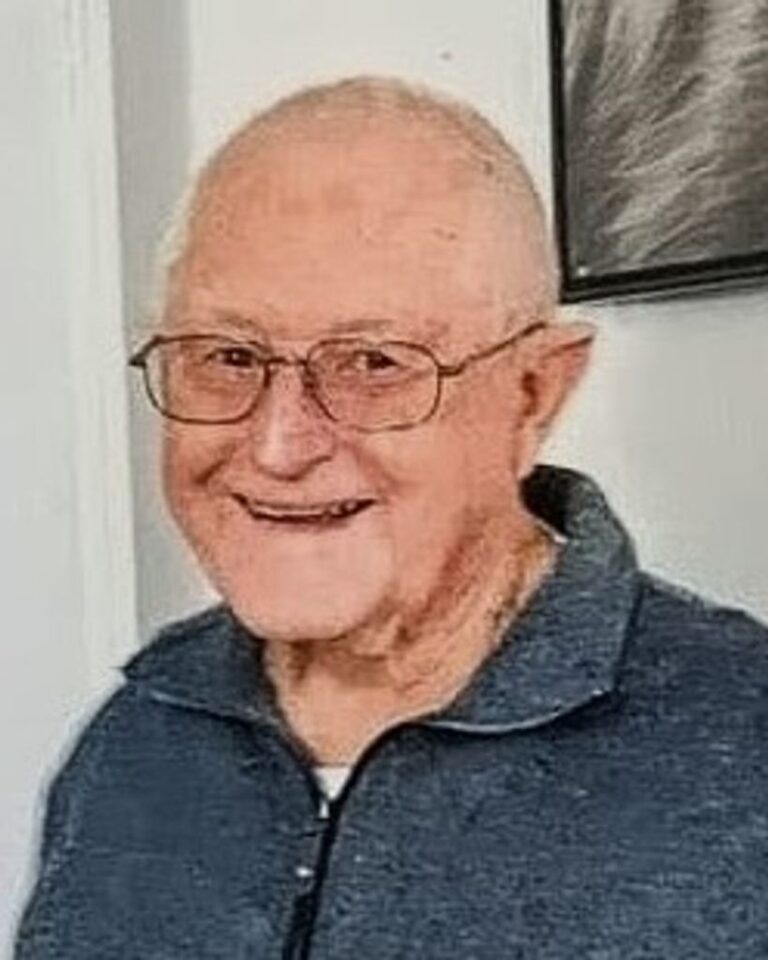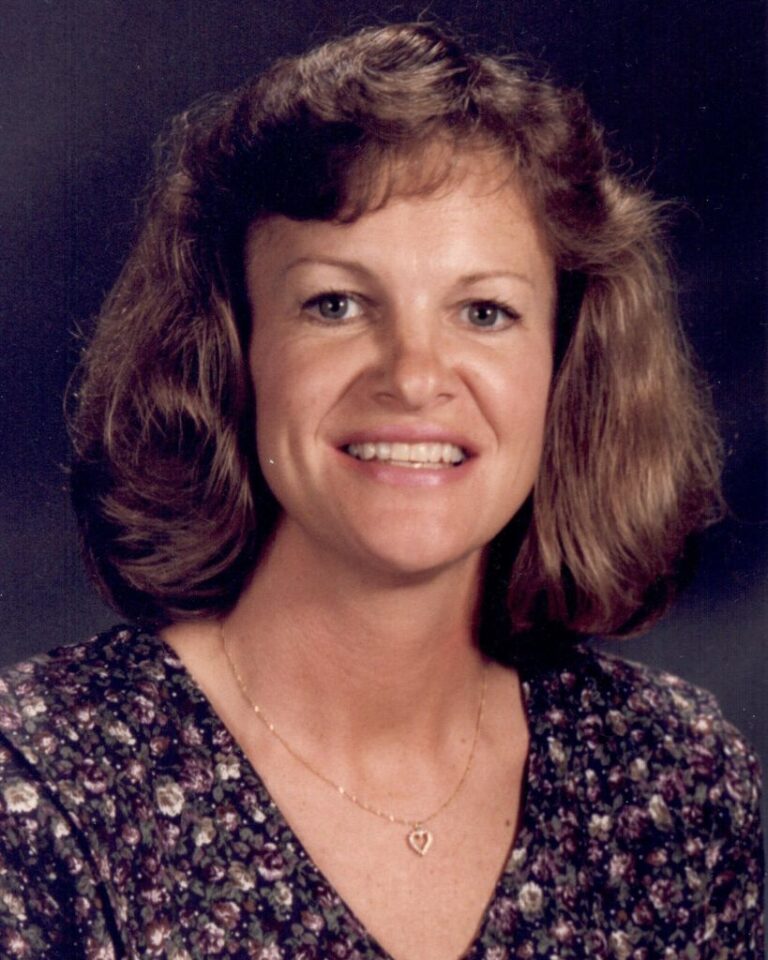
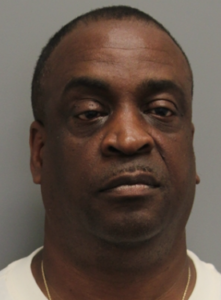
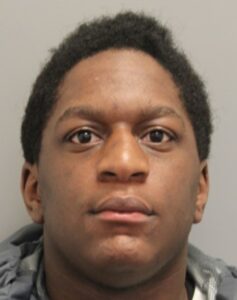


At the end of his book, Milford Eleven, Orlando Camp talks about his classmates and where they were at the time the book was published.
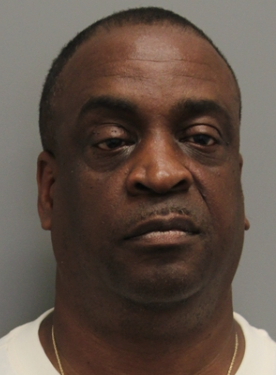
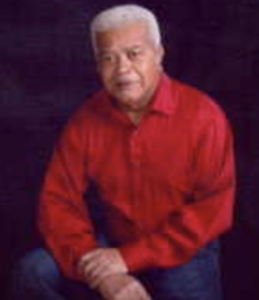 Kenneth Baynard was the musician in the group, Camp wrote. He had the ability to play any song without reading sheet music and played at many local places, including the Chicken Shack and Gun & Rye Club. During his brief stint in Milford, he joined the band. He was the youngest of five and his entire family was musical. Baynard learned to play the sax at the age of 12, but could also play drums, guitar and piano.
Baynard played with several local bands. At the time of the book writing, Baynard played sax with the Milford Church of God choir. He retired from the State of Delaware Department of Administrative Services, Division of Facilities Management. Baynard started there as an electrician and retired as Director of Facilities Management. He married Marilyn Cohen and they had four children. Baynard passed away on July 24, 2013.
“Don’t let anybody tell you what you cannot achieve,” Baynard is quoted as saying. “If you listen to that and believe it, you will never achieve anything.”
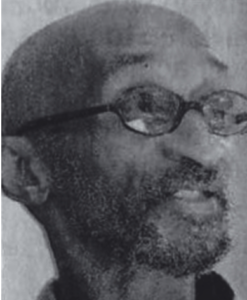 Alex Leo Blue, who went by Leo, was frustrated by racism and name calling in Milford. The rumor that he asked a white girl to a dance, causing the uproar in Milford, is something Camp does not believe true.
“The Leo that I knew would never ask a black girl to a dance, let alone a white girl,” Camp wrote. “He was not bashful or shy; he was into making money.”
After that rumor, Blue did not want any parts of integration if it meant going to a school that did not want him. He moved to Wilmington soon after. According to one of his children, his family moved when his mother was fired as a cook in a local restaurant when the owner found out Blue was her son.
Blue married Yvonne and they had three children. He began driving trucks for Certified Concrete Company where he worked for many years. In addition, he operated a successful trucking service in Wilmington selling fish, produce and hauling junk. Blue passed away in 1975.
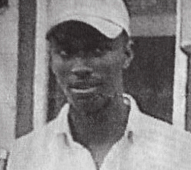 Born in Philadelphia, Camp moved to Milford to live with his grandparents. His grandfather was passionate about race relations and he knew that education was important. Camp’s grandfather also instilled in him that how you spoke and how you dressed were important. When his grandfather went to work as a chauffeur for a rich investment banker, Camp says his shoes were always shined and his suit pressed.
Moving to Milford from Philadelphia was a culture shock, Camp wrote. They lived next to Silver Lake, and he spent summers on the lake in his canoe. He felt that the education he got at Banneker was as good as the teachers could give with limited resources.
When the students were given the option to transfer from Jason High School to William Henry High School, Camp wrote that one stayed at Jason, three dropped out of school in frustration and the rest went to William Henry. After graduation, Camp moved to Philadelphia, earning degrees from Delaware County Community College and Temple University.
After being discharged from the Army in 1964, Camp joined Scott Paper Company and was eventually promoted to consumer products sales manager. He spent ten years with Comstock Foods as a special markets’ national sales manager and Stanson Corporation a vice-president of sales and marketing. He also directed a marketing team for the State of Delaware.
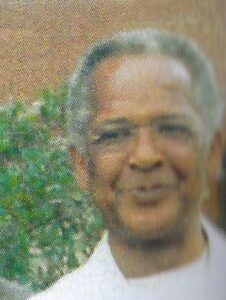 Charles P. Fleming, Jr. was always the life of the party, Camp said. He attended Jason High School in Georgetown for one year before transferring it to William Henry High School in Dover. He graduated from there and entered the Marines in 1961. After his honorable discharge, Fleming moved to Philadelphia where he worked for a local car dealership, learning how to put vinyl tops on cars. This led him to open his own business, Custom Vinyl Tops, Inc. which later became Williams Custom Auto Tops, Leather & Upholster, Inc. He married his longtime sweetheart, Carol Myers and they had two sons. At the time Camp wrote his book, Fleming had retired.
“It motivated me to be successful,” Fleming told Camp about the attempted integration of Milford High School. “Never carry a chip on your shoulder. All people are the same. We all have different beliefs. Take the best out of that and put that on your portfolio. Work each day from what you’ve learned in life.”
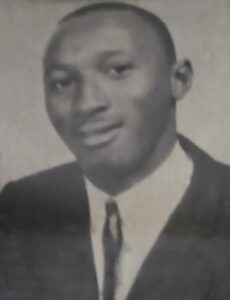 Eugene Harris, often called Mouse or Jimmy, was the second oldest of ten children. He was one of the best-groomed students at Banneker, always with a crease in his pants and well-shined shoes. Harris was an outstanding and industrial arts students, creating beautiful furniture for his mother in wood shop. After William Henry, he moved to New York City where he became a commercial painter. Harris married Nancy Clark and they had three children.
The state police were parked across the street from his house in front of the Baptist Church to make sure there were no problems, Harris remembered. He attended Jason and then William Henry High School. Harris is sorry the students did not get a chance for education at the white school.
“If they had let us stay, we might have learned a lot of things, but I don’t dwell on the past,” Harris is quoted as saying in Camp’s book. “When I went to Jason High School, I was happy. I was with people who wanted me there.”
Harris passed away November 25, 2025.
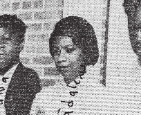 Annie Ruth Thompson McDaniel moved to Milford as a small child and her social activities were limited to church, according to Camp. She could not go to school basketball games or other events. The only event outside of church she could attend was an occasional movie with Madalene Staten. One of nine children, McDaniel recalls being struck by a watermelon in the head by a group of white men in a car as she walked to church months prior to her enrollment in Milford High School.
McDaniel recalls being excited to attend the all-white Milford High School, but she was also frightened of the unknown. The school was closer to where she lived and, having grown up in a neighborhood of white people, she was not afraid of them. The first few days, McDaniel recalls that, although there were protestors, they were not violent. Then, she overheard a teacher call the black students’ “monkeys” and remembers that the teachers often talked to them as if they were not really there. Her disillusion about the success of integration grew one day as she and Staten were walking home and men working for the electric company on a pole purposely dropped a light bulb on the ground. When it hit, it sounded like a gunshot and scared them. The men laughed at their fear.
Although she was disappointed when the students were kicked out of school, McDaniel was also relieved. She found the students and faculty friendly at Jason. At the end of 10th grade, the students were given the option to stay at Jason or transfer to William Henry. McDaniel transferred but became frustrated with so many changes. She didn’t like William Henry, so she left school and moved to Boston with her brother.
Remaining in Boston for about 15 years, McDaniel married John McDaniel and they had four children. After nine years, the couple separated and she moved to Sherman Oaks, California. McDaniel retired from a career in retail after 25 years but often looks back at 1954 and wishes things had been different.
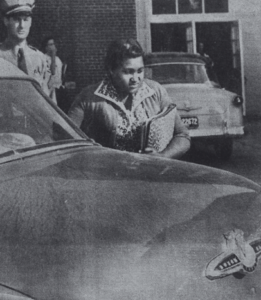 Irene Pettyjohn, Camp wrote, “sat in the back of the calls and never raised her hand, but always knew the right answers.” When interviewed by Camp, Pettyjohn remembered how frightened she was and that she would run past the crowd gathered outside because there were so many white men and women screaming at her to go back where she came from. Protestors spit on her and called her the “N” word. Pettyjohn only returned to school because her mother insisted.
When it was announced that the black children would be sent to Jason in Georgetown, Pettyjohn decided she had enough of school She was disillusioned by education and the fight for it. Camp reported that she passed away much too soon and was never able to see what her struggle means today. No obituary could be found for Pettyjohn, so it is not clear when or how she died.
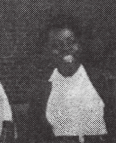 Edna Turner Sharp was one of ten children, all of which had an intense desire to learn, to do and to make a difference. All of the children knew how to write their names and the basics of reading when they entered first grade. Sharp stated that “playing school” was common at her house and the older siblings often taught the younger ones. Devout members of the Bethel A.M.E. Church, the children also attended all services the church offered.
At the ninth-grade graduation at Benjamin Banneker, Sharp was named valedictorian. Looking back, Sharp doesn’t think any of the ninth graders in that class or their families were prepared for what would happen the following year. She told Camp she tried to forget some of those events. Fifty years later, she finally was able to purge her soul after a few citizens reached out to her to show sincere regrets for what transpired.
Sharp still finds it difficult to talk about what she felt during September 1954. She remembered vividly being scared of the adults from Milford that showed up and blocked the doors, the hateful taunts, the mean looks and the bitterness shown toward eleven students who were just children. Sharp remembers wondering what would happen to them and their families if they were hurt. Most of all, she wondered how they could learn in such an environment.
Crosses burned, acts of hate and, for the first time in her life which she now sees as sheltered, fearful of people she had known, Sharp remembered it as one of the worst feelings. She does not remember talking about it and believes she just internalized it, accepting the calming voice of her mother who kept telling her she had done nothing wrong.
Sharp believes she was relieved when they transferred to Jason but also remembers feeling as if they had failed. She graduated from William Henry High School with honors in 1958. Her first marriage ended in divorce, and she remarried Joseph V. Sharp. She began working for Diamond State Telephone, which became Verizon, retiring after 33 years as a highly successful service representative.
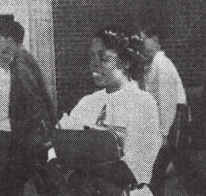 Lillian Simmons did not attend Benjamin Banneker with the rest of the Milford Eleven. She lived with a local undertaker, Perry Reese, who was known to help families in need. Simmons helped take care of Reese’s mother until she passed away, then took care of his mother-in-law while attending school in Dover. When Reese’s mother-in-law died, Simmons moved to Milford but continued attending school in Dover. When Reese learned of the attempt to integrate Milford High School, he enrolled Simmons in Milford.
According to Camp, Simmons was never happy about going to an all-white school. Every day she worried something bad would happen, but once she was enrolled, she was determined not to give up. When the students were moved to Jason High School, she was happy. When they were transferred to William Henry High School the next year, Simmons stayed only one year before she became pregnant with her first child and moved back to Camden, New Jersey.
Simmons worked in housekeeping for the Playboy Casino in Atlantic City for 15 years before retiring. She wonders what her life would have been like had she graduated from Milford but is happy in her retirement.
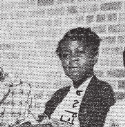 Madelene Staten, who was called “Baby Sis” as she was the youngest of four girls, looked forward to going to Milford high as she knew a good education would give her a better chance in life. She graduated from William Henry and returned to Milford to manage Penn Fountain, a hangout where many met to socialize. On Friday and Saturday nights, people would come from surrounding areas to dance and meet friends. Staten was behind the counter serving everyone who came in.
Staten married Buddy Young of Slaughter Neck who owned school buses. They had three children. Staten died in 1968 from complications of childbirth. Her husband passed away in the 1970s.
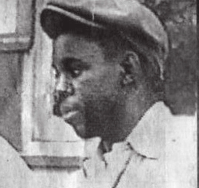 Ronald Vann was the athlete of the Milford Eleven, according to Camp. A quiet man who was soft-spoken, Camp describes Vann as “a man who never backed down from a challenge.” Vann was one of two blacks to make the team and play football at Milford High School and one of his greatest disappointments was not being able to play all four years at a white school.
“If I was good enough to play football side-by-side on the football field on the all-white football team, why wasn’t I good enough to get an education?” Vann is quoted as saying. He always wondered if he may have been able to go on to college and maybe even the pros had he been allowed to complete his education at Milford.
Vann graduated from William Henry High School and moved to Wilmington. There, he worked at Allied Container Company for 31 years before taking a position at Christiana Hospital where he remained until his 2005 retirement. He married Dorthea Crisden in 1961 and they had two sons. Vann died on April 3, 2017.
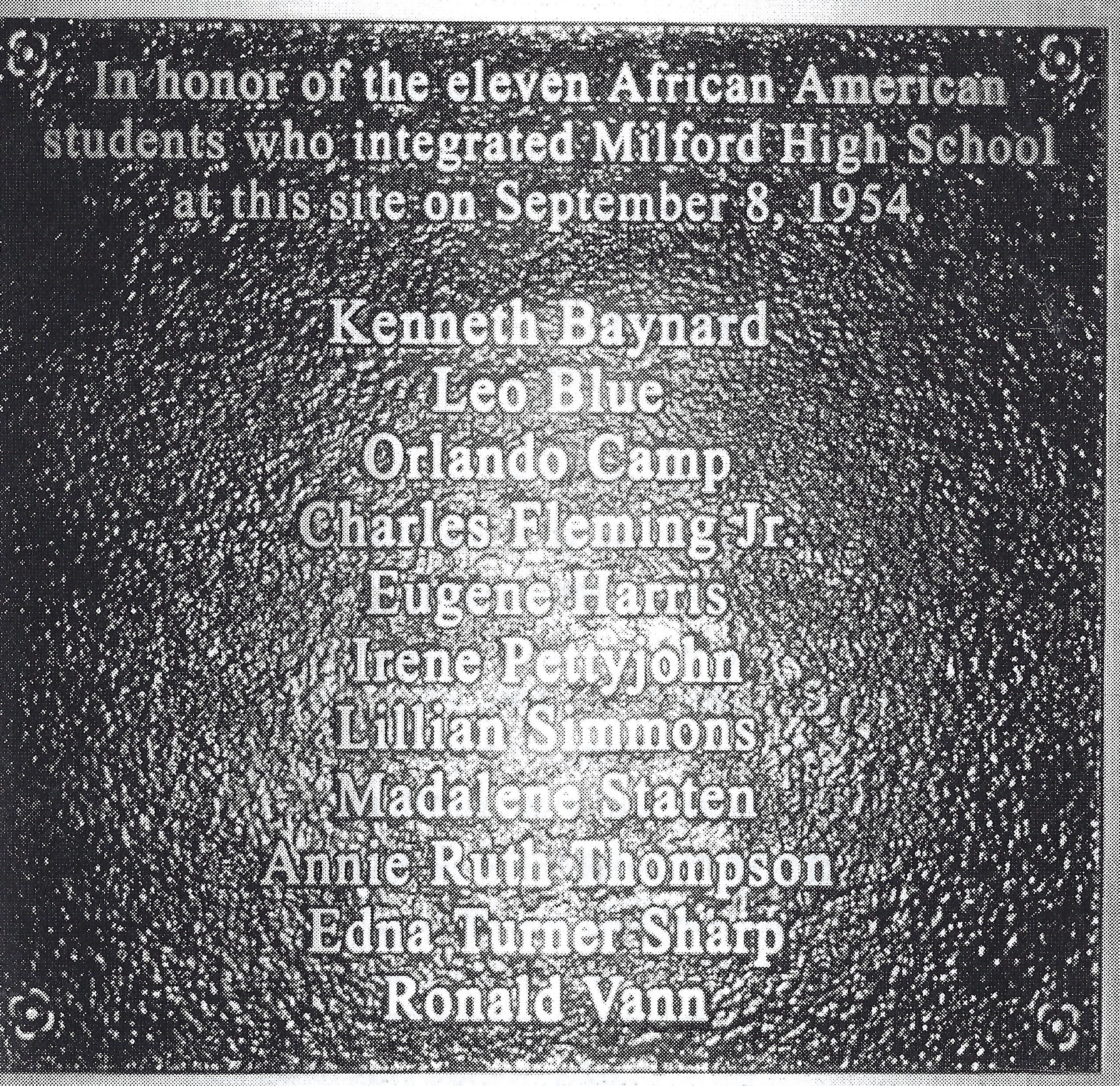
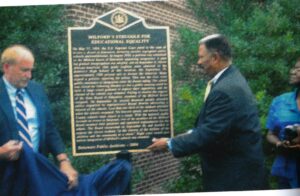 On September 8, 2004, 50 years to the day after the Milford Eleven attempted to integrate Milford High School, a marker was unveiled in front of the school to recognize their efforts. Inside the school, another plaque was dedicated in the lobby listing the names of the Milford 11. When Milford School District renovated the school and sections were to be demolished, the plaques were removed for safekeeping. Both will be rededicated in a ceremony in September 2026 as well as commemoration of the Milford Seven who were successful in integration.

In May 2012, The Milford Eleven were awarded honorary diplomas from Milford High School.
Bryant Bowles, who made the attempted integration of Milford High School national news, turned out to be less than an upstanding citizen even while he was stirring up racial tensions in town. William Bryant Bowles was found to have a police record in Baltimore as well as arrest records in Tampa, Florida. Bowles was convicted of five charges of false pretense involving bogus checks. He was fined $25 and costs on each charge. At the time of his arrest in Baltimore, he had warrants for his arrest in Tampa for similar charges. When police checked, they found Bowles had made restitution and the warrants in Tampa had been voided.
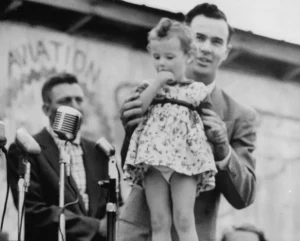
After his conviction in Baltimore, Bowles was turned over to Bel Air, Maryland, police for paying employees of his roofing company with bad checks. Those charges were nolle prosed by the state’s attorney’s office, and he was set free.
On October 8, 1954, Delaware attorney Albert W. Young moved to revoke the charter of the National Association for the Advancement of White People (NAAWP), founded by Bowles, for fraudulent practices. Young also accused Bowles of “attempting by means of mass hysteria, mob rule, boycott and dissemination of race prejudice” not only to intimidate black families and school officials but to encourage white parents to violate attendance laws. Then-Governor Caleb J. Boggs ordered the arrest of Bowles, and he was taken into custody. At his arraignment in both Kent and Sussex Counties, his bail was set at $6,000.
In 1955, Bowles stood trial in Dover before Judge Charles Sudler Richards on the charges. The jury found Bowles not guilty. Many years later, it was learned that one of the jurors was a member of his organization. Bowles continued to hold rallies in Maryland and Pennsylvania where he was threatened with criminal charges. Segregationists began to move away from Bowles due to his propensity for violence and a growing record of fraud. When Bowles began to attack Jews, he was alienated even further.
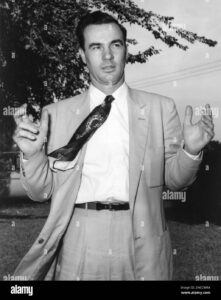 In 1958, Bowles’ pregnant wife, Elma, got into an argument with her brother, James Earl Harvey, and he slapped her. Mrs. Bowles told her brother that she was going to have her husband “kill him.” Mrs. Bowles called her husband who was on a business trip to Chicago. Bowles drove 18 hours to Beaumont, Texas, where the couple lived, got his shotgun and shot Harvey who died the next day. Both Bowles and his wife were arrested and charged with murder.
Bowles claimed self-defense, claiming Harvey always carried a knife, but he was found guilty of murder with malice. The prosecution sought the death penalty, but the jury recommended life. Mrs. Bowles received a five-year suspended sentence for her part in the murder.
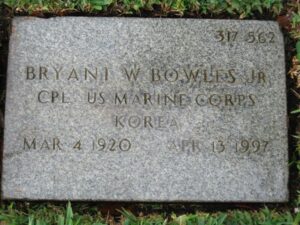 In 1973, Bowles was paroled. In 1976, he and his brother, John Thomas, were arrested for their involvement in a marijuana smuggling ring in Florida. In 1977, the two were arrested again for smuggling marijuana and each received a five-year sentence. While on work release in 1978, Bowles escaped. In 1980, he was arrested again after landing a plane with 600 pounds of marijuana and 78,000 Quaaludes. Bowles was sentenced to 25 years in prison in 1980 but was paroled in the 1990s.
Bowles died in 1997 at the age of 77 of congestive heart failure in Tampa.