


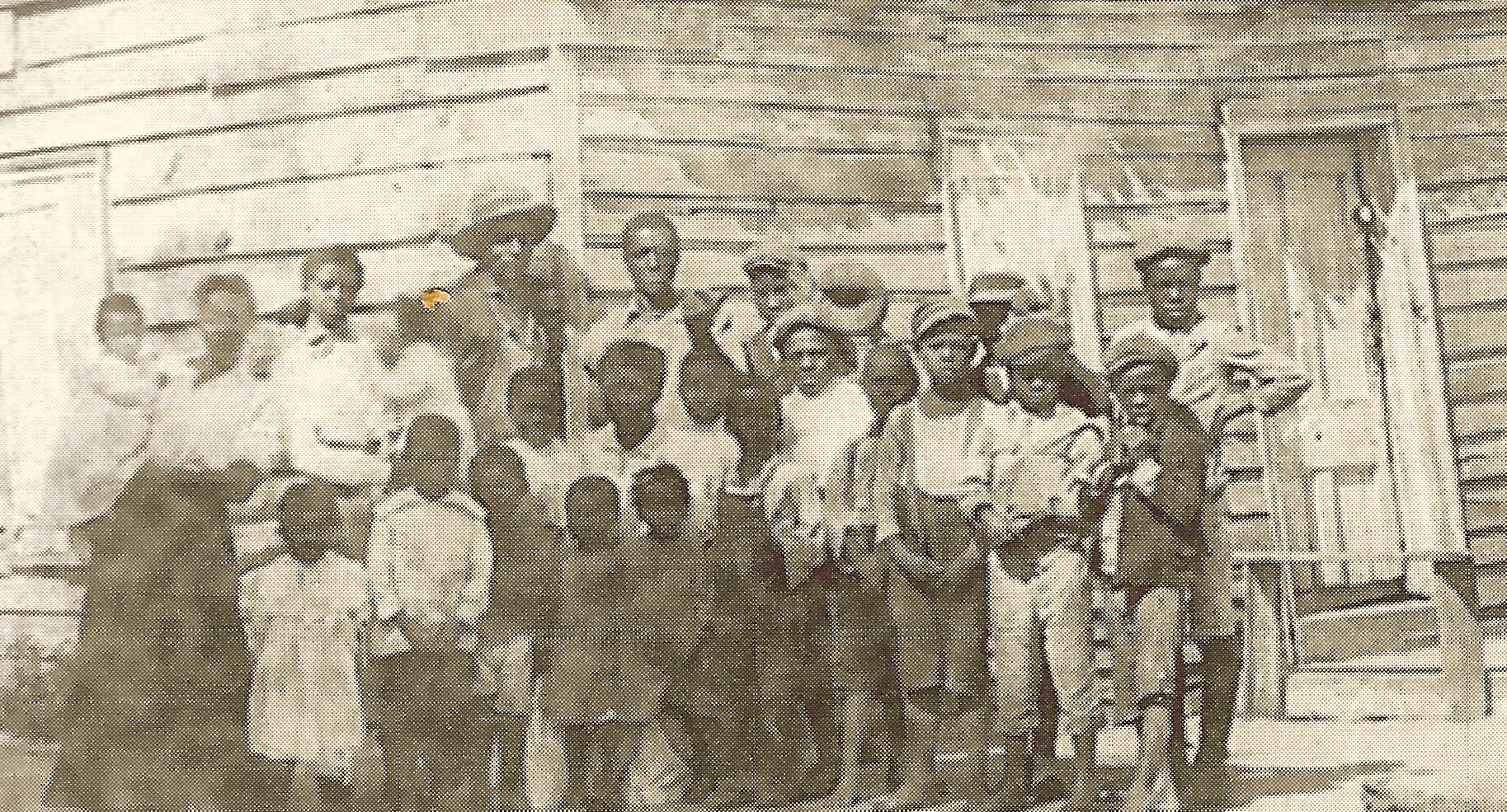


According to Dave Kenton’s book Images of America: Milford, blacks were kept poor and uneducated in the early 1900s as a result of Milford’s segregation culture held over from the era of slavery and reconstruction after the Civil War. Very few postcards depict the lives of the poor and lower class.
This photo is apparently of a picnic with a family of African Americans standing in front of their home. There is handwriting on the edges of the post card that reads.
“Milford crops are flourishing. This one is one of our picnics. You’ll have to come home by Aug. now whether you want to or not for you have a date with me for the 18th and you must never break a date, you know. Have been in Philly for two weeks and had a grand time. Saw Sadie lots of times. What was the message sister gave you from me? I am anxious to know.”
There is no information on who the family is, who wrote the postcard or who it was sent to.
There were slaves in Milford. Absalom Jones, who became a prominent abolitionist and clergyman, was born enslaved in Milford in 1746. He eventually bought his own and his family’s freedom, moved to Philadelphia and became a leader in the Free African Society.
There is a still standing outbuilding on the property of Causey Mansion that was a slave quarters and there are records that Parson Thorne owned slaves when he lived in Silver Hill Mansion.
In 1847, an amendment to the town charter gave commissioners the power to suppress “riotous and noisy assemblages of gatherings of negroes, mulattoes or other persons.” It also established different punishments depending on whether the individual was free or enslaved.
Despite this dark history, there is evidence that some areas of Milford were part of the Underground Railroad. Research is currently being done on where those locations may be with some pointing to the Roosa farm north of Milford.




Excellent information..I’ve been a resident for 5 yrs. I enjoy the small town feel and the fact I feel safe to walk the summer festivals by myself.
The history doesn’t surprise me but love the multi cultural neighborhood it has become. Looking forward to more info on the Underground Railroad.