

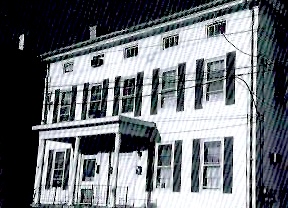
Located on North Walnut Street, the Nehemiah Davis home still stands, built in 1840 by a prominent member of Milford society. Davis was a partner in the firm of Currey & Davis, a firm that specialized in fertilizer and farmland speculation.
“He shipped cordwood and barrel staves to Philadelphia and brought back farm supplies and traded goods,” Milford historian Dave Kenton wrote in his book “Images of America: Milford, Delaware. “His partner, Daniel Currey, kept books in the office and lived across the street in the home that later became General Torbert’s residence after he married Currey’s daughter, Mary in 1866.
The lot was originally owned by an African American man named Shevillier who lived in a wooden shack on the property. When Shevillier passed away in 1820, the land was bequeathed to Reverend Trusten P. McColley who sold it to Henderson Collins, a bricklayer and builder.
Collins sold the lot to Davis who had married the daughter of a wealthy merchant from Philadelphia. As a wedding present, her father constructed the three-story home.
Davis initially entered business in Milford with the son of Peter T. Causey under the name N. Davis & Co. The store was where the Milford Museum stands now. In addition to offering agricultural supplies, the company also manufactured black oak bark into quer-citron for tanning hides and for shipment to London for dying purposes. The company dabbled in iron ore beds, trading between Milford and Georgetown.
When Currey joined the company, the name changed to Currey & Davis as did their merchandise. Their field of operation included merchandising, speculation in grain, in heavily timbered lands, vessel building and buying farms as well as houses. When the two men dissolved their partnership, both were considered very wealthy.
Col. Henry Fiddeman purchased the storehouse, wharves and granaries owned by Currey & Davis. Currey opened an office in Fiddeman’s building and increased his wealth through speculations in land, guano and grain. Davis retired with a substantial fortune.
After Davis died, the property was willed to his daughter in 1880. She married Frank Rickards and, in 1916, the home was willed to the wife of Dr. Willard Pierce, the daughter of Frank Rickards.
Willard Pierce, Jr. was raised in the home until he died in a World War II training accident in 1943. After Dr. Pierce died, the home was purchased by Dr. Robert Emory who operated a dental practice in the building until 1995 when it was converted to apartments.