
Methodism in Delaware has a storied history, from persecution to a place of great prominence and influence. In. November 1739, a storm forced a vessel into the Lewes harbor and one of the passengers was Rev. Georges Whitefield, an orator and Methodist evangelist. This is thought to be the beginning of Methodism in the state, spreading out of Lewes to Frederica with the construction of Barratt’s Chapel in 1784.
Until 1785, the followers of Methodism were under the ecclesiastical care of the Church of England. Places of worship were known as meeting houses and preachers were evangelists. The church became separate in 1785.
Methodists began meeting in Milford around 1777 at the home of Raynear Williams. The congregations continued to meet in private homes until 1787 when land on North Street was sold to the Methodist Society by Joseph Oliver for just five shillings. In 1789, the first mention of a church in Milford appears with Thomas Jackson and William Ratcliff in charge while Richard Whatcoat served as presiding elder of the district. A frame church was constructed on the land, completed in 1790.
The Methodist Conference of 1812 was held in the church, a memorable session with 23 sermons during the few days it was held. During this era blacks and whites attended church together and there was a gallery provided for African Americans with a separate entrance. On communion days, African Americans filed down the stairs to partake of the sacrament after white people had been served.
There was a partition down the center of the church with men on one side and women on the other. Cuspidors were provided for the men. The benches were spartan in nature where the congregations often sat and listened to six sermons during a service.
Initially, the church was lit by candles hung from a large chandelier suspended from the center of the roof. Later, the lighting changed to whale oil lamps. Whale oil had an unpleasant smell and caused dense smoke, causing one janitor to quit his job in disgust.
A graveyard was laid out around the entire building. The church is long gone, but the cemetery remains and is the burial location for several important figures in Milford history, including General Alfred T.A. Torbert.
In 1842, a new brick church was constructed at Third and North Streets with the official church board consisting of Purnell Hall, Samuel Draper, Jesse Sherwood, Benjamin Henderson and Louder Layton. The church was three stories and stood for many years. It was here that instrumental music was introduced in Methodist services. This led to dissatisfaction among members who registered their disapproval by not attending services for a time. Again, men sat on one side of the sanctuary while women and children sat on the other. Mothers with young children often brought refreshments to sustain them during long sermons. Eventually, the building was sold to St. Paul’s United Methodist Church, but prior to that, it was converted into a playhouse by Nathan Pratt, becoming known as the Music Hall. St. Paul’s Methodist Church was won of Milford’s first African American churches.
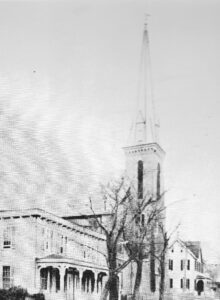
In 1870, members began to suggest the church building was too small and that a new church, more centrally located, should be erected. This led to violent dissension as many felt the building was of suitable size while others were in favor of moving to South Milford. Some felt they could simply remodel the current church.
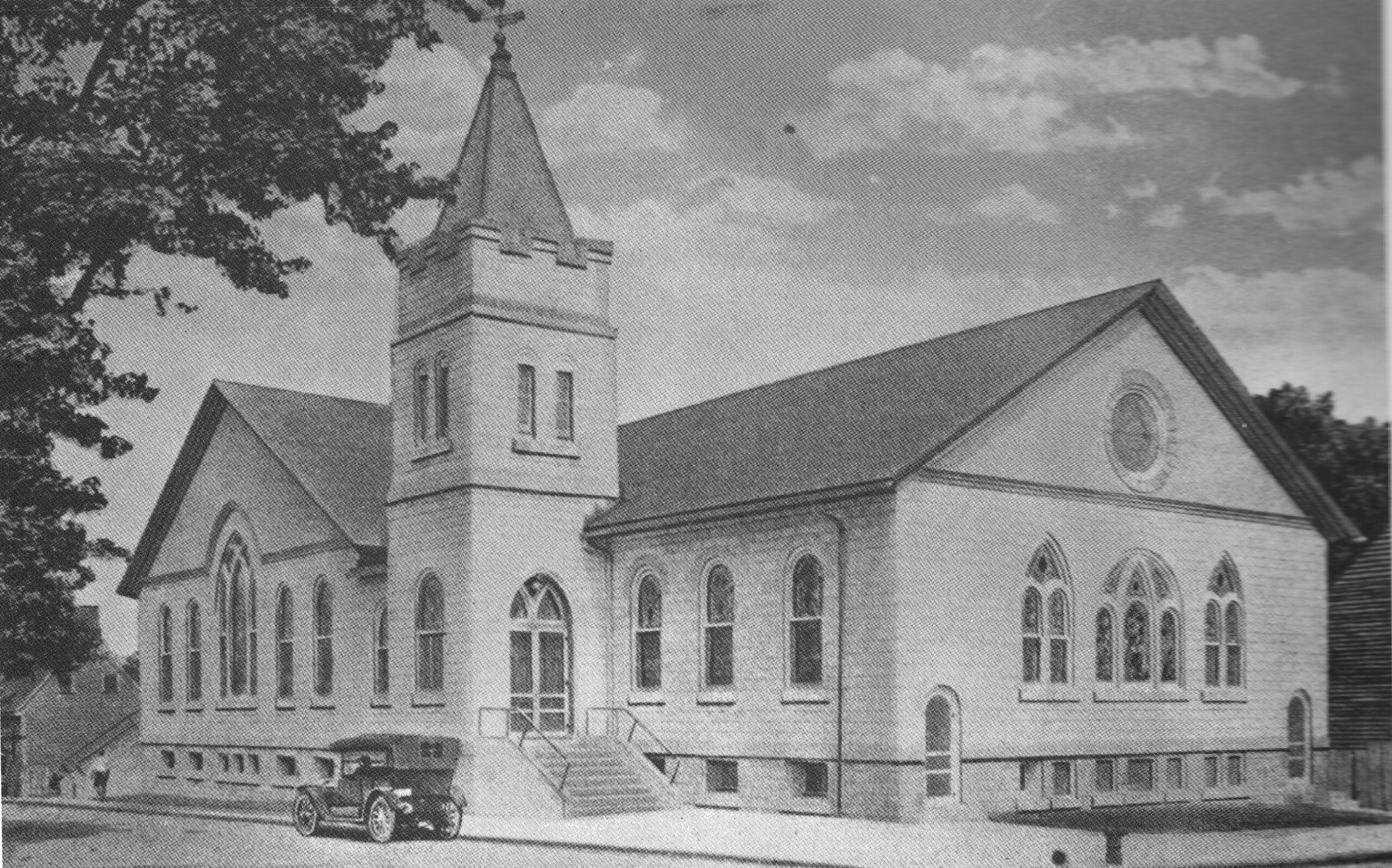
Finally, the decision was made to construct a new church and the cornerstone laid in 1871 on what was then Railroad Avenue but is now Church Street. The cost was significant at $19,000 (roughly $1.3 million today) but the cost was more than money as many congregants left, never to return.
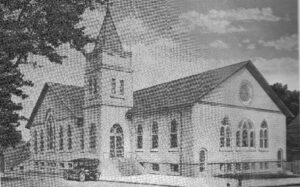
Construction was slow and by 1872, only the basement and lecture room were completed. Construction stopped until 1876 and the building was completed in 1877. The name Avenue United Methodist Church was adopted, and the first pastor was Rev. Dr. R.L. Daishell. Extensive improvements were made in 1889.
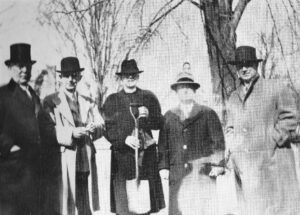
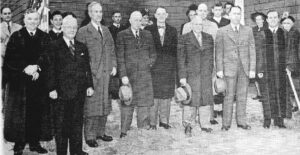
In 1939, ground was broken for the church that stands today. The building was dedicated in December 1939 by Bishop Edwin Holt Hughes, Dr. Hearn and the pastor, the Rev. Frank Herson. Under the leadership of Rev. Roy L. Tawes, the social hall and educational wing were added, dedicated in 1954 to Bishop G. Bromley Oxnam.
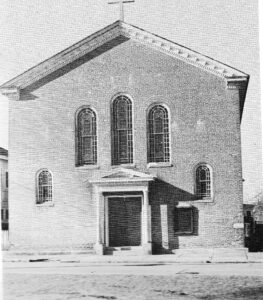
The first African Methodist Church in Milford was organized in 1859. The group was known as Bethel African Episcopal Church and the first church building constructed in 1892. The congregation worshiped there until 1937 when a new church was constructed on Northwest Front Street.
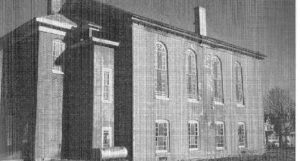
In 1885, a small wooden Methodist chapel was constructed on the southwest corner of South Washington Street and Southeast Second Street by Peter Causey Jr. who felt the citizens of south Milford needed a place of worship. Many workers from the shipyards were not comfortable attending the more elegant services in North Milford.
During the summer of 1910, a group of Methodists felt there should be another Methodist church in South Milford. This effort was led by Rev. Louis Bennett, an evangelistic preacher who came to Milford in 1910. Bennett held tent meetings on a site that is next to the current Salvation Army store but was once the Acme Market on Southeast Front Street. In October of that year, the tent meetings became the Methodist Protestant Church of Milford. When cold weather arrived, the congregation needed a permanent shelter, and a temporary tabernacle was constructed on the land.
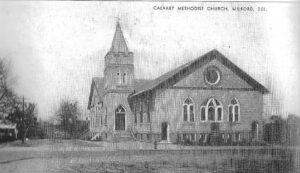
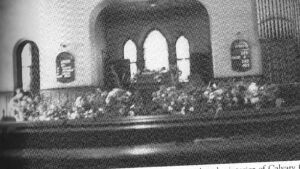
Bennett became pastor of the congregation which became official in January 1911. A lot was purchased to construct a church on the corner of Southeast Front Street and Franklin Street. The building was dedicated in 1912. When Methodist churches were joined in 1939, the name of the church became Calvary United Methodist Church.
Fire destroyed the building in March 1951, and the pews, stained glass window and organ were lost in the fire which completely destroyed the building. Ground was broken for a new building in October 1952. This building was dedicated on March 7, 1954. While the church was under construction, the congregation met at the Milford High School as well as Avenue Church.
Today, St. Paul’s, Avenue and Calvary are all still practicing Methodism and have thriving congregations.
All photos courtesy of Milford Historical Society and Dave Kenton.







At Calvary Church, 301 SE Front Street, the large stained glass window in the sanctuary was saved from the church fire from the original church . There are a few other items that were saved and are in Calvary today.