




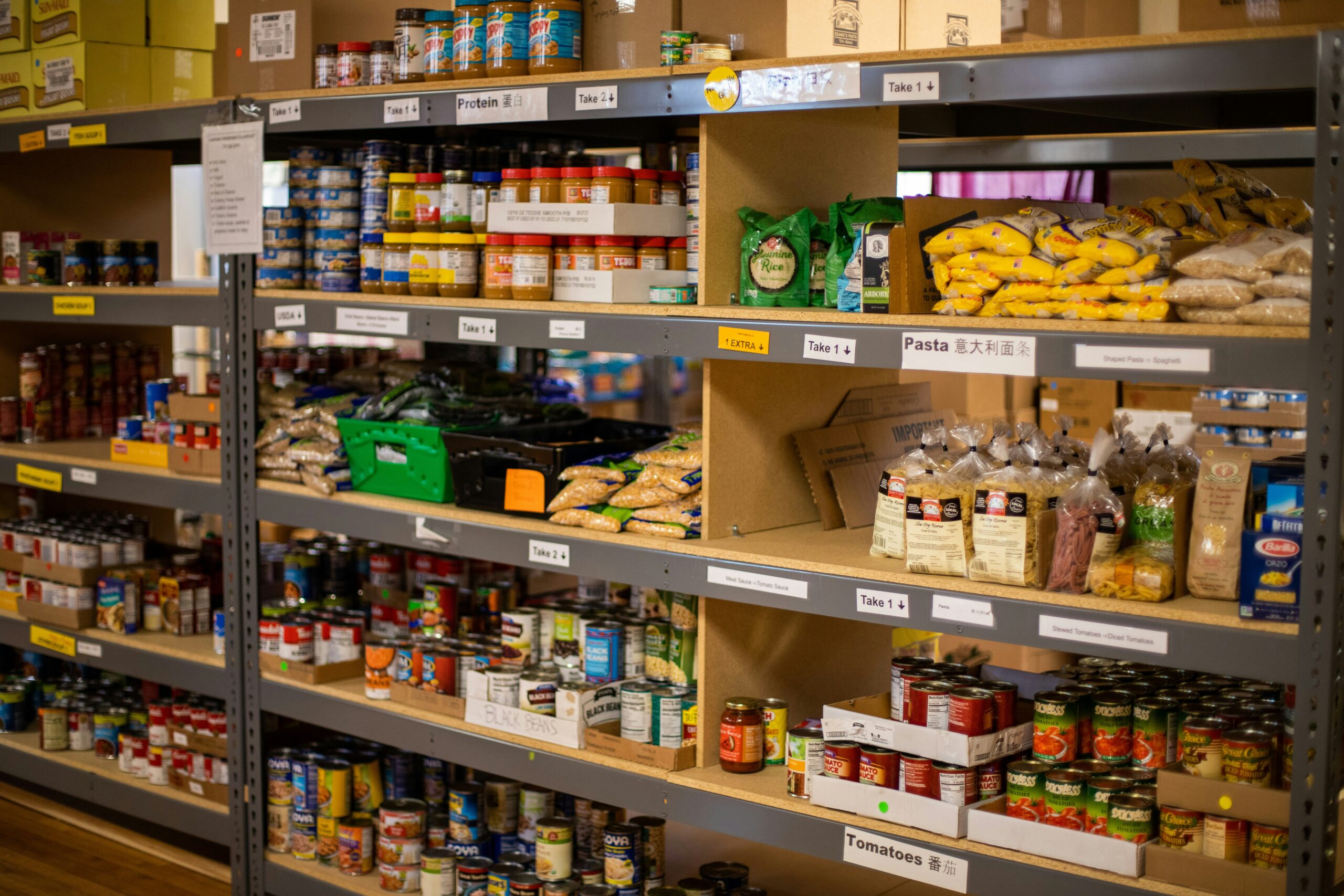

Families with a student in Milford School District are eligible to access the district’s free food pantry. The food pantry is open the first and third Saturday of each month from 8 AM to 12 Noon at Benjamin Banneker Elementary School. The food pantry is provided in collaboration with the Harry K. Foundation.
In order to access the Food Pantry families need to complete a Federal Food Commodities Program Form that requires the names and ages of everyone in the household. They also need to bring proof of residence such as a driver’s license or a phone or electric bill. Please also bring your own bag.
Families who need further assistance should contact School Family Interventionists. At Milford High School, contact Latoya Bonville; Milford Central Academy, contact Nick Albert; Milford Middle School, contact Shanika White; Ross and Mispillion, contact Jessenia Carranza and at Banneker or Morris, contact Duvanel Louis.
Childhood hunger is an ever-present but often hidden issue that negatively affects many aspects of children’s health. These negative effects of hunger can change how a child’s brain and body grow and affect the child’s thinking, learning, and behavior. The Harry K Foundation (HKF,) under the leadership of Harry Keswani, is creatively looking at ways to combat the problem of childhood hunger.
Research shows that children who eat more nutritious meals are less likely to miss school, have fewer behavioral problems, and perform better in school. Working with the Food Bank of Delaware, the Harry K Foundation is tackling childhood hunger on all fronts, including hunger after school, during the summer and holidays, and on weekends.
The challenge of childhood hunger in Delaware is real. Currently, 93,900 Delawareans face hunger. 30,920 of those were children. One in 10 face hunger in Delaware. One in seven children faces hunger
The grave food security disparities that exist in our communities are often not readily apparent. Our fellow Delawareans suffer hunger in every county and congressional district. They may be our neighbors, kids in our children’s classes, members of our houses of worship, and the list goes on.
According to the Harry K. Foundation, 12.9% of Delaware residents who experience food insecurity and 5.1% of residents who experience very low food security. Food insecurity has many faces. It may be low food security, including reports of reduced quality, variety, or desirability of diet. Families have little or no indication of reduced food intake. Families report disrupted eating patterns and reduced food intake as well.
There are very real health risks associated with food insecurity, including obesity, hypertension, diabetes, and limited access to health care.
Exacerbating food insecurity are food deserts. Food deserts pose barriers to affordable and nutritious food, particularly in lower-income communities. As defined by the United States Department of Agriculture (USDA), food deserts are areas devoid of fresh fruit, vegetables, and other healthful whole foods, usually in impoverished communities that lack grocery stores, farmers’ markets, and/or healthy food providers.
The common indicators to measure food access and food deserts are accessibility of sources to healthy food, individual resources such as income or vehicle availability, and neighborhood resources such as the average income of a neighborhood and availability of public transportation.
A census tract is considered low access if at least 500 people or 33% of the population in the tract are at least one mile from a supermarket or large grocery store (or ten miles if the tract is in a rural area). According to a report by the University of Delaware’s Institute for Public Administration, 61% of Delawareans live in census tracts with no grocery store, and 27% live in census tracts with only one grocery store.