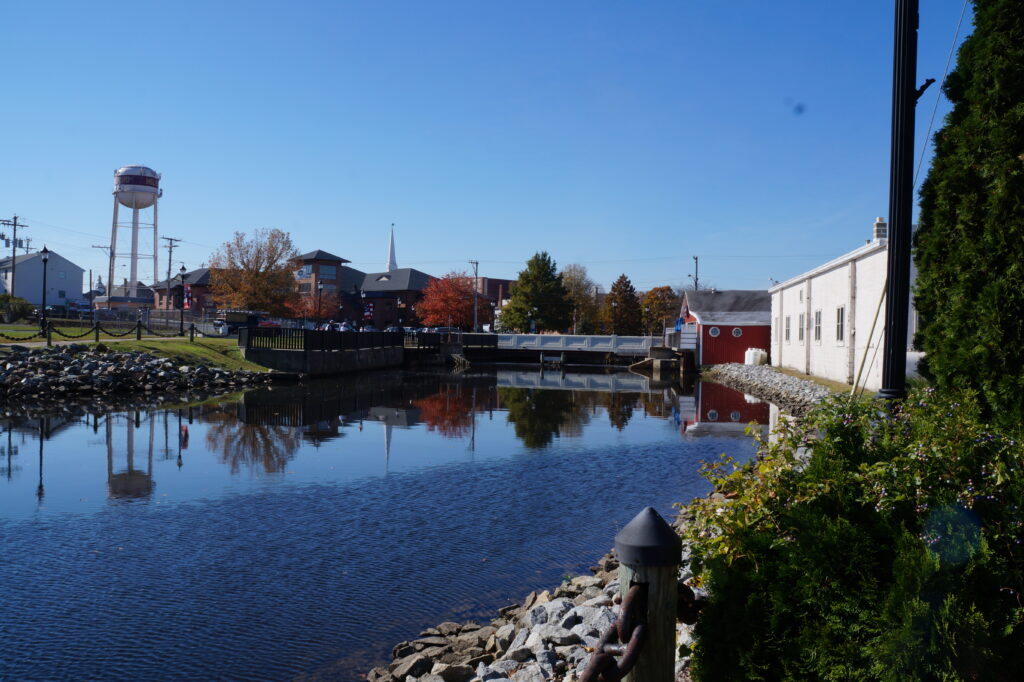


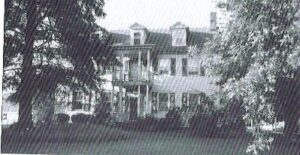
Located at 700 Southeast Second Street, Egglinton Hall has a rich history. Portions of the building were constructed as early as 1790 and it became the home of Trusten Polk McColley, a popular Methodist minister. The home is listed on the National Registry of Historic Places.
Egglinton Hall is a two-story, five-bay center hall frame house with a one-story rear wing. The gable roof is pierced with three regularly spaced dormers and by interior gable-end chimneys. It has a plain box cornice with partial returns. The windows are over six-over-six sash and the center section have a two-story portico with paired, thin Doric columns. The rear wing which was the original house, has a gable roof with dormers and two massive chimneys, one in the interior gable end and one in the interior block.
When constructed by Egglinton, it was a one-story, one-room house. In 1805, the home was purchased by William Black who built additional rooms, and, in 1828, the property was purchased by Truston P. McColley. He added the main five-bay section to the front of the home.
Born in 1793, McColley married Hester, and they had three children. Hiram W. McColley was born in 1816; Eliza Ann Fisher was born in 1820 and Hester Angelina Marshall was born in 1830. Hiram married Margaret who died in 1883. His second wife was Susan. Eliza married George Purnell Fisher. Hester married William Marshall.
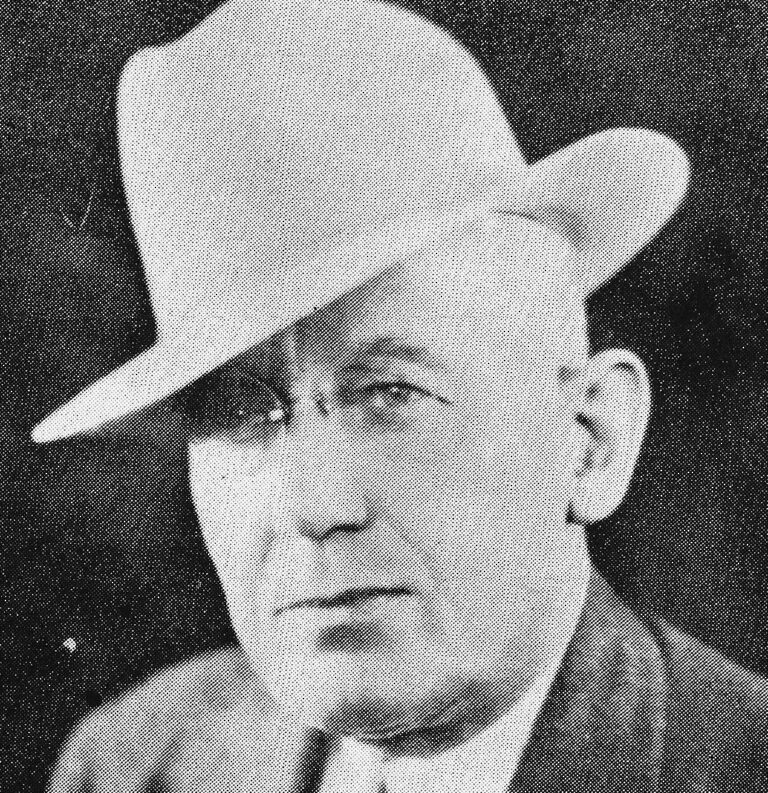
McColley was a prominent figure in politics, religion and business in Southern Delaware. His original trade was as a hatter, but early in his career he embraced Methodism and became a minister. He served several churches in the area and was often called upon as an orator. The Delaware State Archives holds the register book used by McColley to record the many weddings he conducted in Egglinton Hall.
Not only was he in demand as a minister, McColley was a very large property owner, not only in Milford but throughout Sussex County. He was one of the first to begin laying out peach orchards in the southern portion of the state, bringing a large cash crop to the area which eventually became very important in the Milford area. His strong interest in agriculture also improved the condition of the industry, leading him to help found the Delaware State Agricultural Society in 1849.
McColley was instrumental in bringing the Junction and Breakwater Railroad to Milford, connecting Milford with the north/south line in Harrington. He served on the board of directors of the railroad as well.
Active in Democratic Party affairs, McColley was sent to Dover as a delegate from Sussex County in 1852 to the State Constitutional Convention, elected president of the Convention and serving in that position throughout the gathering.
The building itself is significant to Milford history as it began as a Chesapeake Bay vernacular building built in the late 18th century. The addition created by McColley is also significant as the two-story main block was added to the north side of the building which were converted into service areas. He also added a two-story portico to the front of the house which is supported by the Doric columns. At the second-floor level, a door, similar to the one on the first floor, was added, allowing access to the porch on the second floor. This feature was very unusual in lower Delaware and demonstrates an attempt to add an element of the Greek Revival architecture which weas very fashionable during the area.
According to “A History of Milford, Delaware” by the Milford Historical Society states that “for many years there were wooden bars across Carlisle Lane, the lane leading only to Egglinton Hall, the Trusten McColley farm. It is remarkable for its fine staircase and curious second floor fireplaces.” When the book was published in 1974, the home was a summer home of Dr. William Marshall who was the great-grandson of McColley.