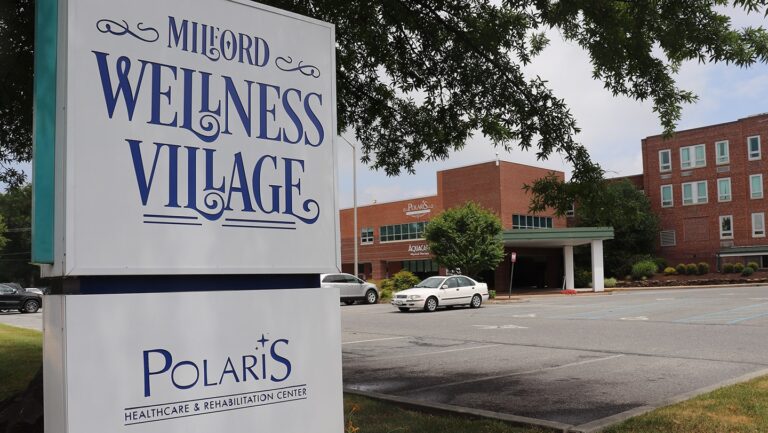

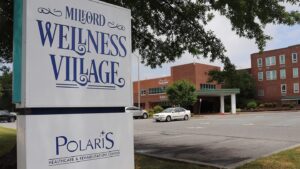


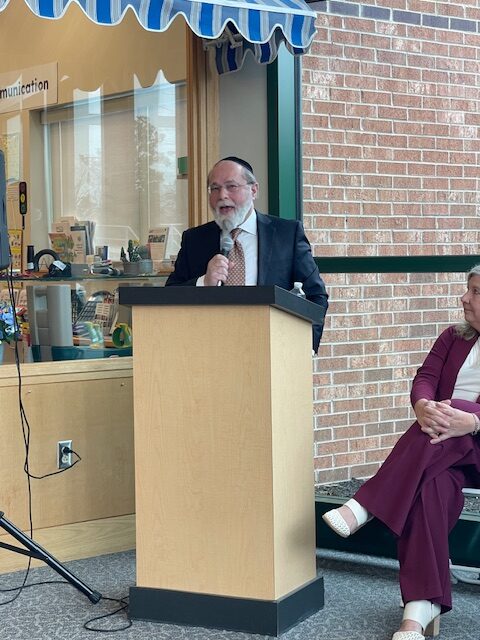


At a celebration at Milford Wellness Village, Meir Gelley was recognized on Rural Health Day as a “Rural Health Community Star” for his efforts in addressing healthcare needs in Kent and Sussex County. Gelley is the owner and CEO of Nationwide Health, the parent company for Milford Wellness Village.
“Thirty years ago, we came together as a group of friends in southern Delaware, the leaders of the downstate hospitals and the Division of Public Health, meeting every month to talk about issues that were shared across the downstate area,” Betsy Wheeler, Director of the Rural Health Initiative, said. “Over the years, our purpose has been the same, but slightly amplified in the sense that the mission, obviously, is to make the area healthier, but our thinking is to elevate issues, to draw attention to them, for policy, for resources.”
Wheeler stated that over 250,000 people are considered rural which leads to unique challenges. She referred to Kent and Sussex Counties as “big, big spaces and small towns.” Unfortunately, the large land mass, lack of public transportation system and lack of health provider resources is an issue. When combined with poverty and uninsurance rates, along with the higher number of female heads of households leads to a challenge in bringing adequate healthcare.
“The nature of the industry in the area, agriculture, tourism and seasonal jobs adds to the lack of insurance,” Wheeler said. “But one of the reasons we are celebrating National Rural Health Day today is due to the spirit of innovation, the spirit of entrepreneurialism and the strong relationship with networks that exist in rural areas.”
Rabbi Halberstam of Education Health & Research International (EHRI) explained that the Milford Wellness Village has almost 30 different service providers that connect the rural area with services, resources and education.
“It serves as a national model utilizing villages, utilizing old hospital space, to create senior services in the community, allowing our precious senior population in rural Delaware to age in place with dignity,” Halberstam said. “EHRI programs use innovation and service delivery using collaborative partnerships with state agencies and stakeholders, including hospitals, skilled nursing facilities, rehab and recently partnering with Del State to train a senior workforce.”
Delaware’s Secretary of Health and Human Services, Christen Linke Young stated that there were more than 400,000 rural residents, about 40 percent of the state population. Although there are world class health systems in Delaware, there are also major challenges in delivering that healthcare to rural areas. According to Young, Delaware ranks last in the ability to meet primary care needs. Sussex County has 271,000 residents, but serves them with just 130 primary care physicians, one of the worst ratios in the country.
“This part of the state also suffers from significant chronic disease and real challenges addressing the social determinants of health, especially transportation, broadband and technology infrastructure and growing challenges with rural homelessness,” Young said. “We are also in the middle of a major demographic shift, particularly here in Sussex County, as we as we see a great migration of a relatively older population that is straining all of our health care and social service delivery systems. And so, it is a moment that calls for urgent reform and major investment.”

Young talked about Delaware’s Rural Health Transformation Program, a comprehensive vision to change the way healthcare is delivered in rural counties in Delaware, a plan that was the result of a study conducted by Governor Matt Meyer. Feedback from that survey was instrumental in creating a plan that expanded access and improved quality for rural residents across the state.
“The centerpiece of the Delaware Rural Health Transformation Program is workforce investment,” Young said. “The plan calls for the creation of the first four-year medical school through an innovative partnership. We know that if our young people need to leave the state in order to pursue their ambition of becoming a physician, they may not come back to serve the people here in Delaware. So, if we can educate them as physicians here, we can significantly grow the pipeline of young people who are entering the medical profession.”
Kyle Phillips, MSN, FNP-BC, the Director of Nursing, Office of Public Health, read a proclamation from the governor in recognition of Rural Health Day. Mayor Todd Culotta commended Geller for what he had done with the former Milford Memorial Hospital.
“The biggest concern when the hospital moved was what to do with this building because it easily could have been empty for a very long time,” Culotta said. “The importance of the decision made that day and the commitment they have made to Milford has been phenomenal. Milford is about 14,000 people within city limits and probably double that in the surrounding area, so 25,000 to 30,000 people I the general vicinity. You added 750 jobs to the city, and you realize that is five percent of the population.”
Culotta continued, stating that he wanted to see Milford become a healthcare hub, not just for Sussex County, but for the entire state.
“We’re going to do what we can to attract that investment, bring those jobs, because that is our industry,” Culotta said. “We have the great migration of people coming from New Jersey, the DC area, Philadelphia and they want the healthcare services close by. There is no reason they shouldn’t have them right here. The whole idea of healthcare is to keep you out of the hospital, to live a comfortable quality life and not have to depend on doctors and medicine all the time, so if all the education takes place here, all the services take place here, it is really neat.”
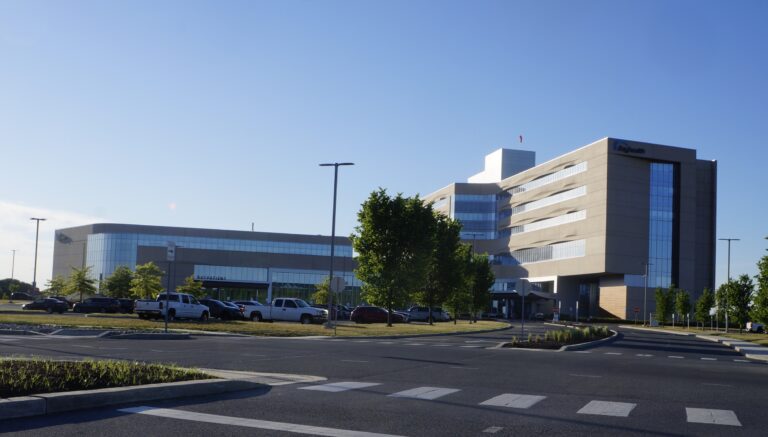
Terry Murphy, MHSA, FACHE, President and CEO of Bayhealth, discussed how Bayhealth originally planned to expand on their original campus, but did not have the room they needed. After they made the decision to move to southeast Milford, they were concerned about what would happen to the Milford Memorial campus. Bayhealth went through an adaptive reuse process where they met Gelley.

“I had the opportunity to be introduced to Nationwide and when I met Meir, I realized immediately what he said was what he did,” Murphy said. “We visited Regal near Brandywine and then downtown Wilmington facilities operated by Nationwide and I could tell from the get go that Meir kept to his word. He knew people, people knew him, and he was highly engaged operationally. He knew what was going on. Today, this building employs 750 to 800 people, from Polaris, a skilled nursing facility to treating people with substance abuse disorders to taking care of children. All of these are very important services that are needed in this community.”
After accepting the Community Star Award, Gelley stated that he was honored and humbled. He pointed out to Murphy that when the hospital left, they had about 90 people spending the night in the building. Today, Milford Wellness Villages houses 200, joking that not only have they reformed the building, but they are housing more people.
“You have heard a lot about Milford Wellness Village, so I won’t go there,” Gelley said. “What I want to do is just say than you to the federal, state and township leaders whose support has given us so much encouragement and to our great staff that has been instrumental to this day to our success. This recognition is not about me at all. It is about an incredible team and community that have Milford Wellness Village successful.”
Gelley stated that he was excited about the future at Milford Wellness Village.
“Let us continue to work together and build together a healthier, brighter future for all,” Gelley said. “And most of all, thank you God for making all this happen.”