





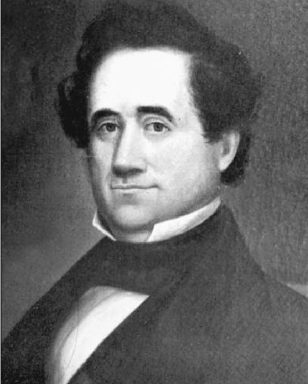

 Starting his career as a shipbuilder at the age of 24, Manlove Roland Carlisle became one of Milford’s most well-known shipbuilders in Milford. Working with a partner, William F. Reville, Carlisle took over the shipbuilding business when Reville retired in 1853, operating the company with his brother, Thomas H. Carlisle.
Carlisle was born August 15, 1809, the son of Thomas and Mary Carlisle. He was the oldest of six children with his brother, Thomas born in 1815; his sister Catherine in 1820; his sister Mary Elizabeth in 1825 and his youngest sibling, Sarahann born in 1829. He also had a brother, James, whose birth year is not known.
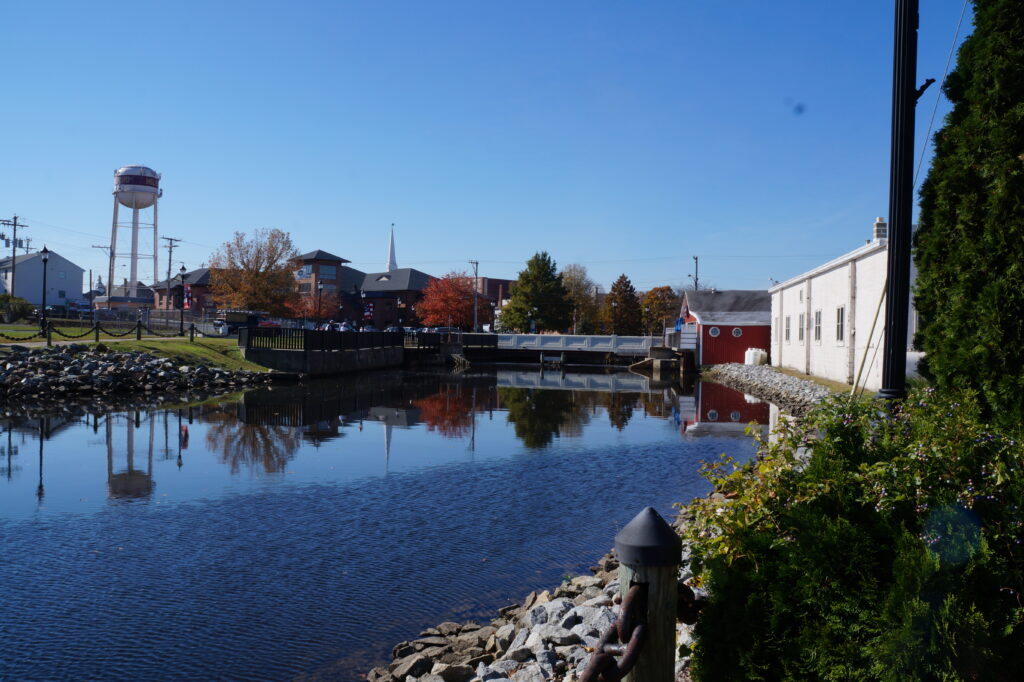
Little is known of Carlisle’s early life other than he is listed on the 1820 census living in Cedar Creek in Sussex County. In 1833, Carlisle and Reville bought a shipyard from David West who died soon after. The two built nine sloops, 19 schooners and one brig during their partnership. The shipyard was located between Montgomery and Franklin Street in Milford.
His brother joined Carlisle in 1855 and the two built 19 ships between 1855 and 1877, including four three-masted schooners. Carlisle retired in 1877 at the age of 60, but his brother continued to build eight more schooners before he died in 1890.
On September 20, 1837, Carlisle married Anna Watson who was born August 17, 1813. Anna was the daughter of Beniah Watson and Elizabeth Shockley, the middle child of five. She had an older brother, Curtis, born in 1809 and an older sister, Catherine, born in 1811. She also had two younger brothers, Bethuel, born in 1816 and Beniah, born in 1826.
In 1856, Carlisle entered politics when he was elected to the Delaware State Senate. He took his seat in January 1857 and served as Senate Speaker during the 1859-60 session. After leaving office, Carlisle returned to the shipbuilding business with his brother. He retired in 1877. At the time of his retirement, Carlisle was worth more than $40,000, an amount that today would equal $1.2 million.
During a typhoid epidemic in 1857, Anna and her brother, Bethuel, died of the illness. Bethuel, who was then married to Ruth Tharp, died in August while Anna died in December. There were no children from the marriage of Anna and Carlisle. Ruth Tharp Watson, however, had children from her marriage to Bethuel – Mary Elizabeth, William Tharp, Annie Bell and Minnelia Warfield. One child, Beniah, died when he was just over a year old, before his father died. The youngest child, Minnelia, was born after the passing of her father.
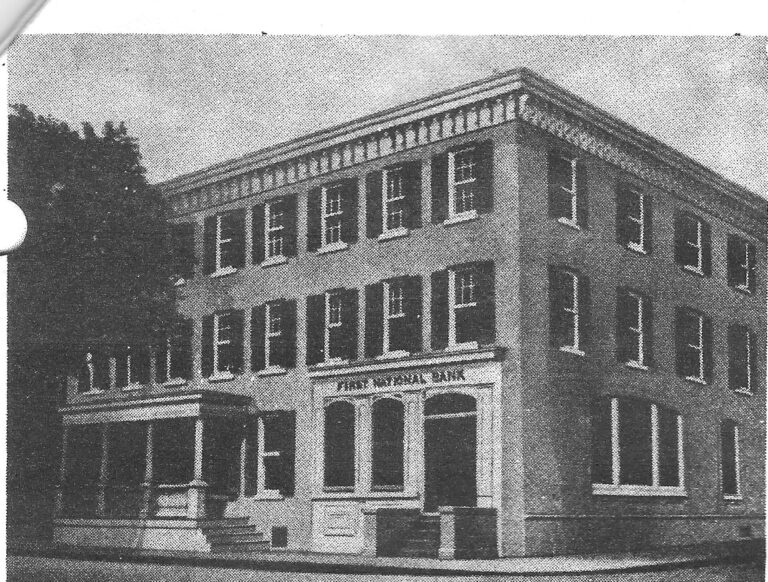
On August 18, 1861, Carlisle and Ruth Tharp Watson married. Carlisle moved to 12 Northwest Front Street to live in the home built by Bethuel for his family. In 1876, Carlisle served as one of the first directors for the First National Bank of Milford, located on the corner of North Walnut and Front Streets. He also served as a senior warden for Christ Episcopal Church.
Several weeks before his death, his health began to fail. According to a report in the “Middletown Transcript,” Carlisle could take “no food or drink for forty-nine days” except for medication administered by his doctor. On Friday, November 4, 1881, the “Morning News” reported that Carlisle was very ill.
“One of our aged and highly respected citizens and capitalists, formerly a prominent shipbuilder, has been confined to his room for several months from an attack of “dry gangrene” and it is now believed he cannot survive more than a few days,” the article read.
Dry gangrene is caused by a lack of blood supply that leads to the death of tissue. It is often found in people with diabetes or peripheral arterial disease.
Carlisle died on November 10, 1881, at his home and is buried at Christ Episcopal Church. He was 72 years old.
In his will, signed and dated September 20, 1881, Carlisle bequeathed his wife, Ruth, $3,000 in cash as well as bonds held against Thomas Currey for $2,000 and William Watson for $3,000. He also left her his stock in the First National Bank of Milford as well as stock shares in Junction and Breakwater Railroad. Ruth also inherited his horses, carriages, household furnishings, her house and lot along with the adjoining lots of James Hall plus a vacant lot on Walnut Street.
To his brother, Thomas, Carlisle bequeathed the Cowan Land in Cedar Creek Hundred along with additional farmland. The will also released Thomas from a bond in the amount of $1,000 held against him by his brother. Thomas also inherited the shipyard in full.
Carlisle bequeathed funds to Sarah Ann and John Sipple for back house rents due to him and cancelled a debt of $500 from his brother, James. To the children from his wife’s first marriage – William Watson, Mary Warriington, Anna Watson and Minnie Keisler, Carlisle left $200 each.
Carlisle requested that his wife use $500 to erect an iron fence around the family graveyard in the Christ Episcopal Church cemetery. The remainder of his estate was to be divided evenly among his sisters Anne Reville, Catherine Davis, Mary Reynolds, Sarah Ann Sipple and his brother, James.
His brother, Thomas, William Reville and Charles Harrington were appointed executors of his estate. On September 27, 1887, Carlisle added a codicil to his will regarding his brother, James. He revoked his previous request to give James one-fifth of his final estate and, instead, bequeathed him $3,000 with a stipulation.
“I bequeath to my said brother, James Carlisle, the sum of three thousand cash provided he makes application for the same within two years after my decease,” the codicil reads. “But, if he does not make application for the same within the time named, my executors are authorized to consider him dead, and they are hereby authorized to pay the child or children of said brother James the sum of twenty-five hundred dollars which shall be the full share in the place of their father. The other five hundred dollars to go into and be divided in the balance of my estate.”
The codicil continued to state that the balance of the estate would go in equal shares to Carlisle’s sister’s Ann, Catherine, Mary and Sarah.