
 With a nor’easter forming off the coast of North Carolina that is expected to travel north and impact the Delmarva Peninsula, the City of Milford is bracing for what has been called potential major flooding by the National Weather Service. Predictions are for between one and four inches of rain or more during the storm as well as wind gusts over 50 miles per hour.
“The city spent the week clearing and checking storm structures throughout Milford,” Lauren Swain, Economic Development and Community Engagement Director, said. “We have placed high water signs in areas that are known to flood and ensure all our equipment like loaders, trucks and chainsaws are prepared for an event involving downed trees or flooding. We have also ensured that water and sewer plants will be monitored by the duty staff for high levels or station flooding.”
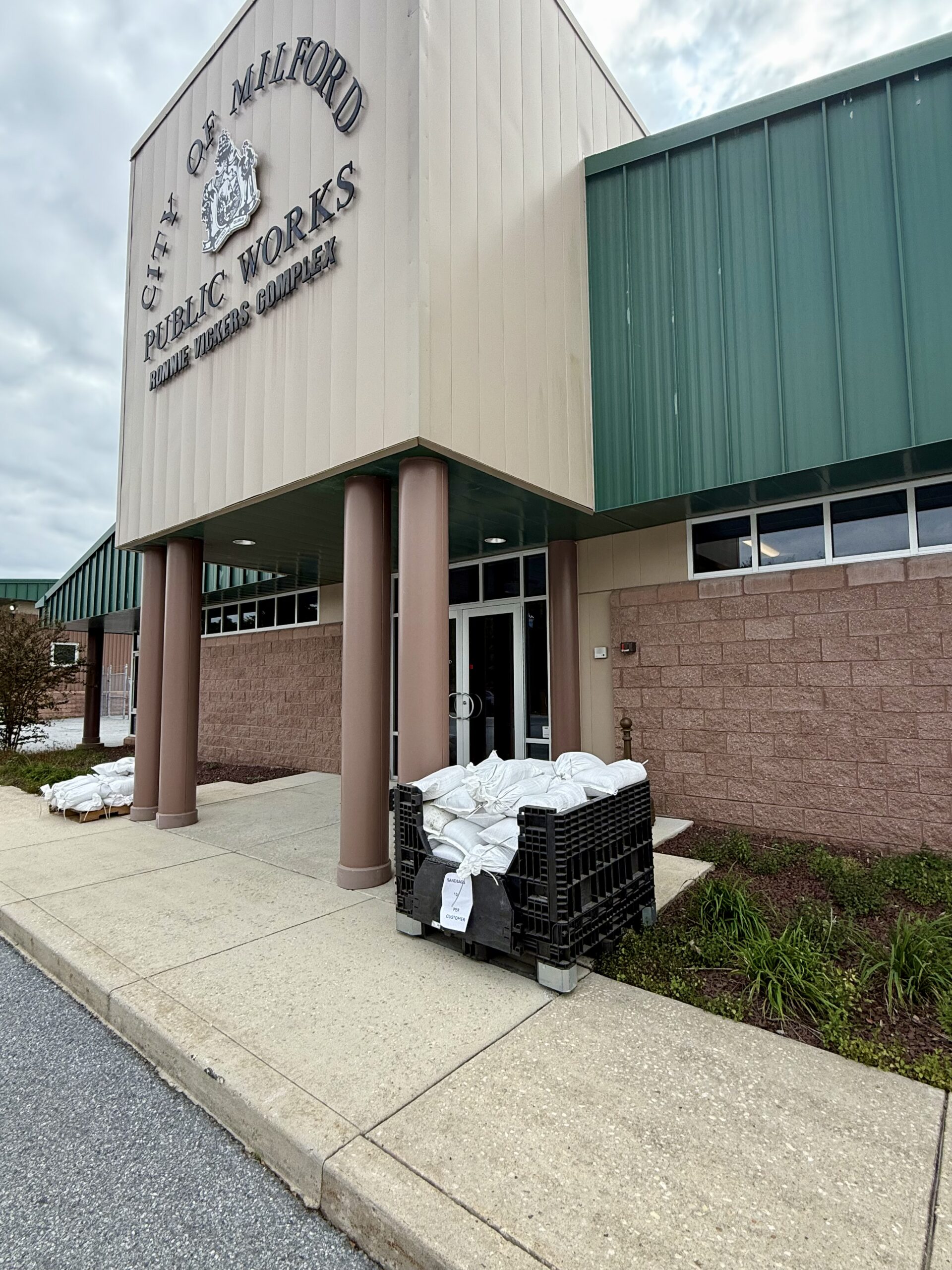
Swain stated that citizens could pick up sandbags at the Public Works Building located at 180 Vickers Drive in Milford. Sandbag pickup is self-service, and the city asks residents to take no more than ten bags.
“We’re asking Delawareans to follow local directives to remain safe through the developing storm,” A.J. Schall, Director of DEMA, said. “Take steps now to check your emergency kit, to clear gutters and secure outdoor furniture, to set aside some cash in case of loss of power, and to avoid nonessential travel during periods of heavy rain.”
 In addition, Schall pointed out that the department was asking residents to sign up for the Delaware Emergency Notification System to receive critical alerts and to monitor weather reports through the weekend.
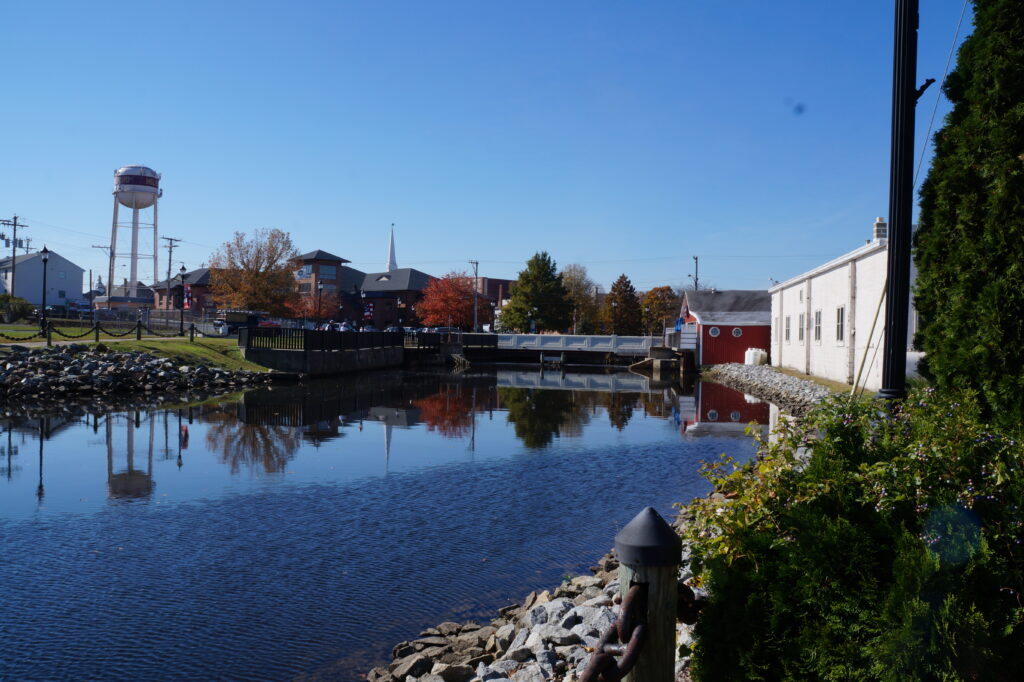
Milford, like much of Delaware, has a low average land elevation which makes it vulnerable to rising water levels. The Mispillion River acts as an outlet for water from the bay and, as bay water levels rise, the river levels rise as well. When storms blow wind and water from the bay inland, which is common in nor’easters, floodwaters can build up in the marshes along the Mispillion River, eventually overflowing the banks of the river into town.
Learn more about the potential for flooding in your area by visiting the Know Your Zone website. Type in your address to see where you are in relation to flood zones. Even if you are outside of the flood zone, it is important to monitor the weather as even areas that rarely flood could be impacted by this storm.
If you are in a flood zone, evacuation is recommended. Take any important documents with you. Elevate belongings as much as possible and tie down any outside items you cannot bring inside. If you do not want to evacuate, build an emergency kit that includes matches, water, non-perishable foods, flashlights, radios and batteries along with child and pet needs that will last for three to seven days. A battery-operated radio is also recommended in order to stay up to date on weather updates. A list of local stations can be found on the DEMA website.