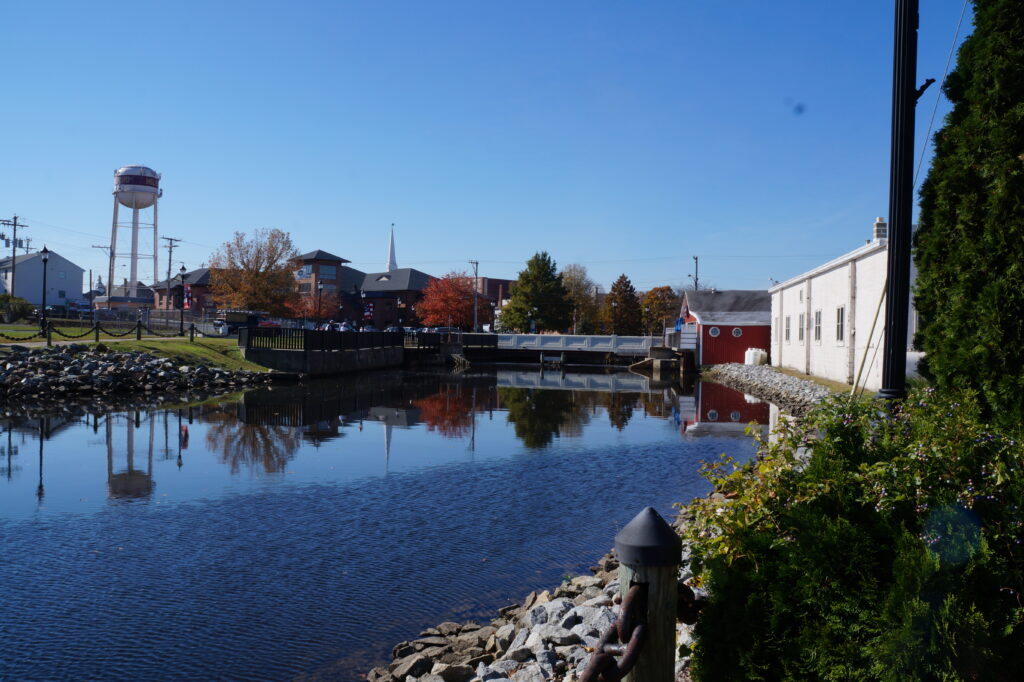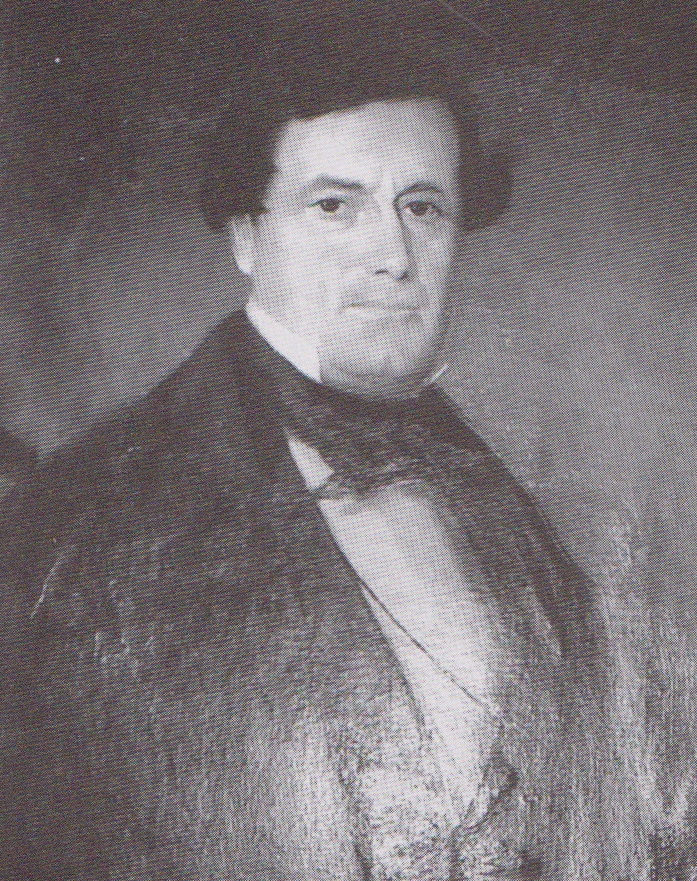

Milford has produced eight state governors. In this series, Milford Times will delve into the men and women who led our state who called Milford home. The sixth governor from Milford was William Tharp who served as Delaware’s 36th Governor from 1847 to 1851.

Born November 27, 1803, to James and Eunice “Nicey” Fleming Sharp. His grandfather, John Tharp came to Delaware from Sussex, England, settling near Frankford before moving to Farmington, becoming one of the earliest settlers in Kent County. In 1829, Tharp’s father died. Around that same time, Tharp married Mary Ann Johnson, the daughter of Purnell Johnson. The couple had five children, Ruth, Mary Elizabeth, Martina, Willamina and Ann Purnell Tharp.
The Tharp’s lived in a brick and frame mansion in Farmington on what was called “Flowers Lot.” This is because it was part of an original 1200 acres of land owned by Thomas Flowers and Thomas Davis in 1691. It was sold to Purnell Johnson, Tharp’s father-in-law, by Samuel and George Fleming in 1807, who left it to his daughter, Mary, when he passed in 1829.
Tharp was elected to the State Senate in 1838 for four years and, in 1844, ran for governor, defeated by a small margin by Thomas Stockton, his Whig opponent. Stockton died and Tharp ran again and was elected in 1846, taking the office in January 1847. Tharp was politically connected to Governor Peter F. Causey and, soon after his election, Tharp moved to Milford. The family lived in the Williams-Tharp-Jewell house on the corner of Church Street and Northwest Front Street. This home was constructed in 1814 by Reynear Williams who died in 1828, and the Tharp family lived in the east wing of the house.
There are reports that Tharp moved to Milford as he was “beset with politics.” He wanted to be in an area that afforded him public accommodations for visitors in order to reduce the need to entertain so many politicians. The Tharp-Jewell House as it is now known is on the National Registry of Historic Places. The name Jewell is from John and Thelma Jewell, a brother and sister, who operated a grocery store out of the west end of the home from 1925 until 1988. Although scheduled for demolition, the building was completely renovated by Dan Bond about 10 years ago.
During this time period, Delaware politics were characterized by a conservative downstate with a small business majority. Wilmington had an industrial minority with the majority led by John M. Clayton of the Whig party who also grew up in Milford. Tharp was elected to the senate and served two terms. He ran again in 1842, but after a recount that lasted many months, it was determined he lost by one vote.
Ironically, Tharp defeated his friend, Causey, in the 1846 election, despite the strong Whig membership in the legislature. Tharp began a long dominance for the Democratic Party, a dominance that lasted through the remainder of the 19th century.

Shortly before he took office, the Mexican American War broke out, a war that Tharp and other Delawareans felt was unnecessary. However, like the War of 1812, Tharp and other Delawareans responded to the cause and served honorably in the war. During Tharp’s governorship, Pea Patch Island was given to the federal government in order to construct Fort Delaware. After leaving the office, Tharp retired but served as treasurer of the Delaware Railroad.
Tharp died on January 9, 1865, in Milford and is buried in Christ Episcopal Church cemetery. His grandson, William Tharp Watson served as governor in 1897.
A report in the News Journal dated September 6, 1933, reported that 43 descendants of James Tharp met at the home of William Tharp for a family reunion. At that reunion, the Tharp Family Association was formed with the President William B. Tharp, Vice-President W.W. Harrington, Secretary Georgia Jacobs and Treasurer Beniah Tharp.
William Tharp gave a summation of the life of James Sharp, reporting that he emigrated from Wales before the Revolutionary War. His wife, Eunice, has ancestors dating back to 1739. Three of James Tharp’s grandchildren were still living at the time of the reunion – William B. Tharp, Sara P. Collins and Lena Melvin. Melvin was unable to attend the reunion.