




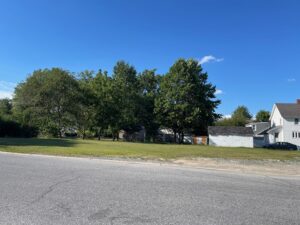
Milford Board of Adjustments approved a request from M&P Property Group for a parcel of land located on South Washington Street. The applicant was requesting to separate two lots into one which also required a variance for minimum lot size.
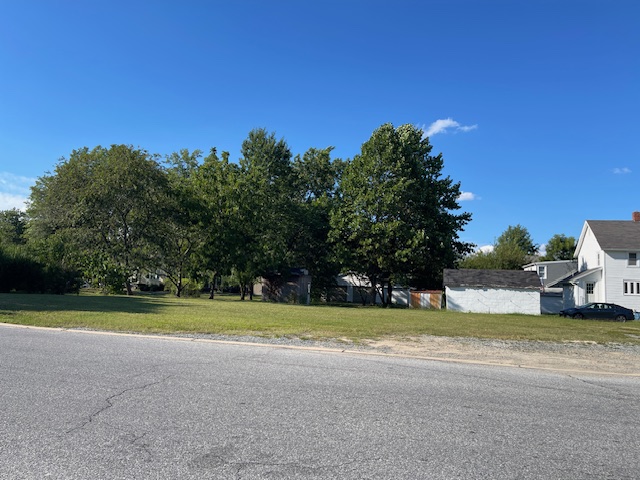
“It is a land-hooked property formerly owned by Bayhealth,” City Planner Rob Pierce said. “The property is located on the corner of Jefferson Avenue and South Washington Street. The applicant is proposing to subdivide the property into two parcels. Proposed lot one would continue to contain a warehouse structure formerly owned by Bayhealth and proposed lot two would be a vacant lot on the other corner.”
Because code requires corner lots to be 13,000 square feet and the splitting of the property would have one lot at 10,318 square feet, a variance was necessary. In addition, the applicant planned to construct a building on one of the lots which would be higher than the code allows for lot coverage.
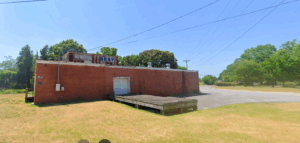
“It is our plan to demolish the warehouse that currently sits on the one parcel,” Tom Dayton, owner of M&P Property Group said. “We hope to put a house on the vacant lot. Once we have cleared the other lot, we may consider a three-door unit that would be in the footprint of the building that is currently there.”
Pierce stated that code would not allow a triplex on the lot, but that a duplex would be permitted. Pierce also explained that this was the only land-hooked property in the city.
“When I say land-hooked, it means it is the same tax parcel number, they get one tax bill, but it’s separated by a public right-of-way, and that is non-compliant for the city code. If someone wanted to do this now, we would not permit it. By allowing the variance, it actually makes a non-conforming lot conform to code.”
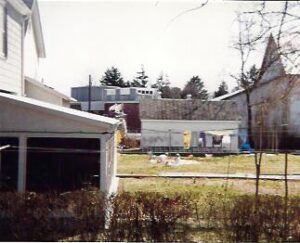
For many years, a large barn-style warehouse stood on what is now the vacant lot. That building was demolished about five or six years ago.
“My issues, more or less, could be answered in a conversation with the people who want to build on that lot. I’m directly next to it. I’ve been living next to that empty lot for three years now,” Mike Herholdt said during the public hearing. “That corner is already dangerous. It’s hard to see when you’re coming out. It’s a very. Narrow route on my house. I’ve had issues with that vacant lot. I’ve had people walk through my property in the middle of the night. I’m more or less concerned about how it’s going to affect my safety, my privacy, my ability to get in and out of my house. I’ve had my driveway blocked multiple times. People have had to get towed from my property. That lot is small, and I guess I just have some concerns.”
Pierce stated that when the applicant was ready to construct a building on the vacant lot, they would have to file a house placement survey and meet setbacks from other properties. If they were unable to meet setbacks, they would be required to come before the Board of Adjustments again. Julie Morris, who lives on Cedar Beach Road, asked Pierce why the applicant did not complete some of the questions on the application.
“We provide an opportunity for the applicant to provide a response to the four criteria used to evaluate area variances, but I will say 90 percent of them do not fill it out,” Pierce said. “If it is a larger application, like a site plan, they will provide it because they have an engineer or a representing attorney, but the majority of them come in with no response to those.”
Morris then pointed out that Pierce told the board to listen to what public comment had to say.
“I had never heard you say that either,” Morris said. “So, it gave me the impression you may not be agreeable to this subdivision.”
Pierce stated that was something he said with every application and in his staff report.
“I’m all for affordable housing and I think this sounds like a good idea,” Morris said. “Being as a resident who lives right next door commented, I’m going to mention two things I was most concerned about. One was the lot coverage increase to 40 percent and does that limit ensure enough permeable surface to absorb rainwater and reduce runoff. That 52.4 percent adds thousands of square feet of extra roof and pavement, meaning mor e stormwater rushing into an already stressed drainage system, greater risk of pooling ad flooding and permanent loss of open space, open yard space, and we’ve seen parts of Milford where reduced green space has led to storm drains backing up, water ponding in streets and sidewalks becoming impassable because of heavy rains.”
Morris also felt the reduction in lot size requirements would reduce the sight line for drivers and pedestrians, creating conditions where fire trucks, ambulances and other large vehicles may struggle to maneuver.
“I was over there yesterday trying to get myself acclimated with the area and I think, conceptually, this is a good idea,” Trish Marvel said. “That is with the exclusion of the big elephant in the room, which is the building that is very old and has probably what brought this request to this point. Now, they are going to take down the building and then try to fit in a duplex.”
Marvel suggested they take down the building and simply leave the lot empty rather than try to fit “a square peg in a round hole.”
“I wasn’t very specific about what I planned to do with that building,” Dayton said after hearing public comment. “The building is going to go away. The duplex we build will actually be less square footage than that building as we would remove all the blacktop, making the entire surface around the building permeable. We have not completely decided what will go on the smaller lot, but if we put a single-family residence there, we will do it right. We are trying to create affordable housing, so we will try to do what is right for the neighbors on that lot.
The Board of Adjustments approved both requests unanimously.