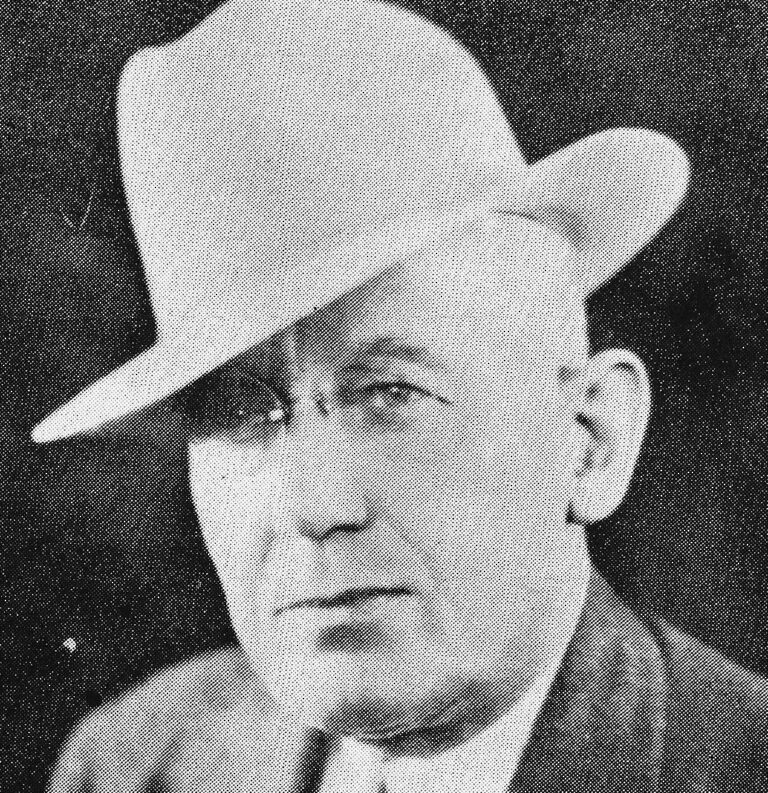
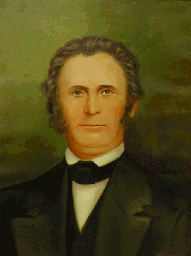


Milford has produced eight state governors. In this series, Milford Times will delve into the men and women who led our state who called Milford home. The fourth governor from Milford was Charles Polk. Polk was the first to serve terms in the General Assembly from different counties.
Charles Polk was born near Bridgeville on November 15, 1788. He attended a classical school in Lewes then studied law with Kensey Johns, although he never practiced law after graduation. Instead, he purchased about 1,000 acres of land near Milford in 1816 and became a successful farmer.
The farm, which Polk named “Ellerslie” after his family’s native home in Scotland.
Polk married Mary Manlove, whose family were original patentee in Milford Neck. and the couple had 20 children. Polk was the fourth child of Charles and NAME. Polk’s father died when he was very young, and he often attributed his success to his mother’s “great piety and intellectual strength.”
A close personal friend of John M. Clayton, who served as the United States Secretary of State under President Zachary Taylor, was often referred to as an “exceedingly affable and delightful gentleman of strikingly handsome appearance, and possessing qualities of mind and character that endeared him to the populace.” There are reports he was offered the position of United States Senator, a request he declined.
In 1814, Polk entered politics as a Federalist, becoming a member of the Delaware House of Representatives in 1815 and eventually Speaker of the House. At the time, Polk was living in Sussex County. Polk was reelected in 1816, starting his second term in office in 1817. By that time, he had moved to his wife’s family land near Big Stone Beach, which meant he now served the state from Kent County. He was sworn in to the Delaware Senate in 1824 and elected governor in 1826, sworn into that office on January 16, 1827. Although he entered politics as a Federalist, he eventually became a member of the Whig party.
While serving as governor, a federal tariff of 1828 was constituted, and the public school system was founded. The summit viaduct over the canal at Buck Tavern was also completed during his term as well as the initial phase of the Chesapeake and Delaware Canal.
His term ended in 1830, but he continued to remain active in public service. In 1831, Polk served as president to the 1831 Delaware Constitutional Convention. He ran for senate again and was elected in 1834, serving as president of the senate in 1836. While serving as president, Governor Caleb Bennett passed away in office. As president of the senate, Polk assumed the duties of governor and remained in the office until January 17, 1837.
After leaving the governor’s office a second time, Polk served as Kent County Register of Wills from 1843 to 1848. In 1849, he was appointed Wilmington’s Collector of the Port, a position he held until 1853. In 1857, Polk was appointed Commissioner-Judge of the Delaware Supreme Court.
Polk died on October 27, 1857, and is buried in the Presbyterian cemetery in Dover. Several of the Polk children also entered politics, including William A. Polk, who served as Register of Will, and Dr. Charles G. Polk, who served as the Assistant Surgeon at the federal level. Polk’s obituary read:
“The. Honorable Charles Polk died at his residence in Milford Hundred on Wednesday last, in the 70th year of his age. He was a highly educated and polished gentleman and one of the most esteemed and popular citizens of our state. He was elected to the State Senate three or four times, held the office of Register in Kent for one term, was elected Governor in 1820 and became Governor a second time in 1932 by the death of Governor Bennett. On the death of Mr. Brobson in 1819, he was appointed Collector at Wilmington and on the expiration of his term of office in 1853, he retired to his farm near Milford. His house was always open to the reception of his fellow citizens and he was noted for his gentlemanly demeanor and hospitality. His remains were interred at Dover on Saturday, amid a large concourse of citizens who took this occasion to evince their respect and esteem for him.” News Journal November 4, 1957.
In 1898, The Morning News in Wilmington ran a story about Charles M. Polk who was arrested following a train robbery in Kansas City, Missouri. According to the report, the train robber claimed to be the grandson and namesake of the governor of Delaware. The family reported that Charles M. Polk was not a relative of theirs, although he had been raised by Governor Polk. He was also not the son of Dr. Charles G. Polk of Philadelphia. The doctor had only two children and they lived with him. The Polk family had not seen nor spoken to the train robber in more than 25 years.
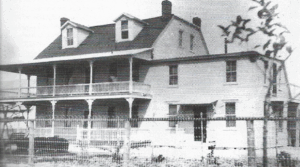
The governor, in his will, requested that his farm on the Delaware Bay be disposed of and the proceeds of the sale given to certain relatives. He named his son, William, as executor, but before the estate could be settled, William passed away. A contest over the ownership of the farm between two of the Polk children, Theodore Polk and Josephine Polk Truitt ended up in court. The matter took 40 years to settle, but the courts decided for Truitt in 1897, awarding her letters of administration.
According to the court documents, the land contained “1,000 acres of timber land, rich farmland and marshes, which yield abundantly of hay and is declared to be the best gunning preserve in Delaware. It is well stocked with the finest game and a resort for birds that are much sought by marksmen.”
The property is located at the foot of Milford Neck, about 12 miles northeast of Milford and the land fronts the Delaware Bay. In an effort to check the encroachment of the bay, Polk spent considerable money constructing breakwaters along the shorefront, but storms often overtook them. Polk then built small canals designed to carry water into small streams in the area, but they were also not effective. The land between the homestead and the bay remained marsh.
In 1890, the Ellerslie property was sold at public auction for $6,100 to the Frank Greco family. In 1924, James Levergood Polk, a reporter and grandson of the governor, returned to Delaware to see if the Ellerslie property could be returned to its former glory as it had fallen into disrepair. There is no record of the outcome of James Polk’s visit and the land now belongs to the Delaware Nature Preserve.
In 1953, an oil painting of Polk was presented to the state by Charles P. Polk of Merchantville, New Jersey, and his cousin, Albert F. Polk of Wilmington, both grandsons of the governor. The oil painting replaced a crayon portrait of the governor presented to the state by his sons in 1898.