




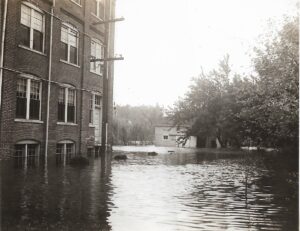
Although the majority of the damage caused by the Hurricane of 1935 was in the Florida Keys were more than 500 people died, the storms havoc reached all the way to Delaware as well. Hurricanes were not named at this time, and it was known as “Tropical Cyclone 3” when it was identified around August 2 near the Bahamas.
The strongest tropical cyclone of that year and the third most intense Atlantic hurricane on record, several errors in forecasting led to many of the deaths. Initially, it was predicted that the storm would pass through the Florida Straits and into the Gulf of Mexico, but the storm was moving far more slowly than forecasters realized. It is important to note that there was very rudimentary technology available in 1935 which reduced the ability for warnings to be issued quickly.
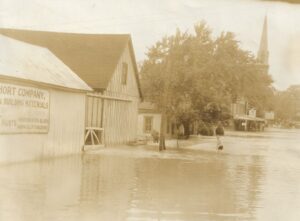
In addition to errors in predicting the path of the hurricane, forecasters also failed to recognize the possibility of explosive intensification. When it was first identified and passed over the Bahamas, the storm was a weak Category 1, but with the warm waters in the Florida Straits, the hurricane became a Category 5 within 24 hours. The storm also had a very small eye with a small radius of intense winds which also made it difficult to predict without direct observation.
The hurricane made landfall between Key West and Miami as a Category 5 with maximum sustained winds of 185 mph. It then curved northward and traveled along the western coast of Florida, eventually moving across Georgia and the Carolinas and weakening to a tropical storm. However, it moved back into the Atlantic near Norfolk and regained hurricane strength, causing heavy rain across the Delmarva Peninsula along with high wind gusts in Sussex County.
Called a “nor’easter” in local papers, the storm “played havoc” in Delaware, according to the September 7, 1935, edition of the Morning Herald. A 36-foot yacht, Caroline, with Mr. and Mrs. Walter Robinson of Swarthmore, Pennsylvania, had to be towed to Lewes when it became disabled off the coast of Assateague. Captain Archie Taylor, a Lewes fisherman, towed the couple in “hazardous” conditions. The Robinson’s left Georgetown, Maryland, and spent a day drifting out to sea as no one saw their distress flags, which were gas-soaked rags. The schooner Liberty, who was part of the DeBraak salvage mission, saw them and called in their distress.
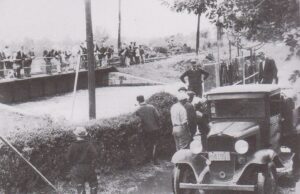
The Herald article reported that another sloop sank to the bottom of the bay in the storm with no one on board. Only “the tip of her mast is showing above the lashing waters,” the report read. The report also told of two Boy Scouts, J. Norman Bennett and Felix Mick, Jr., rescued by the Coast Guard. They tried to return from Milford to Lewes when the storm struck. The young men anchored near the mouth of the canal and were found by the Coast Guard after their parents reported them missing.
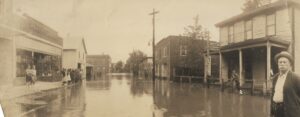
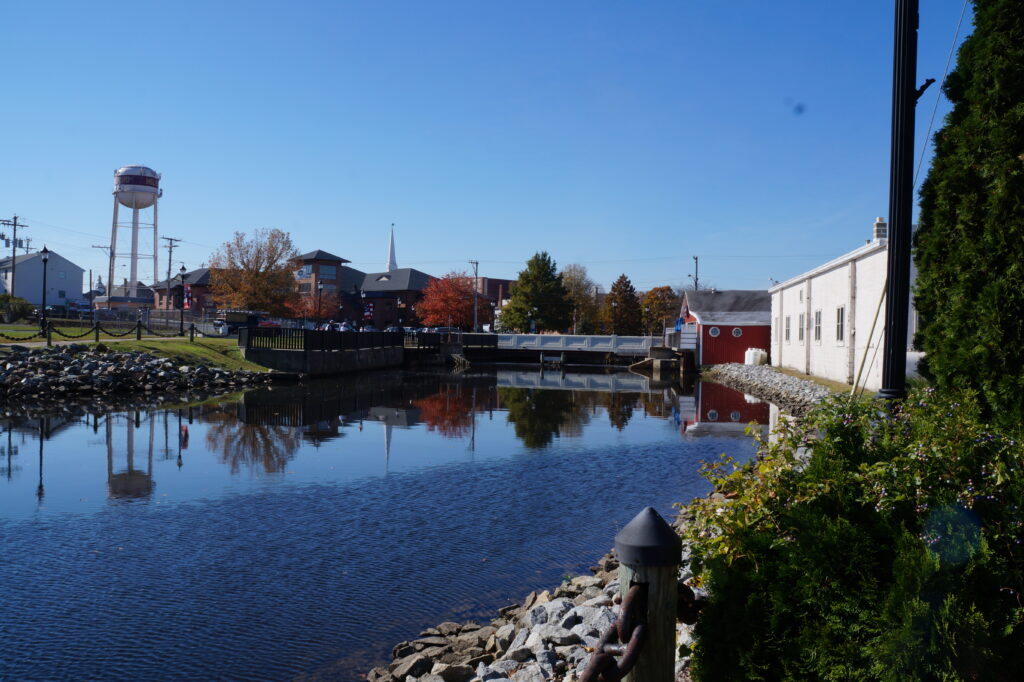
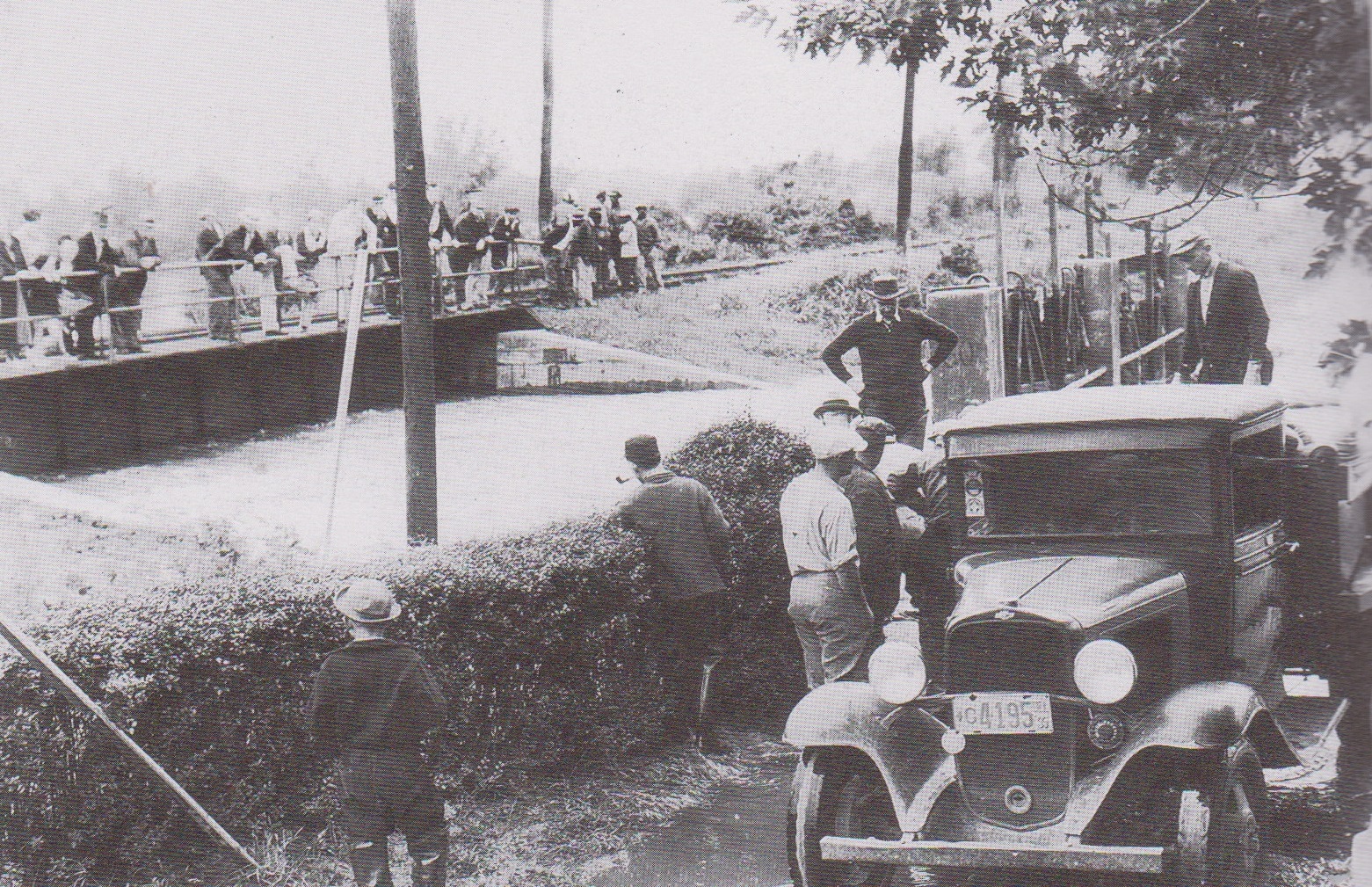
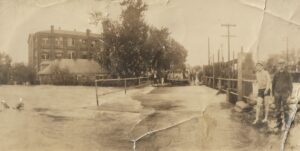
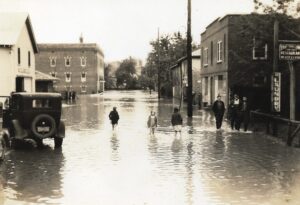
In Milford, floodwaters ran beneath the railroad bridge along Maple Avenue on September 6. Milford saw more than 10 inches of rain in 24 hours during the storm. The floodwaters caused the Maple Avenue dam to collapse, filling the first two stories of the Caulk Company with water.
The Labor Day Hurricane of 1935 held the record for a hurricane with the lowest pressure of 892mb until 1988 when Hurricane Gilbert broke it with 888 mb. Today, the record is held by Hurricane Wilma in 2005 at 882 mb. The size of the Labor Day Hurricane is comparable to Hurricane Andrew, another catastrophic hurricane that struck Florida in 1992.
In the Florida Keys, many victims were cremated due to the sheer number of them. In the village of Islamorada, a simple monument made of Key’s limestone, unveiled in 1937, stands. In front of the sculpture, a ceramic-tile mural of the Keys covers the stone crypt which holds the ashes of victims.