

Milford has produced seven state governors. In this series, Milford Times will delve into the men and women who led our state who called Milford home. The first governor from Milford and the third for Delaware after the Revolution, Daniel Rogers, assumed his role as leader of the state when Governor Gunning Bedford died in office.
Daniel Rogers was born in Pungoteague, a small town in Accomack County, Virginia, on January 3, 1754. He was the son of James and Patience Rogers whose family came from England around 1665. He moved to Cedar Creek sometime prior to 1778, purchasing a farm from Levin Crapper, and built the brick granary. Rogers eventually moved to Milford where he lived in what is now known as Causey Mansion. He also built a causeway over Cedar Creek at his own expense, likely to make it easier to get to Milford.
Before entering politics, Rogers was a miller who owned a considerable amount of land in Milford. In addition to the brick granary, he owned Haven Mills and a tavern in Cedar Creek. His first wife was Esther O. Crapper, the wealthy widow of Moulton Crapper and daughter-in-law of Levin Crapper. They had five children – James, Thomas, Betsey, Moulton and Daniel. After Esther died, Rogers married Nancy Russum. He and Nancy had seven more children – John, Samuel, Clement, Hannah, William, Mary and Henry. The family were members of the Christ Episcopal Church.
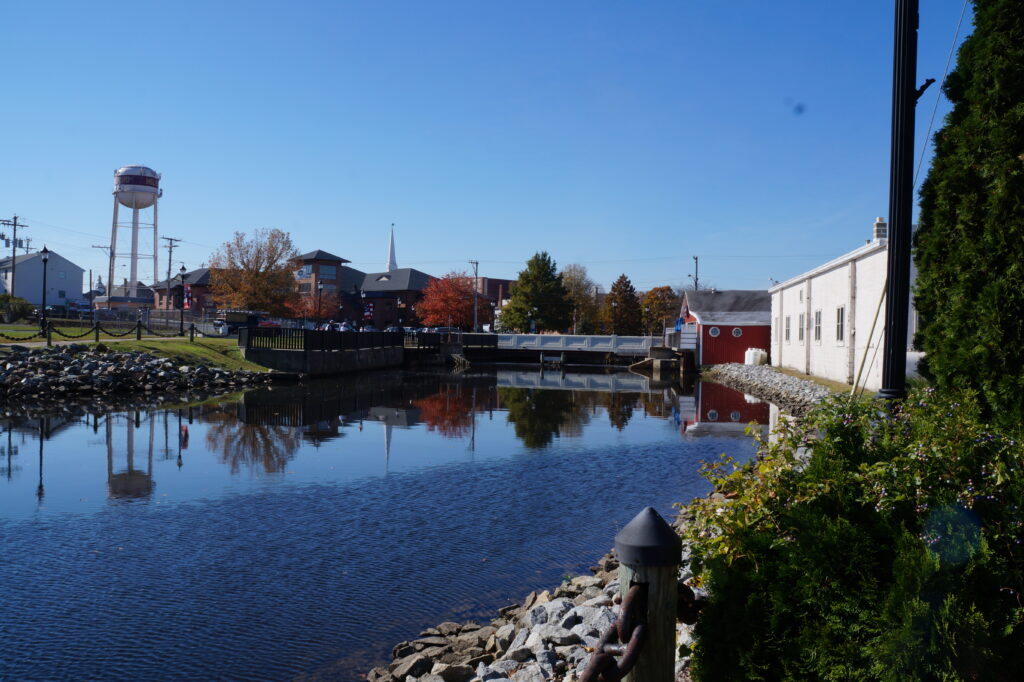
At the time Rogers lived in Milford, the town was divided by the river into two sections as the stretch where the Walnut Street bridge stands today was a stretch of marsh that kept ships from traveling into town. According to George Hynson, the “present approach to the Walnut Street bridge was almost bottomless mud and the street was only built by corduroying the surface and filling in.” It was difficult to keep a good roadbed although there were attempts. During an excavation near the bridge, huge white oak timbers were found at about seven feet deep, likely part of the first bridge constructed over the marh.
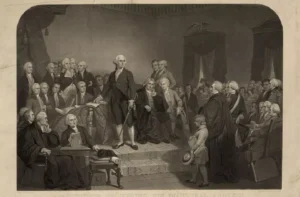
Rogers was a member of the Federalist party and elected to the State House of Representatives for the 1791-92 session and then elected twice as speaker. He served from 1793 until he became governor.
On September 28, 1797, Bedford passed away. At the time, there was no lieutenant governor which meant the president of the state senate assumed those duties. Rogers followed the agenda that began with Bedford who improved transportation throughout the state and incorporated the Bank of Delaware. Rogers also continued to work on the initial groundwork sanctioned for the creation of Delaware’s public school system. He left office in 1799 as the Delaware Constitution prohibited governor’s from being immediately re-elected.
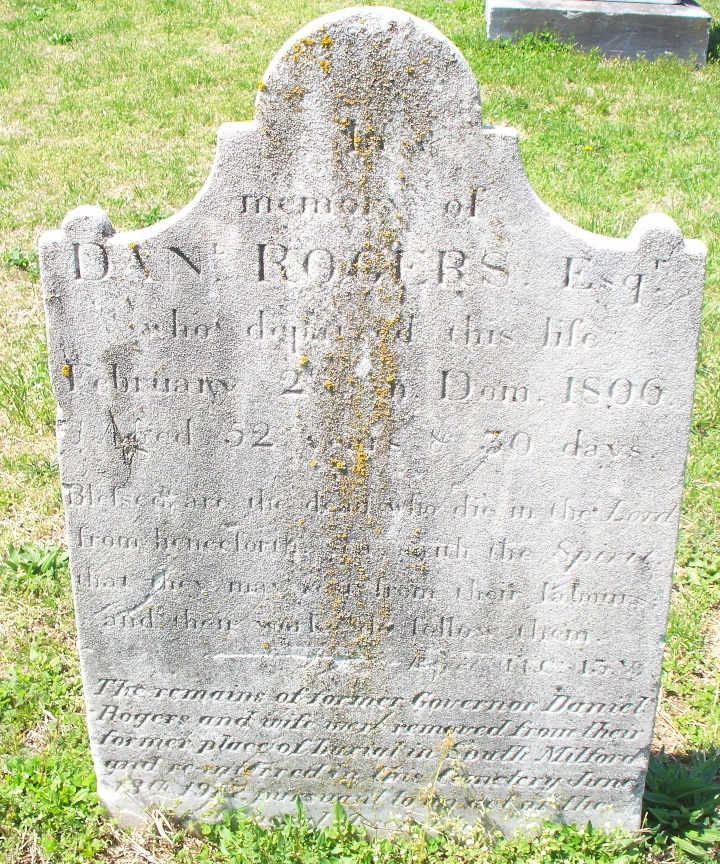
After leaving the governor’s office, Rogers continued to serve in the senate until he died on February 2, 1806, at the age of 52. Initially, he was buried at his home on Cedar Creek, but in 1917, his remains were moved to the Odd Fellows Cemetery in Milford.
Rogers oldest son, James, moved to New Castle and later served as chief justice of the Court of Common Pleas, Attorney General and Secretary of the State of Delaware.