





Although it is now a quiet small town on the outskirts of Milford, Lincoln actually has a unique and rich history. The town, which was originally to be called Lincoln City, was meant to be one of the largest towns in Sussex County.
Lincoln was founded in 1865 by Colonel Abel Stokes Small who had moved to the area from New York. Small wanted to create a large metropolitan area in southern Delaware to take advantage of the Delaware, Maryland and Virginia railroad system. The first edition of a local newspaper, “The Lincoln Herald” was published in 1865 and was mentioned in an 1866 edition of the New York Times.
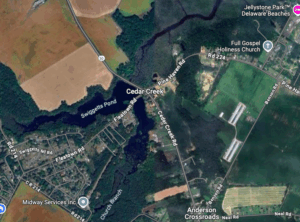
Even before the arrival of Small, the area surrounding Lincoln had smaller villages. Spittlefield was an area owned by Henry Bishop and sold to Benjamin Truitt, eventually sold to James Houston and Curtis Houston who were said to be heirs of Truitt. Lincoln sits in Cedar Creek Hundred and the first post office in the area was located in Lincoln.
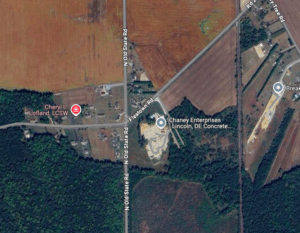
Southwest of what is now Lincoln was an area known as Fleatown that was a popular stagecoach stop. There were two competing hotels on what is now the corner of Fleatown and Old State Road, one owned by Milloway White and the other by Samuel Warren. There were stories of wild parties thrown at the two taverns located inside the hotels and those stories continued even 60 years after they were gone. There is a report that White was fined $20 for selling “spiritous liquors” in 1806.
Cedar Creek Village was another small town near what is now Lincoln, and had a tavern that was in existence prior to 1784. The tavern was known as an area where politicians held meetings.
After Small arrived in the area and the train station for “Lincoln City” was built, the stagecoach stops disappeared as did the hotels with businesses relocating to the area around the railroad. Small laid out the town and constructed a lumber and planing mill. There is mention in an 1869 issue of the “Evening Telegraph” in Philadelphia of a fundraiser to construct a church in Lincoln. He also constructed stables for a horse track.
On January 2, 1889, Small’s lumber and planing mill was destroyed by fire and, just four days later, Small passed away unexpectedly.
“Colonel Abel Stokes Small of Lincoln died last Sunday of general debility,” a small article in the January 12, 1889, “Evening Journal” read. “Colonel Small was an enterprising businessman and owned the large lumber mill which was recently destroyed by fire at Lincoln. He was born in New York in 1821.”
The community continued with his plan for a racetrack which was built in 1891, but a fire on Christmas morning in 1897 destroyed the granary, ice house, and one store completely while damaging four others in the town.
The town grew to include canning establishments, basket factories, two large churches and a school. The first church known in the area was Slaughter Neck Methodist Church, erected in 1810 and then known as the Hickman Meeting House. The second was the Methodist Episcopal Church constructed in 1869.
Train travel between towns was common when the railroad first arrived. The town, which Small named after President Abraham Lincoln after his assassination, had a general store where locals would sit outside as the passengers stepped off the train. A favorite pastime was to tell visitors to look for the “statue of Lincoln” in the town – something that never existed.
It appears that Small was married twice. He was the son of Abel Small and Rebecca Pine, born July 20, 1821, in New Jersey. His first wife, Elisabeth “Libbie” Bryan Small, died October 24, 1854, around the age of 30 and is buried in New Jersey. She and Small had four children Alphonsia W. born in 1845, Charles E., born in 1853, Caroline Matilda, whose birth is not known but who died in 1852, and William B., whose birth is also unknown. Caroline is buried with her mother in New Jersey.
Small’s second wife, Elizabeth Davis Parham Small, was born May 25, 1827, and had two children with the colonel. Abel Eugene was born in 1866, and Elizabeth “Bessie” was born in 1870. Although she passed away in Philadelphia, Elizabeth’s body was transported by train so that she could be buried in Lincoln City Cemetery by her husband. Also buried in Lincoln are Charles E. Small, Clara Small Humes and Nellie Small Sanson.
Clara and Nellie were the daughters of Alphonsia W. and Emma Egbert Walton Small. Clara married James Harry Humes and moved to Milford while Nellie married Dr. Francis Sanson moving to Ellendale. Sanson is also buried in the Lincoln cemetery. The family reports that Emma often took the train in the morning to visit her daughters, returning in the evening to her home in Lincoln.
After the colonel died, the family decided not to pursue his dream of a “giant metropolis” surrounding the railroad tracks in Lincoln, although the family remained in the area for the most part. Even today, however, there are signs of Small’s ambition when it comes to Lincoln. Trees line the streets that were named Washington, in honor of the first president, and Small, named for the developer himself, while Victorian houses, some of which were built around the time Small created his metropolis, still stand.
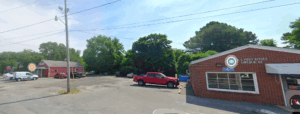
The Lincoln Store serves regulars each day, much like the old general store did back when Small began his vision. A new Dollar General was constructed a few years ago as well. The Evelyn I. Morris Early Childhood Center, which reopened for Milford School District in 1992, drew attention to the little hamlet and it has grown significantly since Bayhealth Sussex Campus opened on the border of Lincoln and Milford at the intersection of Wilkins and Cedar Creek Roads.