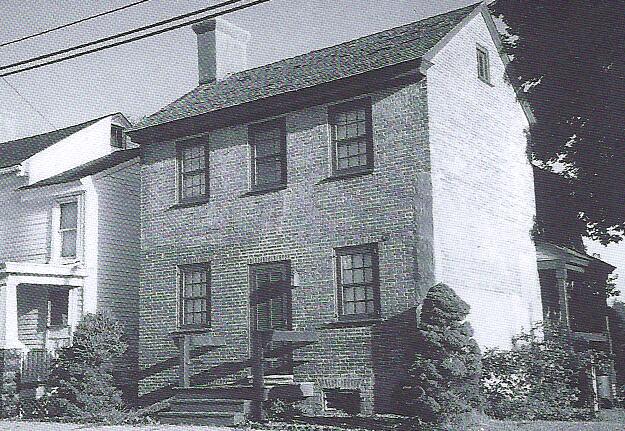


One of the oldest homes in Milford, the Isaiah James House, sits at 216 Northwest Front Street. Also referred to in historic documents as the “Ruhl House” or the “Molly Nutter House,” the home has a colorful history.
The brick portion of the double house was once the home of Isaiah James who operated a tannery, according to the Milford Historical Society, who included details on this home in a newsletter. E. Dallas Hitchens, a noted Milford historian, wrote that the land the home is own was part of Saw Mill Range, lands warranted to Henry Bowman in 1680.
According to Hitchens, James purchased the land from Joseph Oliver which, at the time, was bounded on the south by the Mispillion River, the west by Mullet Run, the north by Front Street and the east by a brick wall. James built a home there and operated a tannery on the land.
The home was purchased by R. Calvin Clendaniel and he restored it to its 18th century appearance. The brick portion, which was the original home, was separated from a frame building added later. The rear frame portion, which a previous owner had removed, was replaced with a frame addition in the style of the 18th century, although it did contain modern conveniences.
Original panelling was retained on the east wall of the first and second floor along with chair rails, doors, trim and more.
When James lived in the home, Front Street was known as First Street while Church Avenue was known as Ralston’s Alley. The size and plot of. Land, along with its location on water, indicates that it was the perfect location for a tannery.
When James passed away, his widow married Dr. John Owens and moved with him to Frederica. In 1820, they sold the plot, including the “house, buildings, tanyard and vats” to Col. Benjamin Potter. Potter came to Milford from Drummondtown and was a tanner by trade. According to a book by George Hynson “Historical Etchings of Milford,” Potter’s “vats occupied considerable space on each side of Front Street, near the run.”
Potter had a store on the south side of the street where he and his son, Edmund, managed the tannery, but Potter’s wealth was mostly in land. He was known as brusque and “uncongenial.” His will, unusual at the time, demonstrated his eccentricity as, although he left valuable bequests to relatives, a large portion of his land he left to “the poor of Kent County outside of the walls of the Poor House.” The fund created by what was then known as “the Potter Estate,” continues today, managed by Philanthropy Delaware Inc. as the Potter Charitable Trust.