


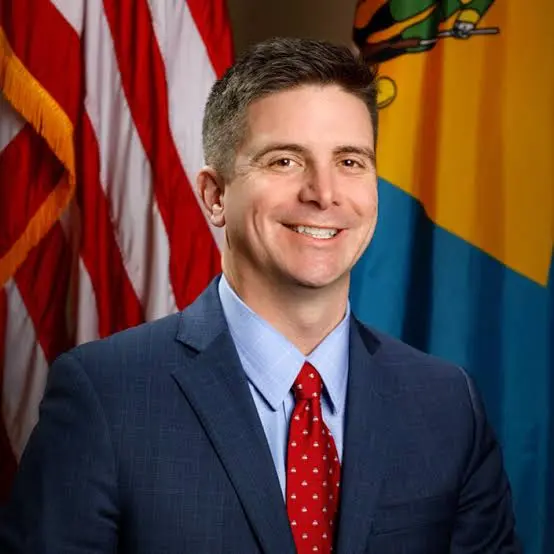

Milford Times sent candidates from the 33rd and 36th Representative Districts the following questions for the general election. What follows are their answers in their own words. As of press time, we had not received a response from Andy Gorlich or Morgan Hudson.
 The Milford, Lincoln and Ellendale areas continue to experience residential and commercial growth. What do you believe is the greatest challenge associated with that growth, and what action should the General Assembly take to ensure infrastructure and public services keep pace with development?
The greatest challenge is development moving faster than the infrastructure and public services needed to support it. Residents see that in traffic congestion and increasing pressure on schools, utilities and emergency services.
I opposed Senate Substitute 2 for SB 23 because it allows greater density and removes meaningful public input without providing the corresponding investments in infrastructure, emergency services and schools. It puts developers’ interests ahead of the communities that must live with the consequences.
I have proposed developer impact fees in the past and will propose them again in the upcoming legislative session to ensure that new growth pays for new growth. These fees would be placed in a protected lockbox and used exclusively for infrastructure, first responders and schools within the areas where the new growth occurs.
Housing costs have made it increasingly difficult for many working families, seniors and young adults to find housing they can afford. What specific state policies would you support to increase the supply of affordable and workforce housing in the 36th District?
We need to address the underlying cost of housing. Currently, the state of Delaware is injecting government money into a market where supply is already constrained. Increasing purchasing power without addressing supply and construction costs can artificially increase demand and push housing prices higher.
When we use organizations such as Habitat for Humanity and Milford Housing Development Corporation, we can focus on homeownership, financial literacy and sweat equity that help families build lasting stability. I have directed funding to Milford Housing Development Corporation’s Riverwalk housing project because it combines housing opportunities with preparation for successful homeownership.
We should also explore shared-risk loan pools with local banks and credit unions. A limited public guarantee could help qualified borrowers obtain financing while lenders retain most of the risk. This approach focuses on access to responsible financing rather than injecting additional cash into an already expensive housing market.
Communities throughout Delaware are dealing with homelessness while local governments, nonprofit organizations and state agencies sometimes disagree over responsibility, funding and appropriate solutions. What should Delaware’s state government do differently to reduce homelessness, and what responsibility should municipalities and counties have?
Delaware too often manages the visible symptoms of homelessness without adequately addressing the circumstances that keep people homeless. Those circumstances vary and can include housing costs, addiction, mental-health challenges, family instability and loss of employment.
Currently, when addiction is involved, the state is moving in the opposite direction from where we need to go. SB 249 provides for programs distributing free needles, syringes, tourniquets, cookers and other supplies used to prepare and inject drugs. My concern is that this approach enables continued drug use and can leave people deeper in addiction rather than helping them address its root causes.
We should direct more resources to organizations such as Love INC of Mid-Delmarva and Delmarva Adult & Teen Challenge, recognizing their different roles in housing assistance, personal support and recovery. These organizations work with people over time to help them rebuild their lives.
The state should coordinate funding and services, while counties and municipalities help identify local needs and maintain safe public spaces. Success should be measured by people achieving stable housing, recovery and greater independence.
Data-center development has become a significant issue in Delaware because of concerns involving electricity demand, water use, land use, noise, infrastructure and transparency, as well as potential economic benefits. The General Assembly has considered legislation addressing data-center development, including a temporary moratorium.
Should Delaware encourage, restrict or place additional conditions on large-scale data-center development? What requirements should apply before a data center is permitted to locate in or near communities such as those in the 36th District?
Economic development should not come at the expense of our agricultural heritage, fragile and diverse ecosystems, wetlands or water quality. These resources are part of what makes our region special, and some losses cannot be reversed.
The 36th District has experienced considerable residential growth, but economic development does not always produce jobs that allow residents to support a family. What industries or types of employers should Delaware work to attract to the Milford area, and what specific state policies would you support to bring more year-round, higher-paying jobs to the district?
Economic development should begin with our healthcare system. Families and employers need reliable access to care, and healthcare itself can provide year-round, well-paying jobs.
I introduced HB 318 to repeal Delaware’s Certificate of Need system, formally known as Certificate of Public Review. This system requires covered healthcare providers to obtain government permission before establishing a new facility, acquiring certain multimillion-dollar medical equipment or increasing bed capacity beyond specified thresholds, including more than 10% of licensed capacity. Removing these barriers would give providers greater opportunity to invest, compete and expand access while maintaining licensing and patient-safety standards.
Our education system is equally important. In Delaware’s 2026 assessments, only 40% of third graders demonstrated English language arts proficiency. Across grades three through eight, proficiency was 42%. We must improve literacy and give parents clear information about school performance. My HB 29 strengthened access to that information.
Employers offering good-paying jobs want strong schools for their employees’ children and a dependable future workforce from the region. Better healthcare and education help attract those businesses and support their long-term success. Their employees, in turn, create demand for the shops, restaurants and service businesses that help our community thrive.