

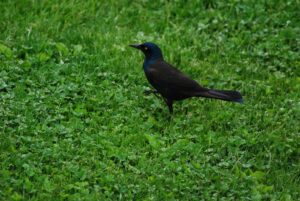


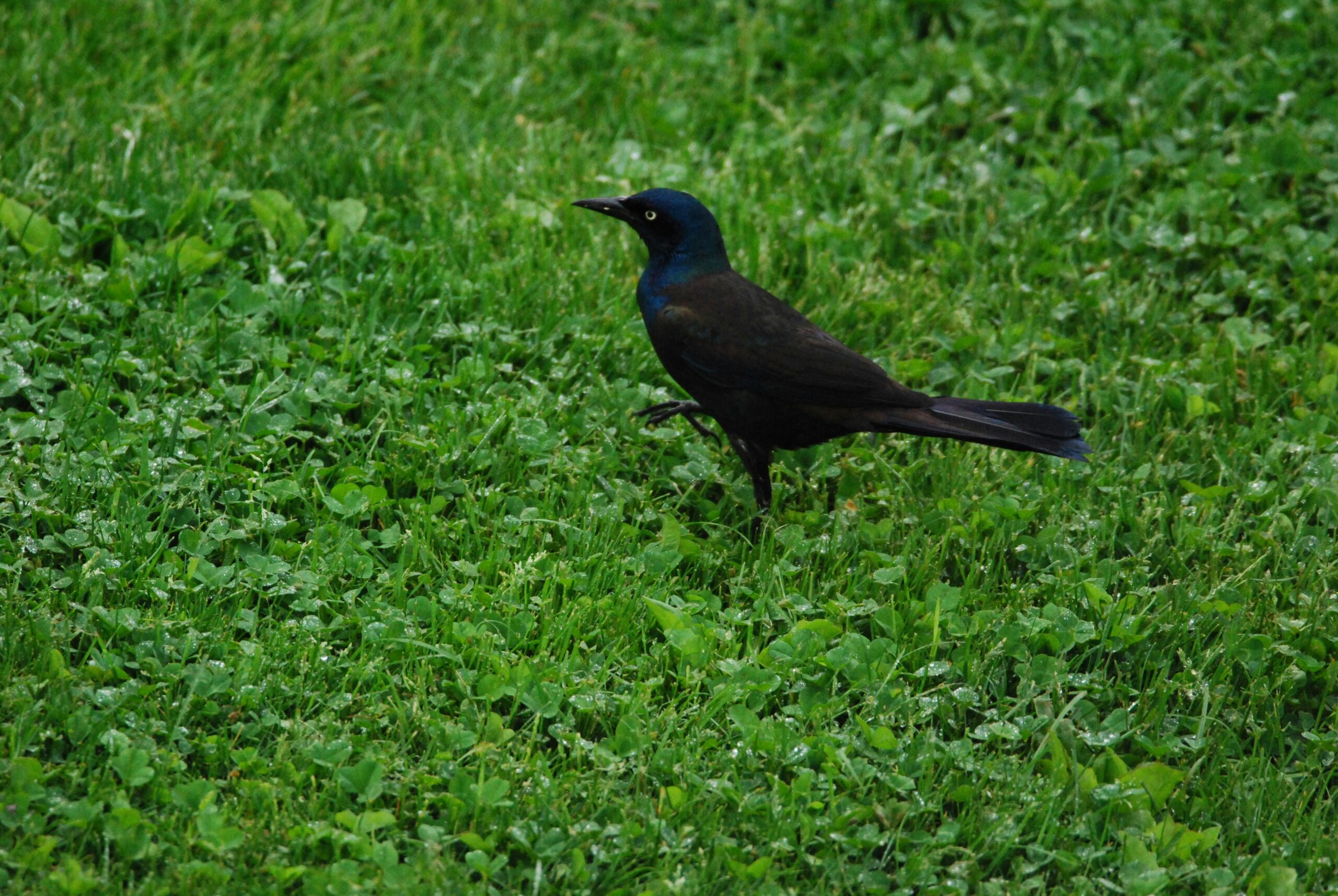

One bird that is often found in Delaware backyards is the common grackle. The bird is beautiful with shiny black feathers that often appear purple in the sunlight as well as bright yellow eyes. However, these should not be welcome at backyard feeders.
Grackles can cause extensive crop damage, they gather in huge, noisy flocks and can be seen chasing smaller birds from feeders.
Grackles are abundant in Delaware and are easily recognizable. They have a long, graduated tail that has as deep keel shape. The central tail feathers are lowered and the outer ones raised and flared. During the mating season, the grackle uses the tail in ritualized display postures.
The birds can be seen striding across lawns, where they do eat insects, but what is most noticeable is their song which is a loud creaking sound. When gathered in groups, they can be quite noisy.
There are two species of grackle in the area. The male bronzed grackle has a bronze-tinted body and wings that contrast with a blue head. The male purple grackle has a purplish body and head, with a green-glossed back or a more variegated purple-green back. The female of both types is smaller, browner and shorter. They are also less glossy. The juvenile is plain brown with dark eyes and a faintly streaked breast.
Grackles inhabit fields with scattered trees, open woodlands, farmlands and marshes. They are also found in developed areas, suburban yards, towns and cities. The bronzed grackle breeders move south for the winter, but the purple grackles can be found in large flocks even during winter months.
The birds are opportunistic. They mainly dine on insects, but will also eat grains, especially corn and seeds. They do eat fruit and will scavenge in garbage as well. They will visit feeders and can empty them quickly.
Grackles nest in colonies of 10 to 50 pairs, sometimes more. They build a cone-shaped nest, usually 3 to 20 feet up. The nests are bulky, made of twigs and grass.
They lay three to four eggs which are incubated by the female for 12 to 15 days and fledglings leave the nest between 12 and 15 days.
Another reason that grackles are not particularly welcome in backyards is that they carry the waste of their hatchlings, known as fecal sacs, directly to water sources, like swimming pools, bird baths and ponds. This results in dozens of sticky, white spots during nesting season and can introduce bacteria into swimming pools.
There are humane ways to deter grackles from backyard feeders. Switch to safflower seeds and thistle. Smaller songbirds like cardinals and sparrows like the safflower seed while finches prefer thistle. Avoid placing cracked corn, millet, bread scraps, peanuts or black-oil sunflower seeds where grackles can get them. Place those types of food in caged feeders that allow smaller birds to enter, but larger grackles cannot.
Next week: the Song Sparrow